
Family with leftovers for tomorrow
You want space for sealed portions alongside your everyday shopping, and the ability to check the fridge temperature. The Netherlands Nutrition Centre advises setting your fridge to 4 °C.


For pasta you’ll be eating the next day, it’s important to have fridge space for sealed containers and a temperature you can check. The Netherlands Nutrition Centre advises keeping cooked pasta in the fridge for no more than 2 days and setting the fridge to 4 °C. If you cook ahead, compare the usable freezer space, annual energy consumption and dimensions too. A larger capacity or No Frost doesn’t automatically make one fridge-freezer the best fit for your kitchen.
You want space for sealed portions alongside your everyday shopping, and the ability to check the fridge temperature. The Netherlands Nutrition Centre advises setting your fridge to 4 °C.
You freeze family meals in portions, so the layout and capacity of the freezer compartment matter too. The Netherlands Nutrition Centre gives a separate storage time for cooked pasta in the freezer.
You need room for meal containers, but also want to check that the appliance will fit in your kitchen and along the delivery route. Energielabel.nl lists the capacity of the fridge and freezer compartments separately.
Compare the fridge and freezer capacities separately, then check whether the dimensions and annual energy consumption suit your household and kitchen.
| What to consider | What to look for when buying | Who is this important for? |
|---|---|---|
| Keeping leftovers in the fridge | Check the fridge capacity and whether the shelves are adjustable. Make sure you can set the fridge to 4 °C and check its temperature. | If I want to store containers of leftovers alongside my everyday shopping, I look at the available space and temperature. Around 33% of consumers prioritise safe, practical refrigeration. |
| Freezing portions | Compare the freezer capacity and drawer layout; check how to set the freezer compartment to at least −18 °C. | When I cook meals ahead, I want to be able to store portions alongside other frozen foods. Around 27% of consumers say freezing is their top concern. |
| Dimensions and layout | Measure the space where the appliance will go and the delivery route, then check the exact model’s external dimensions and installation instructions. | If my kitchen has limited space, I want the appliance to fit while still leaving room for the containers I use. Around 20% of consumers prioritise finding the right size. |
| Energy consumption | For models of a suitable size, compare annual energy consumption in kWh and the capacity of both compartments. | When I want to factor in running costs, I look at annual energy consumption, not just the energy label rating. Around 20% of consumers prioritise energy consumption. |
The total capacity doesn’t tell you how much room you’ll have in the fridge for containers, or how much will fit in the freezer.
Compare the stated fridge and freezer capacities separately, and check where the shelves and drawers are positioned.
A feature described as being for fresh ingredients doesn’t automatically change the recommended storage time for cooked pasta.
Follow the Netherlands Nutrition Centre’s recommended storage time and temperature for pasta, whatever a drawer is called.
The energy label rating is no substitute for comparing annual energy consumption and the space you actually need.
Choose a suitable size first, then compare the annual energy consumption in kWh of models that meet your needs.
For its freestanding KGN39VLCT, Bosch lists 260 l of fridge space, 103 l of freezer space, energy class C and Total NoFrost. The separate capacities can help when comparing space for containers and frozen portions.
Samsung lists a total capacity of 387 l and energy class B for the RB38T607BS9/EF. These details can be a useful starting point when comparing capacity for a family.
For its freestanding CNsdc 5203 Pure NoFrost, Liebherr lists a total capacity of 330 l and a height of 185,5 cm. This gives you a starting point for comparing size and layout.
For its freestanding B5RCNE366HXB1, Beko lists a bottom freezer, No-frost and energy class C. These features are useful when comparing layout and maintenance.
This selection of fridge-freezers at Joybuy includes models for chilling leftovers, freezing portions and a range of kitchen layouts. Compare the individual compartment capacities and dimensions with what you need.
 No image available
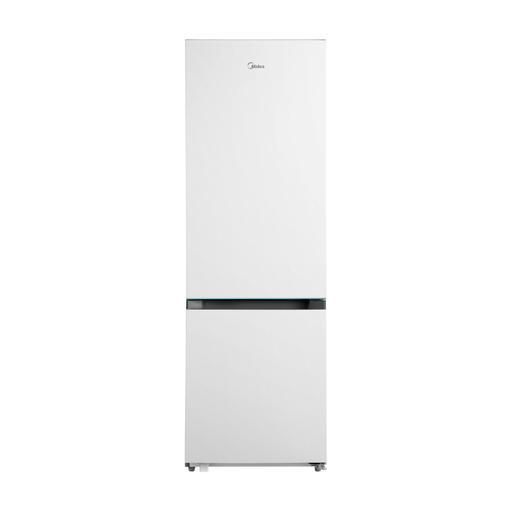
The separate fridge and freezer compartments can help you plan space for leftovers and frozen portions.
Fridge compartment: 187 l. Freezer compartment: 73 l.
Width: 55 cm. The product information lists adjustable shelves, a reversible door and a fridge temperature range of 2–8 °C.
The description states that it needs to be defrosted manually.
 No image available
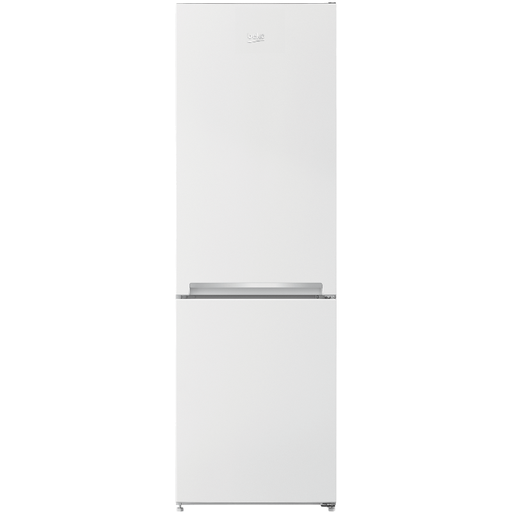
The stated compartment capacities help you weigh up fridge space for leftovers against freezer space for meals prepared in advance.
Fridge compartment: 232 l. Freezer compartment: 98 l.
The product information lists No Frost, electronic controls with a display and dimensions of 595 × 570 × 1860 mm.
The door is reversible.
 No image available
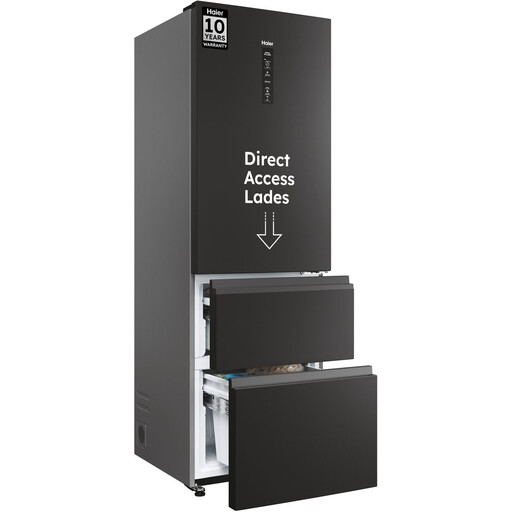
The listed fridge and freezer capacities help you work out how much space there is for leftovers and portions to save for later.
Fridge compartment: 173 l. Freezer compartment: 76 l.
Width: 54 cm. The product information lists an adjustable thermostat and four adjustable shelves.
The door is reversible.
 No image available
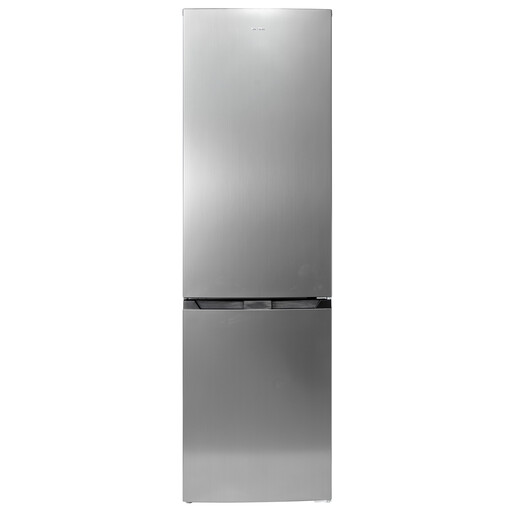
The stated capacity of both compartments helps you weigh up space for chilled containers against space for portions in the freezer.
Fridge compartment: 235 l. Freezer compartment: 125 l.
Dimensions: 59,5 × 185 × 66,7 cm. The product information lists three height-adjustable shelves and a reversible door.
The product title lists Total No Frost and WiFi 3D Cooling.
 No image available
The stated compartment capacities help you work out whether there’s room for chilled leftovers and frozen portions.
Fridge compartment: 182 l. Freezer compartment: 71 l.
Dimensions: 545 × 610 × 1810 mm. The product specifications list adjustable shelves, an adjustable thermostat and a reversible door.
According to the Netherlands Nutrition Centre, you can keep cooked pasta in the fridge for 2 days or in the freezer for 3 months. Cool leftovers quickly and put them in a sealed container in the fridge or freezer within 2 hours. If the product is sold in sealed packaging, follow the instructions on the label.
The Netherlands Nutrition Centre advises setting your fridge to 4 °C and checking the temperature with a fridge thermometer. Place it in the middle of the bottom shelf and read it after it has been there for half a day or overnight. Adjust the temperature if needed.
No. No Frost is about preventing ice build-up and avoiding the need to defrost, not how long pasta can be stored. The Netherlands Nutrition Centre advises keeping frozen food at a freezer temperature of at least −18 °C; freeze pasta in small portions.
To compare energy consumption, check the annual kWh figure on the energy label. If a product you’ve bought is faulty, the Dutch Government says the retailer is your point of contact for a solution; a manufacturer’s warranty does not replace this legal responsibility.
The Dutch Government states that fridges are among the appliances that must have an energy label. If a private customer buys a new, similar appliance, the shop must take the old one away free of charge under the old-for-new scheme. This also applies to online purchases.