
If you cook portions for later
You cook extra pasta and want to keep portions for longer. Freezer space and a practical layout are important in that case. Voedingscentrum provides guidance on storing leftovers.


Choose a fridge-freezer based on how long you want to keep leftover pasta. If you’ll eat it within two days, usable fridge space is what matters; if you want to freeze portions for later, you’ll also need enough freezer space. Then compare the dimensions, capacity of each compartment, annual energy consumption, noise level and freezer maintenance. Voedingscentrum advises cooling leftovers quickly, putting them in a sealed container in the fridge or freezer within two hours, and keeping them in the fridge for no longer than two days.
You cook extra pasta and want to keep portions for longer. Freezer space and a practical layout are important in that case. Voedingscentrum provides guidance on storing leftovers.
You usually eat cooked pasta within two days and mainly need enough usable fridge space, without an unnecessarily large appliance. Milieu Centraal advises choosing a size that suits your needs.
The available space or housing unit determines which appliances will fit. Measure the space and check the installation requirements before comparing compartment capacities.
First, decide whether you’ll mainly refrigerate leftovers or freeze them regularly too. Then measure the available space and compare the capacity of each compartment, annual energy consumption and noise level.
| What to consider | What should you look for? | Who is this important for? |
|---|---|---|
| Keeping leftovers chilled | Look at the layout and adjustability of the fridge compartment, and check whether your sealed containers will fit. Voedingscentrum recommends a fridge temperature of 4 °C. | If I usually eat leftovers within two days, I want to be able to chill them quickly and keep them organised. Around 36% of consumers say safe, short-term storage is their top buying priority. |
| Freezing portions | Compare freezer capacity and the layout of the drawers or compartments; check whether your portion containers will fit. | When I freeze pasta for later, I want space for individual portions and a layout that makes them easy to find. Around 29% of consumers put enough freezer space for portions at the top of their list. |
| Kitchen space | Measure the height, width and depth. For built-in models, also check the housing unit, ventilation and any door-mounting requirements in the installation details. | If my kitchen has limited space or I’m replacing an existing appliance, the fridge-freezer needs to fit the space and installation requirements. Around 21% of consumers say the space available in their kitchen is their main reason for buying. |
| Energy consumption and noise | Compare the stated energy consumption in kWh per year and the noise level of the exact model; also check the capacity of both compartments. | Once I’ve found the right fridge and freezer space, I want to take energy consumption and noise into account when choosing. Around 14% of consumers say energy consumption and noise are their top priorities. |
Two appliances with a similar total capacity may have different layouts. That could mean there’s less room in one of the compartments for the containers you want to store.
Compare the capacity in litres of the fridge and freezer compartments separately, and check the shelves, racks and drawers with your own containers in mind.
According to Beko, the Beko models mentioned use a static cooling system; the Bosch and Liebherr models mentioned are described as No Frost. Don’t assume every model has the same freezer function or maintenance requirements.
Check the details and maintenance instructions for the exact model. Be prepared to defrost it manually if the manufacturer advises this for the model you choose.
The energy class alone doesn’t show the stated number of kWh per year for the specific appliance. The size of the appliance can also affect your comparison.
Compare appliances that offer enough space by looking at their stated annual energy consumption. Only work out potential costs using your own electricity tariff.
An appliance can’t make leftovers safe again if they’ve been left out of the fridge for too long. Voedingscentrum advises not leaving leftovers out of the fridge for more than two hours.
Cool leftovers quickly, divide them into portions if needed, and put them in a sealed container in the fridge or freezer promptly.
The freestanding KV1430 is an example of a compact fridge-freezer with a small freezer compartment.
The freestanding KGN33NLEB is an example of a model with a larger freezer compartment at the bottom.
The BCSA240K4SN is a built-in option; the freestanding RDSA240K40WN has a freezer compartment at the top.
The freestanding CNc 5023 Plus NoFrost is an example of a model with No Frost.
This selection includes freestanding fridge-freezers and a tabletop fridge with a separate freezer compartment. Above all, compare the available capacity in each compartment with how you store chilled leftovers and frozen portions.
 Image unavailable
Suited to anyone looking for room for chilled leftovers and several frozen portions.
260 l total: 187 l of fridge space and 73 l of freezer space. 55 cm wide, with three freezer drawers and manual defrosting. Energy class E.
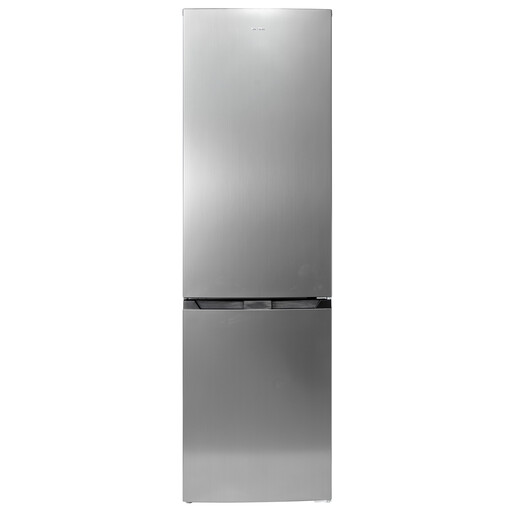 Image unavailable
An option to compare if you want a mix of chilled and frozen portions, along with a reversible door.
253 l total: 182 l of fridge space and 71 l of freezer space. The stated width is 545 mm. Frost Free appears in the product name; the product details list adjustable shelves and a reversible door.
 Image unavailable
A possible fit if you’re looking for a fridge-freezer with separate fridge and freezer compartments and a stated width of 540 mm.
205 l total: 153 l of fridge space and 52 l of freezer space. Low Frost, a reversible door and adjustable feet. Energy class E.
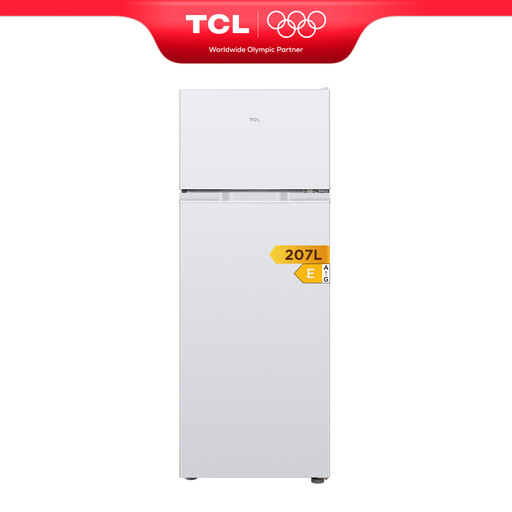 Image unavailable
Compare this layout if you need freezer space for smaller quantities of portions as well as fridge space.
207 l total: 167 l of fridge space and 40 l of freezer space. 55 cm wide and energy class E. The product name lists Power Cool & Freeze, adjustable shelves and adjustable feet.
 Image unavailable
A compact option to compare if you mainly chill leftovers and only need a small amount of freezer space.
109 l total: 95 l of fridge space and 14 l of freezer space. Dimensions: 55 × 58 × 85 cm. Energy class C; the door is reversible.
Voedingscentrum advises cooling leftovers quickly, putting them in a sealed container in the fridge or freezer within two hours, and keeping cooked pasta in the fridge for no more than two days. For leftovers, Voedingscentrum recommends up to three months in the freezer; after that, the quality may deteriorate. Ideally, set your fridge to 4 °C.
Voedingscentrum advises against refreezing and defrosting a meal that has already been frozen and reheated. It’s better to freeze portions straight away and defrost only what you need.
According to Voedingscentrum, you can defrost leftovers in the fridge or microwave. Then heat them thoroughly and eat straight away; don’t defrost them on the worktop.
The label for the exact model includes details such as its energy class on the A to G scale, energy consumption in kWh per year, the capacity of each compartment and the noise level. The European Commission describes the applicable EU energy labelling and ecodesign rules for refrigeration and freezing appliances within the stated scope.
According to ACM ConsuWijzer, online purchases generally come with a statutory cooling-off period of up to 14 days after delivery, subject to exceptions. This is separate from the statutory guarantee: if an appliance used normally breaks down sooner than you could reasonably expect, the seller is responsible for providing an appropriate solution. There isn’t one fixed statutory guarantee period that applies to every fridge.