
Host with a full fridge
You want to store other covered dishes alongside opened hummus, without cramming everything in. The Consumentenbond points out that the right fridge size depends on the household.


Choose a fridge-freezer with enough usable fridge space for the dishes and serving dishes you want to store. Once it is installed, use a fridge thermometer to check that the temperature is 4 °C. Then compare the external dimensions, the balance of fridge and freezer space, and the stated annual energy consumption. Extra capacity is most worthwhile if you’ll use it beyond the festive season.
You want to store other covered dishes alongside opened hummus, without cramming everything in. The Consumentenbond points out that the right fridge size depends on the household.
You’re looking for a fridge-freezer that fits the available space while still offering practical shelves for your food. Remember to measure the clearance needed for the doors and drawers, too.
You don’t want to buy a larger fridge than you usually need just for the occasional festive meal. Milieu Centraal notes that an oversized fridge can use electricity unnecessarily.
First, check the fridge temperature and whether there’s enough usable space for your dishes. Then compare the dimensions and annual energy consumption of models that suit your kitchen. The Voedingscentrum recommends setting your fridge to 4 °C.
| What to consider | What to look for | Who should pay particular attention? |
|---|---|---|
| Fridge temperature | Check whether you can adjust the fridge temperature, then measure it with a fridge thermometer once the appliance is installed. | When I serve opened hummus, I want to know how cold the fridge actually is. Around 33% of consumers put being able to check the temperature first. |
| Usable fridge space | Compare the shelf layout and fridge capacity with the containers and serving dishes you want to store; don’t just look at the total capacity in litres. | When I’m storing several covered dishes for a meal, they need to fit practically on the shelves. Around 27% of consumers put having usable space for meals first. |
| Size and installation | Measure the height, width and depth, as well as the clearance needed to open the doors and use the drawers. | In a smaller kitchen, I want to be sure the appliance will fit and remain accessible. Around 20% of consumers put positioning and access first. |
| Annual energy consumption | Compare the stated energy consumption in kWh per year for models with suitable dimensions and layouts. | If the fridge will be running all year, I want to factor in its energy use and avoid extra capacity that I’ll rarely use. Around 20% of consumers put year-round energy consumption first. |
A feature description doesn’t tell you the actual temperature where you store your hummus.
Measure the fridge temperature after installation and, if needed, adjust it towards 4 °C, as recommended by the Voedingscentrum.
The stated capacity doesn’t necessarily tell you whether your serving dishes and containers will fit on the available shelves. An oversized fridge can also use electricity unnecessarily, warns Milieu Centraal.
Compare the layout, the fridge and freezer capacities separately, and the external dimensions with your dishes and kitchen.
No Frost helps prevent ice from building up in the freezer compartment; it doesn’t tell you how long opened hummus can be left out of the fridge.
Think of No Frost as a freezer feature, and check the Voedingscentrum’s storage advice for hummus separately.
The Beko RCHE300K40WN is an example of a narrower freestanding fridge-freezer for kitchens with limited space.
The RB34C605CS9/EF is an example of a freestanding fridge-freezer with a stated total capacity of 344 l.
The LG GBBS322CPY is a fridge-freezer with a stated total capacity of 375 l, making it an option to compare if you’re looking for more space.
The Bosch KGN39VIBT is an example of a model with separately stated fridge and freezer capacities.
The Liebherr CNc 5203 Pure NoFrost is a model with a stated total capacity of 330 l.
These fridge-freezers offer different layouts and stated fridge capacities. Compare their temperature settings, dimensions and annual energy consumption with the amount of food you want to store and the space available in your kitchen.
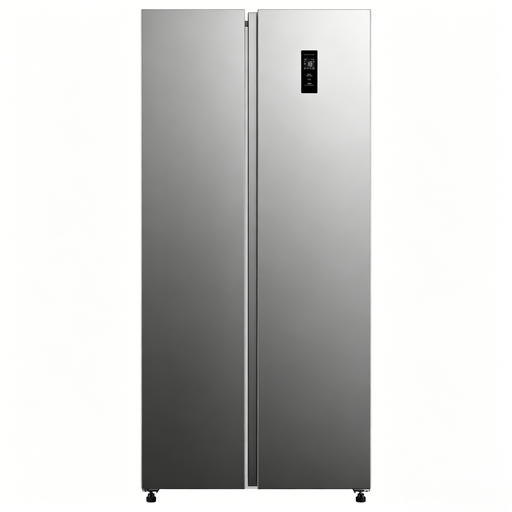 Image unavailable
For anyone who values a separate fridge compartment and digital temperature settings.
276 l of fridge space and 168 l of freezer space; digital temperature settings for the fridge and freezer. The stated width is 83 cm, and the installation instructions require clearance for ventilation and opening the doors. E energy rating; stated noise level of 40 dB.
 Image unavailable
For anyone looking for a narrower model with a separate fridge compartment and an adjustable fridge temperature.
187 l of fridge space and 73 l of freezer space; the stated width is 55 cm. The product information gives an adjustable fridge temperature range of 2–8 °C; the Voedingscentrum recommends setting it to 4 °C. E energy rating.
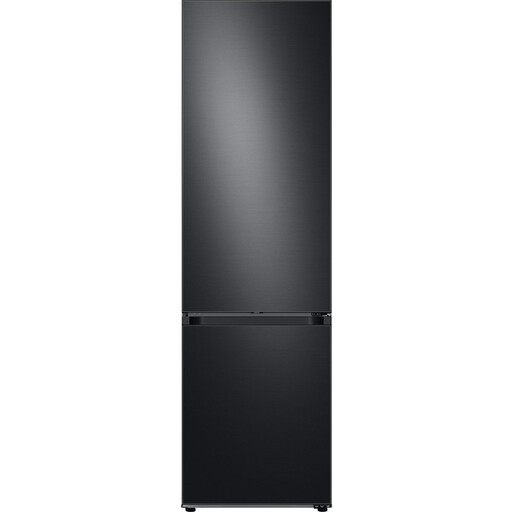 Image unavailable
For anyone comparing stated fridge capacity and annual energy consumption for an appliance used every day.
273 l of fridge space; digital temperature control. The stated dimensions are 59,5 × 65,8 × 203 cm. This model is listed with an A energy rating and annual energy consumption of 108 kWh.
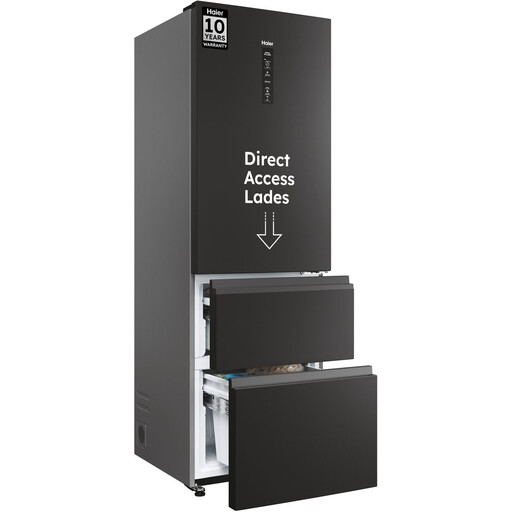 Image unavailable
For anyone who wants to organise chilled dishes on adjustable shelves and can check the available space before buying.
235 l of fridge space; four glass shelves, three of which are adjustable. The stated dimensions are 59,5 × 185 × 66,7 cm. The product name specifies Total No Frost.
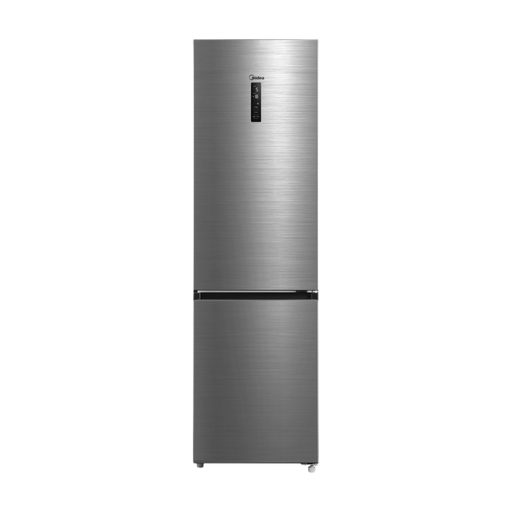 Image unavailable
For anyone who wants to organise several chilled dishes in the fridge compartment and a separate Chill compartment.
216 l of fridge space and a 40 l Chill compartment; electronic temperature control. The stated dimensions are 59,5 × 70 × 201 cm. This model is listed with a B energy rating and annual energy consumption of 140 kWh. The installation information requires at least 10 cm of clearance on both sides and above the appliance; follow the instructions for the rear clearance.
Set your fridge to 4 °C and put the hummus back in the fridge after use. For plain hummus, the Voedingscentrum recommends keeping homemade hummus for 1–3 days and ready-made hummus for 5–10 days, so there isn’t one storage period that applies to every type.
Place a fridge thermometer in the middle of the bottom shelf and leave it there for half a day or overnight. The Voedingscentrum recommends setting your fridge to 4 °C. If the reading is higher, adjust the temperature and check again.
Compare the shelves and fridge capacity with the dimensions of your own containers and serving dishes. Also measure the space available for the appliance and its doors. The Consumentenbond points out that the right fridge size depends on the household.
Compare the stated energy consumption in kWh per year for models that both suit your needs in terms of size and layout. Milieu Centraal warns that an oversized fridge can use electricity unnecessarily.
No. No Frost helps prevent ice from building up in the freezer compartment; it doesn’t tell you how long opened hummus can be left out of the fridge. The Consumentenbond describes No Frost as a freezer feature. Check the storage temperature and advice for hummus separately.