
People who freeze portions
You eat opened hummus in small amounts and want to store the rest in individual portions. The Netherlands Nutrition Centre gives different storage times for homemade and shop-bought hummus.


If you keep small portions of opened hummus, a fridge-freezer with a separate freezer compartment can be useful, but only if you need the extra space. If your current appliance reaches the recommended temperatures and can fit your portions, there’s no need to replace it specifically for hummus. When choosing a new appliance, base your decision on the freezer space you need, the dimensions and the annual energy consumption.
You eat opened hummus in small amounts and want to store the rest in individual portions. The Netherlands Nutrition Centre gives different storage times for homemade and shop-bought hummus.
You have limited room and are looking for a modest freezer compartment as well as fridge space. Compare the external dimensions and freezer capacity separately, rather than looking only at the total capacity in litres.
You also store other frozen foods and want to find small portions easily in an organised layout. Consider the energy consumption and the maintenance the freezer compartment requires.
| What to consider | What to look for when buying | Who is this most relevant for? |
|---|---|---|
| Safe storage and portioning | Check that the appliance reaches 4 °C in the fridge and at least −18 °C in the freezer. Portion the hummus using clean utensils and date each portion. | If I store hummus in small portions, I want to know that the temperature is right and the portions have been handled properly. Around 33% of consumers put safe storage and temperature control first. |
| Dimensions and freezer layout | Measure the available space and compare the external dimensions, freezer capacity and layout of the exact model. | In a small kitchen, I want the appliance to fit and have enough room for the portions I freeze. For around 27% of consumers, suitable dimensions and a practical freezer layout are the main concern. |
| Energy consumption | Compare the stated annual consumption in kWh on the EU energy label, and check the fridge and freezer capacities too. | Once I know how much capacity I need, I want to compare the annual consumption of specific models. Around 20% of consumers prioritise energy consumption. |
| Freezer maintenance | Check whether the model has drawers and which defrosting technology is listed. Less frost build-up doesn’t automatically mean you’ll never need to defrost it. | When I store several small portions alongside other frozen foods, I want to find them easily and spend as little time as possible on freezer maintenance. This is the main consideration for around 20% of consumers. |
Storage times and hygienic handling still matter; freezing is no substitute for safe storage.
Portion it using clean utensils, chill it promptly, date the portions and check the temperature of your fridge and freezer.
A fridge-freezer may have a large total capacity, while the freezer compartment accounts for only part of it. For example, according to Inventum, the KV1430 has a total capacity of 204 l, including 41 l of freezer space; the KV1808R has a total capacity of 270 l, including 71 l of freezer space.
Compare the freezer capacity and layout separately, and consider how much room you’ll need for other frozen foods alongside your hummus portions.
The EU energy label lists annual consumption and capacity separately. So the energy rating alone won’t tell you how much space you’ll get or how much energy the exact model uses.
Compare the label for the exact version, including kWh per year, fridge and freezer capacity, and noise information.
The KV1430 and KV1808R show how freezer capacity and layout can vary between models.
The CUe 2331 is a 55 cm-wide fridge-freezer with SmartFrost, offering a different maintenance option from the No Frost models mentioned.
The KGN36NLEA is a larger freestanding fridge-freezer with a bottom freezer compartment and Total NoFrost.
The RB34C600CSA/EF is a larger fridge-freezer that also has space for other groceries.
These models offer fridge space and a separate freezer compartment for anyone who wants to keep small portions of hummus chilled or frozen. Compare the freezer capacity and dimensions with your available space and other frozen foods.
 No image available
A compact option if you have limited kitchen space and only need a small separate freezer compartment.
Fridge compartment 95 l; freezer compartment 14 l; total capacity 109 l; width 55 cm; energy rating C; stated consumption 89 kWh per year.
 No image available
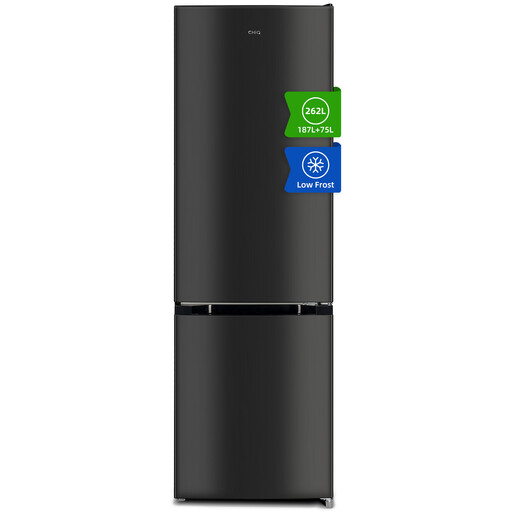
A fridge-freezer with a bottom freezer compartment, for anyone who wants to freeze other foods as well as hummus.
Capacity 262 l; Low Frost; 4-star freezer rating.
 No image available
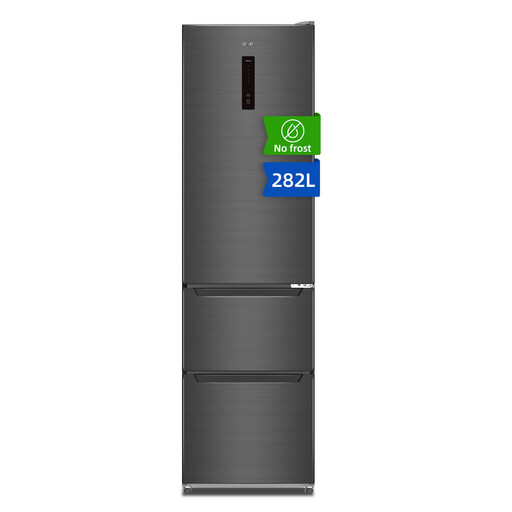
An option with separate freezer drawers and NoFrost if you want more room for frozen portions and other foods.
Total capacity 282 l; fridge compartment 197 l; freezer compartment 85 l; width 540 mm; NoFrost; energy rating E; inverter compressor.
 No image available
A fridge-freezer with three freezer drawers if you want to store portions separately and find them easily.
Total capacity 205 l; fridge compartment 153 l; freezer compartment 52 l; dimensions 540 × 550 × 1440 mm; Low Frost; three freezer drawers; stated consumption 191 kWh per year; energy rating E.
 No image available
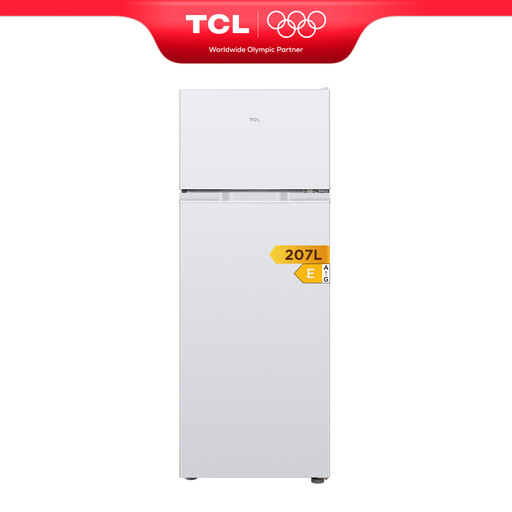
A compact fridge-freezer for anyone who wants to store chilled hummus and frozen portions separately.
Total capacity 207 l; fridge compartment 167 l; freezer compartment 40 l; width 55 cm; energy rating E.
For plain hummus, the Netherlands Nutrition Centre recommends 1–3 days in the fridge if it’s homemade, and 5–10 days if it’s shop-bought. It recommends 3 months in the freezer, after which the quality may deteriorate. Use clean utensils and follow the label instructions for an unopened pack.
Set the fridge to 4 °C and the freezer to at least −18 °C. The Netherlands Nutrition Centre recommends leaving a fridge thermometer in the middle of the bottom shelf for half a day or overnight, then checking the temperature and adjusting it if necessary. Freeze small portions and, where possible, defrost frozen food in the fridge.
The relevant EU energy label lists, among other things, the energy rating, annual consumption in kWh, capacity and noise. Compare the kWh-per-year figure and capacity of the exact models you’re considering.
According to the Dutch government, the seller must offer a solution if a product is faulty; there is no fixed statutory warranty period in the Netherlands. A manufacturer’s warranty is separate from this right. When you buy a similar new appliance, the shop must, according to the Dutch government, take back an old household appliance from a private individual free of charge, including for online purchases.