
Host with a full fridge
You want room for opened hummus and extra snacks alongside your usual shopping. The Consumers' Association recommends considering factors such as capacity and layout when choosing a fridge.


Choose a fridge-freezer with enough usable fridge space for your everyday shopping as well as snacks for guests. Before you decide, check the separate fridge and freezer capacities, the external dimensions and the annual energy consumption. The Netherlands Nutrition Centre recommends keeping your fridge at 4 °C. Check the temperature with a thermometer once the appliance is in place, and follow the storage advice on the packaging for opened hummus.
You want room for opened hummus and extra snacks alongside your usual shopping. The Consumers' Association recommends considering factors such as capacity and layout when choosing a fridge.
You’re looking for a fridge-freezer that fits the space available without leaving you short on fridge space. Compare the appliance dimensions and the separate capacity of the fridge compartment.
You want to take annual energy consumption into account alongside the dimensions and capacity. Energielabel.nl explains what information appears on the EU energy label, including the energy rating and annual consumption.
Start with the space available and the fridge capacity you need every day. The Netherlands Nutrition Centre recommends a fridge temperature of 4 °C. Milieu Centraal advises against choosing an unnecessarily large appliance, while also warning that a fridge that’s too small could lead you to buy a second one.
| What to consider | What to look for | Who is this important for? |
|---|---|---|
| Keeping hummus chilled | Check the fridge temperature with a thermometer and follow the storage advice on the label. | If you want to store opened hummus safely until your guests arrive, it’s important to keep the fridge at a checked temperature. Around 38% of consumers prioritise effective cooling. |
| Room for snacks | Compare fridge capacity in litres and check that your serving dishes will fit on the shelves. | If you need room for opened products and snacks as well as your everyday shopping, the layout of the fridge compartment matters. Around 23% of consumers prioritise extra fridge space. |
| Annual energy consumption | Compare the annual kWh consumption on the EU energy label, as well as the separate fridge and freezer capacities. | If you’re replacing an appliance and want to factor in everyday energy use, compare suitable models using the same label information. Around 23% of consumers focus primarily on energy consumption. |
| Fit and everyday use | Measure the available space and check the door clearance, noise level and whether the appliance has a No Frost function. | If the appliance needs to fit a particular kitchen layout, its position and ease of use will be key to your choice. Around 16% of consumers start with these factors. |
Total capacity includes the freezer compartment, too. That space isn’t available for hummus and snacks you want to keep chilled.
Compare the fridge and freezer capacities separately, and check that your own containers and serving dishes will fit in the fridge.
The setting alone doesn’t tell you what temperature the fridge actually reaches. The Netherlands Nutrition Centre recommends 4 °C.
Once the appliance is in place, check the temperature with a fridge thermometer and adjust the setting if needed.
According to the Consumers' Association, No Frost prevents ice from forming in the freezer compartment; it doesn’t tell you how long opened hummus will keep in the fridge.
Assess No Frost for the convenience it offers in the freezer compartment, and follow the storage advice separately for hummus.
According to the Dutch government, when you buy an appliance as a private individual, the seller cannot charge you to take back an old, similar appliance. This doesn’t automatically mean other services are included.
Ask what’s involved in the take-back, and consider removal or installation as separate services.
Bosch describes the KGN39VXCT as a freestanding fridge-freezer with separate fridge and freezer capacities.
The Samsung RB34C605CWW/EF is described as a freestanding fridge-freezer with a total capacity of 344 l and energy rating C.
LG describes the GBV3100CPY as measuring 595 × 1860 × 675 mm and having energy rating C.
Beko describes the B5RCNE365HG as a freestanding fridge-freezer with a bottom freezer, a width of 59,5 cm and a height of 186,5 cm.
These models include compact and larger fridge-freezers, as well as a built-in model. Compare each model’s stated fridge capacity, dimensions and installation requirements with your kitchen and how you plan to use it.
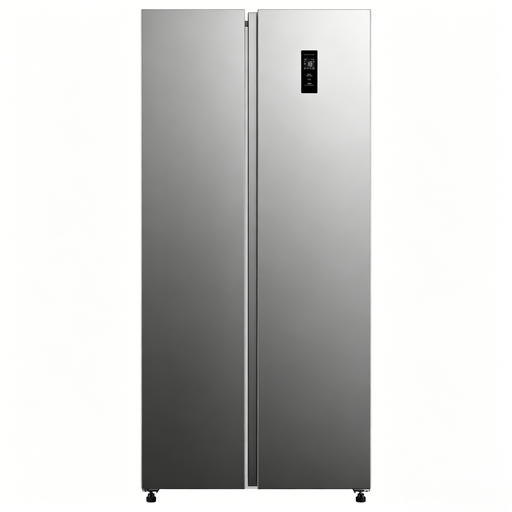 No image available
Its stated width of 83 cm makes the available kitchen space an important consideration.
Total capacity: 444 l; fridge capacity: 276 l; freezer capacity: 168 l. The title lists No Frost, digital temperature control, 40 dB and energy rating E.
 No image available
Its stated width of 55 cm may suit a narrower space in your kitchen. Measure the space available beforehand.
Total capacity: 260 l; fridge capacity: 187 l; freezer capacity: 73 l. Other listed features include adjustable shelves, a reversible door, adjustable feet and energy rating E.
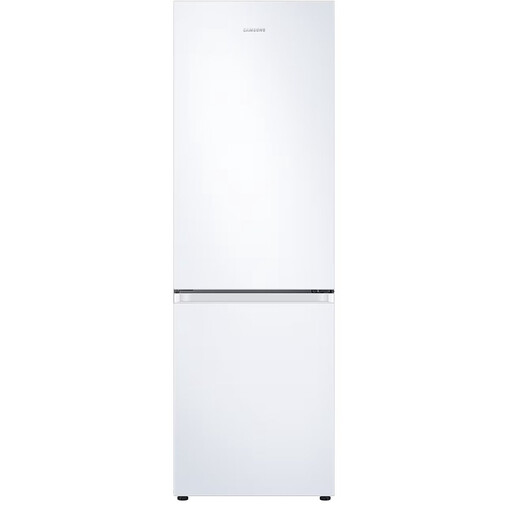 No image available
With a stated fridge capacity of 230 l, you can compare the available space with what you need for everyday shopping and snacks.
Total capacity: 344 l; fridge capacity: 230 l. The product name lists No Frost, Wi-Fi and SmartThings.
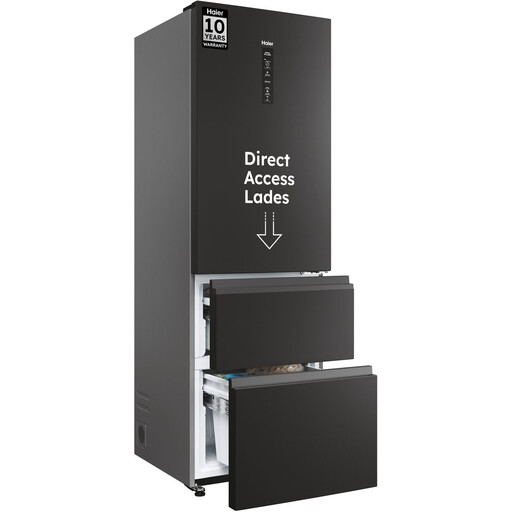 No image available
The stated fridge capacity of 235 l gives you a useful figure to compare with the space you need for everyday shopping and snacks.
The product information lists Total No Frost, Wi-Fi, 3D Cooling, adjustable glass shelves and five door balconies.
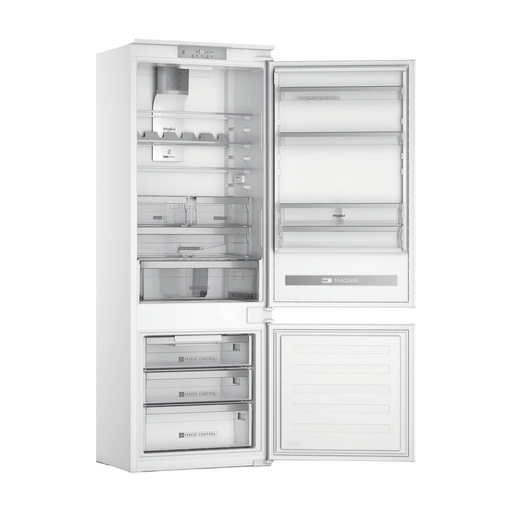 No image available
This built-in model is designed for a niche measuring 194,4 × 72 × 55 cm. Check that the stated niche dimensions and installation requirements suit your kitchen.
Total capacity: 400 l; fridge capacity: 299 l. The product name lists energy rating E and 35 dB. According to the product information, installation must be carried out by a qualified professional.
The Netherlands Nutrition Centre says homemade plain hummus keeps for 1–3 days in the fridge, while ready-made hummus keeps for 5–10 days. Follow the instructions on your product’s label too, and keep the hummus chilled.
Set your fridge to 4 °C, as recommended by the Netherlands Nutrition Centre, and check the temperature with a fridge thermometer. Adjust the setting if the measured temperature differs.
Not for the hummus itself: according to the Consumers' Association, No Frost prevents ice from forming in the freezer compartment. For opened hummus, what matters is the fridge compartment, a checked temperature and following the storage advice.
Compare the annual energy consumption and the separate fridge and freezer capacities of models that fit your kitchen. The EU energy label also shows the energy rating and noise level.
According to the Dutch government, when you buy an appliance for private use, the seller cannot charge you to take back an old, similar appliance. Consider any removal or installation services separately from the take-back.