
Families with a full fridge
You want to fit grapes in alongside the rest of your fresh groceries. In that case, a practical fridge layout matters more than the total capacity alone.


Choose a fridge-freezer with enough fridge space for dry bunches of grapes and the rest of your groceries, and check in advance that it will fit in the space available. Then compare the annual energy consumption of models in a suitable size and consider how much freezer space you really use. For fresh grapes, the Netherlands Nutrition Centre recommends storing them in the fridge, dry and preferably still on the stem.
You want to fit grapes in alongside the rest of your fresh groceries. In that case, a practical fridge layout matters more than the total capacity alone.
You buy grapes in advance and want to keep them dry and chilled until you’re ready to eat them. The Netherlands Nutrition Centre recommends setting your fridge to 4 °C.
You’re looking for enough space but don’t want to choose an appliance that’s larger than necessary. Milieu Centraal points out that an oversized fridge can use unnecessary electricity.
Start by checking the usable fridge space and where the appliance will go in your kitchen. Once you’ve found models that fit, compare their annual energy consumption and freezer capacity.
| What to consider | What to look for | Who is this important for? |
|---|---|---|
| Keeping grapes chilled | Check that bunches will fit in the fridge without getting crushed, and that they can be kept dry. Set the fridge to 4 °C and check the temperature with a thermometer, as recommended by the Netherlands Nutrition Centre. | I want to keep grapes dry and on the stem until mealtime, without them being squashed by other groceries. Around 36% of consumers say that keeping grapes fresh is their top priority. |
| Usable fridge space | Compare the fridge and freezer capacities separately; don’t just look at the total capacity. | If I’m chilling grapes alongside the rest of the fresh food for a family meal, I mainly need practical shelves and drawers. Around 29% of consumers prioritise having enough fridge space. |
| Energy consumption | For models in a suitable size, compare the stated consumption in kWh per year and the separate fridge and freezer capacities shown on the energy label. | I want enough space without running a larger appliance than my household needs. Around 21% of consumers say energy consumption is their top priority. |
| Positioning and noise | Check the model’s dimensions and installation instructions. If you have an open-plan kitchen, also check the stated noise level. | If my kitchen has limited space or opens onto the living area, I want to know in advance whether the appliance will fit and how noisy it is. Around 14% of consumers prioritise positioning and noise. |
The total capacity includes the freezer compartment, so not all of that space will be available for grapes and other fresh groceries.
Compare the fridge and freezer capacities separately, and check whether whole bunches will fit alongside your other groceries.
The rating letter doesn’t replace comparing annual energy consumption. The energy label also shows consumption in kWh per year.
First choose a size that suits your household, then compare the stated annual consumption of those models.
The name of a drawer alone doesn’t prove that grapes will stay fresh for longer. Manufacturers’ claims about storing fruit aren’t the same as independent test results specifically for grapes.
Keep grapes dry and preferably on the stem, and check the fridge temperature.
The Bosch KGN36EICF is a freestanding fridge-freezer with separately stated fridge and freezer capacities.
LG presents the GBBS322CEV with a total capacity of 375 l and fruit and vegetable drawers.
The Samsung RB34C670DSA/EF is a fridge-freezer with a total capacity of 344 l and energy rating D.
The Liebherr CNc 5703 is a freestanding fridge-freezer with a total capacity of 371 l, EasyFresh and NoFrost.
These fridge-freezers are options to compare if you want to store fresh groceries and frozen food in one appliance. Pay particular attention to the separately listed fridge capacity.
 No image available
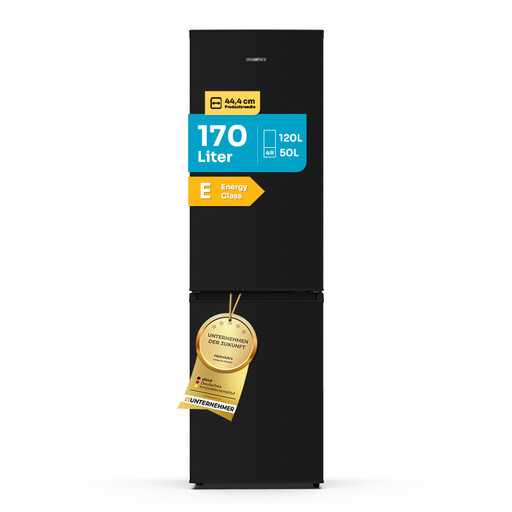
Worth comparing if 120 l of fridge space is enough for your fresh groceries and you also want a freezer compartment.
Total capacity: 170 l; fridge capacity: 120 l; freezer capacity: 50 l; energy rating E; noise level: 40 dB.
The product information lists removable glass shelves and an adjustable temperature control.
 No image available
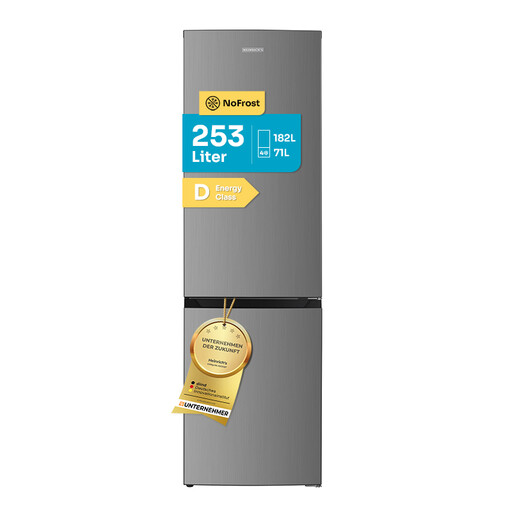
The stated fridge capacity of 182 l is worth comparing if you want space for more fresh groceries alongside your grapes.
Total capacity: 253 l; fridge capacity: 182 l; freezer capacity: 71 l; noise level: 39 dB.
The product information lists LED lighting, an adjustable thermostat and reversible door hinges.
 No image available
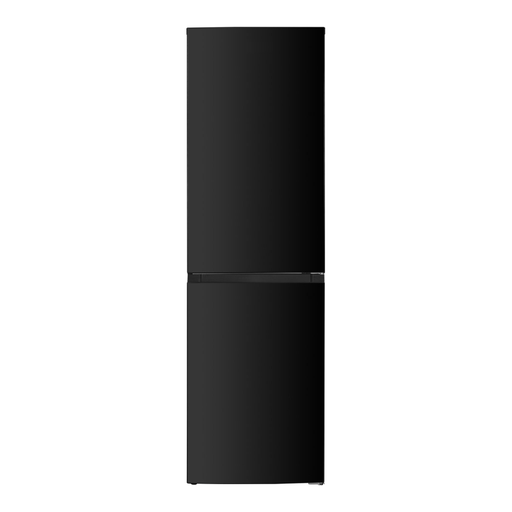
The separately listed fridge capacity and vegetable drawer are useful to consider if you want to store other fresh food as well as grapes.
Total capacity: 247 l; fridge capacity: 165 l; freezer capacity: 82 l; energy rating D; dimensions: 181 × 54,5 × 60 cm.
No-Frost is listed for the freezer compartment. Check that the dimensions suit the space available.
 No image available
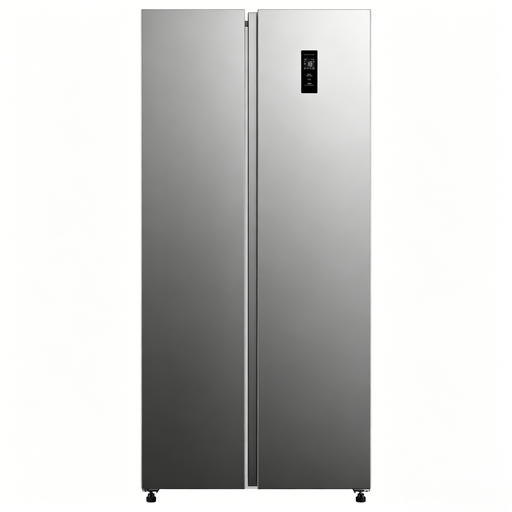
You can weigh the total net capacity of 444 l against the space your household actually needs.
Total net capacity: 444 l; noise level: 40 dB.
The product description lists adjustable temperature settings via the control panel and Total No Frost in both compartments.
 No image available
With 187 l of fridge space, you can compare the stated capacity for fresh groceries separately from the freezer compartment.
Total capacity: 260 l; fridge capacity: 187 l; freezer capacity: 73 l; width: 55 cm; energy rating E.
The product description lists an adjustable fridge temperature range of 2–8 °C and manual defrosting.
For grapes you want to serve fresh, the Netherlands Nutrition Centre recommends using the fridge. It says grapes will keep for 1–2 weeks in the fridge, compared with 3–4 days in a fruit bowl. Freezing is suitable if you want to use the grapes frozen later; the Netherlands Nutrition Centre gives a storage time of 8–12 months, after which the quality may decline.
It’s best to leave grapes on the stem and avoid letting them get damp. The Netherlands Nutrition Centre lists a paper bag, the packaging or a plate as suitable storage options, and recommends setting the fridge to 4 °C. Check the temperature with a thermometer.
The energy label shows details including the A–G rating, consumption in kWh per year, fridge and freezer capacities, and noise level. Energielabel.nl and Milieu Centraal list these as useful points of comparison. To estimate your annual electricity costs, you can multiply the stated consumption by your own electricity rate per kWh. Your actual costs will depend on how you use the appliance and your tariff.
According to the Dutch government, the Netherlands has no fixed statutory warranty period. You’re entitled to expect a product that meets what you could reasonably expect, and the retailer is your point of contact if there’s a fault. If you’re buying a new, similar appliance as a private customer, the retailer must take your old appliance away free of charge under the old-for-new scheme. This also applies to online purchases.