
Family that eats leftovers quickly
You mainly want well-organised fridge space for covered portions that will be served again soon. The Netherlands Nutrition Centre advises keeping cooked vegetables in the fridge for no more than two days.


Choose a fridge-freezer based on what you do with cooked vegetables. Opt for enough usable fridge space for portions you’ll eat soon, or prioritise freezer space and freezing capacity if you cook ahead. Then check the dimensions, layout and annual energy consumption. No Frost reduces the need to defrost, but doesn’t change the storage advice for leftovers.
You mainly want well-organised fridge space for covered portions that will be served again soon. The Netherlands Nutrition Centre advises keeping cooked vegetables in the fridge for no more than two days.
You make extra portions of vegetables for later and need practical freezer drawers and suitable freezing capacity. The Netherlands Nutrition Centre gives three months as the storage time for cooked vegetables in the freezer.
You want to combine fridge and freezer space within the room available, while also considering the door opening and energy consumption. The Consumers’ Association highlights factors such as a fridge’s size and capacity when choosing one.
Choose this if: you usually eat cooked vegetables within two days and want to store covered portions neatly.
Trade-off: extra fridge space may mean less freezer space, so assess the shelves and compartments separately.
Choose this if: you regularly make extra portions to eat later.
Trade-off: compare the freezer capacity, drawer layout and stated freezing capacity. No Frost doesn’t replace food storage advice.
Choose this if: the space available in your kitchen or annual energy consumption is a major consideration.
Trade-off: check that the compartments still have enough room for your portions. Compare kWh per year for models that fit your space.
The Netherlands Nutrition Centre advises storing cooked vegetables covered and separately from raw food, putting them in the fridge within two hours of cooking, and setting the fridge to 4 °C.
| What to consider | What should you check? | Who is this most relevant to? |
|---|---|---|
| Chilled leftovers | Check the usable shelf space, room for sealed containers and temperature setting. | If I keep several portions chilled, I want to store them neatly and separately from raw food. Around 33% of consumers prioritise safe, well-organised refrigeration. |
| Portions for later | Compare the freezer capacity, number of drawers and freezing capacity in kg per 24 hours. | If I cook ahead, I want to fit in the extra portions and know how much can be frozen in a day. Around 27% of consumers prioritise freezer space. |
| Size and layout | Measure the height, width, depth, installation space and door opening; compare fridge and freezer capacity separately. | If my kitchen has limited space, I want an appliance that fits without losing sight of the space needed for family portions. Around 20% of consumers prioritise a suitable size. |
| Energy consumption | For models that fit, compare the energy label and stated consumption in kWh per year. | If I’m choosing an appliance for the long term, I want to consider its annual energy use as well as its capacity. Around 20% of consumers prioritise energy consumption. |
A drawer designed for fresh, unpackaged vegetables doesn’t change the storage advice for cooked vegetables.
Make room for sealed containers on usable fridge shelves and follow the storage advice for cooked vegetables.
The total capacity doesn’t tell you how much space there is separately for chilled and frozen food. The energy label also shows annual consumption.
First check that the dimensions will fit, then compare the capacity of each compartment and the stated annual energy consumption.
Manufacturers say No Frost reduces the need to defrost, but it doesn’t automatically extend the storage time for cooked vegetables.
Choose this feature if spending less time defrosting matters to you, and store portions according to food storage advice.
The KV1851B is a freestanding fridge-freezer worth considering if you want to weigh up fridge and freezer space alongside freezing capacity.
The freestanding KGN33NWDA offers a different balance between appliance size and stated capacity.
The freestanding CNsdc 5203 is an option to compare for its external dimensions, total capacity and NoFrost.
The GBV7280AEV is a larger fridge-freezer to compare for its capacity, dimensions and stated annual energy consumption.
The RB38C7B6AB1/EF is a large fridge-freezer to include when comparing external dimensions.
These models are options to compare for chilled leftovers, portions for later and kitchens of different sizes.
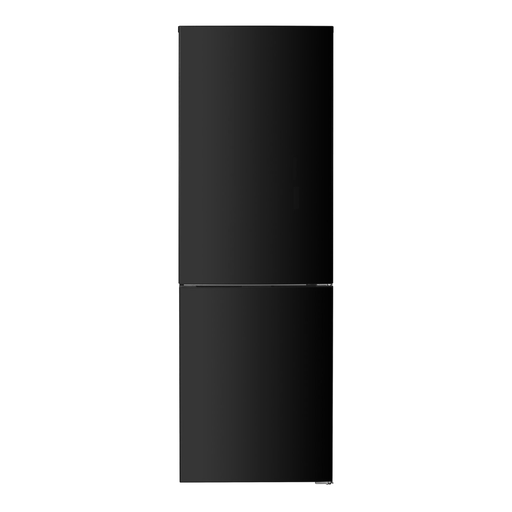 No image available
An option if you want fridge space for leftovers and freezer space for portions.
210 l of fridge space and 83 l of freezer space; No Frost; energy rating E; 293 l total.
 No image available
An option if you want to take the appliance’s width into account when deciding where to place it.
187 l of fridge space and 73 l of freezer space; 55 cm wide; reversible door; energy rating E.
 No image available
An option if you want to freeze extra portions and compare the stated freezing capacity.
232 l of fridge space and 98 l of freezer space; freezing capacity of 4,5 kg per 24 hours; two freezer drawers; energy rating E.
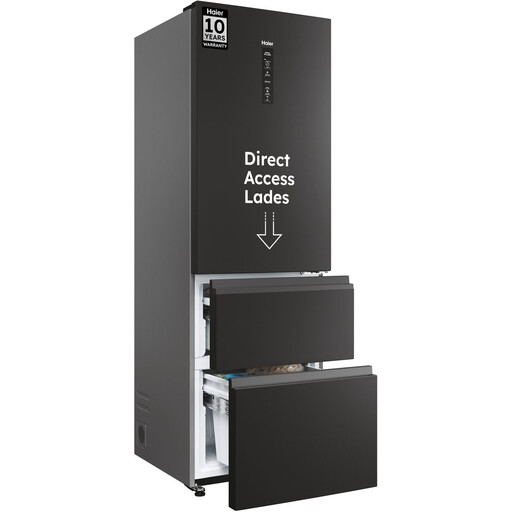 No image available
An option if you want to organise both chilled family portions and extra food for the freezer.
235 l of fridge space and 125 l of freezer space; Total No Frost; four fridge shelves and two freezer drawers; reversible door opening.
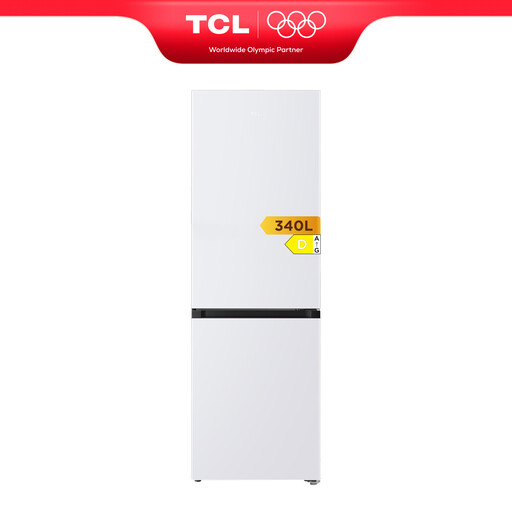 No image available
An option if you want to consider the stated fridge and freezer space alongside the energy rating.
223 l of fridge space and 117 l of freezer space; 340 l total; Total No Frost; energy rating D.
The Netherlands Nutrition Centre advises keeping cooked vegetables in the fridge for no more than two days and in the freezer for three months; after that, their quality may decline. Keep leftovers covered and separate from raw food, let them cool and put them in a fridge set to 4 °C within two hours of cooking.
Don’t assume so. Liebherr describes the EasyFresh drawer as suitable for unpackaged fresh vegetables and fruit. For cooked vegetables, follow the separate storage advice and use sealed containers.
Measure the appliance and the space where it will go, including room for the door to open, and follow the installation instructions for your chosen model. Once it’s in place, check the fridge temperature. The Netherlands Nutrition Centre advises setting it to 4 °C to store perishable food.
The Dutch energy label includes the energy class, kWh per year and the separate fridge and freezer capacities. First compare models that fit your space; annual energy costs also depend on your electricity tariff and how you use the appliance.
According to ACM ConsuWijzer, if a product develops a fault too soon under normal use, the seller must put it right free of charge under the conditions of the statutory guarantee. In the Netherlands, there is no single fixed statutory guarantee period for every fridge; a manufacturer’s guarantee does not replace your statutory rights.