
Planning a dinner party
Wants to keep dressing and other perishable dishes chilled and well organised before guests arrive. The Netherlands Nutrition Centre recommends checking the fridge temperature with a thermometer.


Choose a fridge-freezer with enough usable fridge space for sealed dressing and other prepared food, and check in advance that the appliance and delivery route will fit. The Netherlands Nutrition Centre recommends setting your fridge to 4 °C and checking the temperature with a thermometer. For dishes containing raw egg, it recommends keeping them chilled for no more than 24 hours; extra freezer space does not extend this period.
Wants to keep dressing and other perishable dishes chilled and well organised before guests arrive. The Netherlands Nutrition Centre recommends checking the fridge temperature with a thermometer.
Wants a fridge-freezer that fits in the kitchen and can be brought in through the doorway and along the delivery route. The Consumers' Association recommends matching the appliance’s size and capacity to the available space and how you plan to use it.
Needs fridge space for fresh preparations as well as freezer space for other food, and wants to consider the stated annual energy consumption and the defrosting required. Milieu Centraal points out that an appliance that is too large may use electricity unnecessarily.
First compare the usable fridge space with what you want to store for your dinner party. Then check the dimensions and stated annual energy consumption.
| What to consider | What should you check? | Who is this important for? |
|---|---|---|
| Fridge temperature | Check whether you can set the temperature, then use a fridge thermometer to measure it once the appliance is in place. The Netherlands Nutrition Centre recommends 4 °C. | I want to prepare perishable dressing in advance and be able to check the temperature. Around 36% of consumers prioritise keeping perishable food chilled. |
| Fridge space and dimensions | Measure the space, doorway and delivery route. Compare the fridge capacity separately from the total capacity, and allow for your dishes and containers. | If I want to store several dishes for guests, the appliance also needs to fit in my kitchen. Around 29% of consumers prioritise suitable fridge space and dimensions. |
| Annual energy consumption | Compare the stated annual consumption in kWh for appliances of a suitable size. The energy label alone does not give the same information as the stated annual consumption. | I want to know how much electricity the appliance is expected to use in everyday use. Around 21% of consumers prioritise annual electricity consumption. |
| Noise and freezer maintenance | Compare the stated noise level and check whether the specific model has No Frost; this has no bearing on how long dressing can be stored. | For an open-plan kitchen or frozen food storage, I consider noise and how often the freezer needs maintenance. Around 14% of consumers prioritise quiet operation and freezer convenience. |
Storage time depends on the ingredients and how the dressing is made. For dishes containing raw egg, the Netherlands Nutrition Centre recommends keeping them in the fridge for no more than 24 hours.
Follow the advice that applies to the ingredients and method used for your own dressing.
A fridge-freezer splits its capacity between two compartments. For dressing and other preparations, the usable space in the fridge compartment is what matters most.
Compare the stated fridge and freezer capacities separately, and check that your own containers and dishes will fit on the shelves.
The appliance’s size and stated annual energy consumption also affect how it performs in everyday use. Milieu Centraal warns that a fridge that is too large may use electricity unnecessarily; the Dutch government explains energy labels for household appliances.
Compare the annual consumption in kWh of models that suit your kitchen and the amount of food you store.
The freestanding KV1850W is an example of a fridge-freezer that is 185 cm tall.
The freestanding KGN39VICT is one option reviewed for anyone looking for a fridge compartment and a separate freezer compartment.
The freestanding RB38C7B6AB1/EF is a larger model option; compare its fridge and freezer capacities separately.
For models in the freestanding fridge-freezer range, separate cooling circuits and freezer convenience are worth checking for each version.
These fridge-freezers are for anyone who wants to keep dressing and other food chilled, while also having freezer space for other supplies.
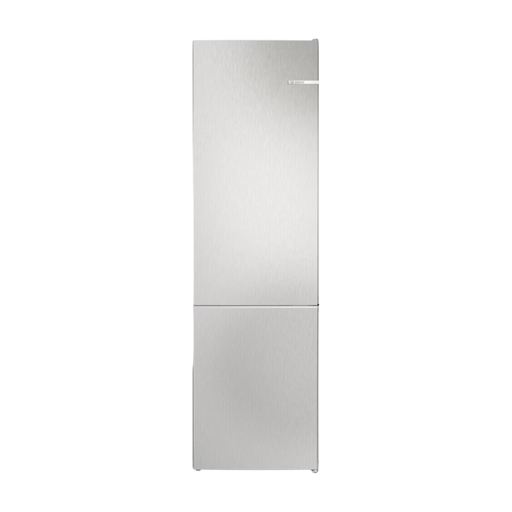 No image available
An option for anyone who wants to store prepared food in the fridge and also needs a freezer compartment.
No Frost.
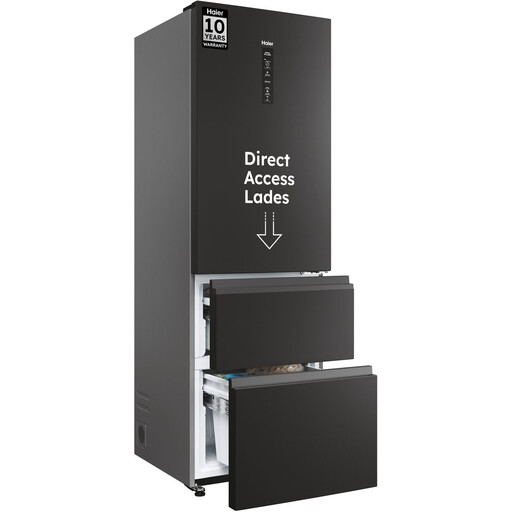 No image available
Suited to anyone who wants to combine chilled preparations with freezer space and take freezer maintenance into account.
Total No Frost, Wi-Fi and 3D Cooling, according to the product name.
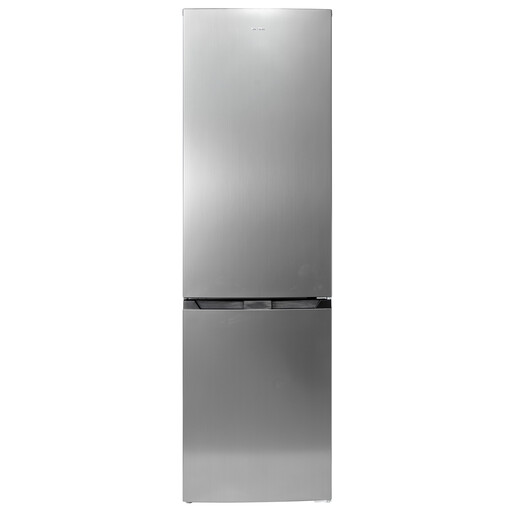 No image available
An option for anyone who wants to store chilled ingredients and other supplies in a fridge-freezer.
253 l net capacity; No Frost; reversible door.
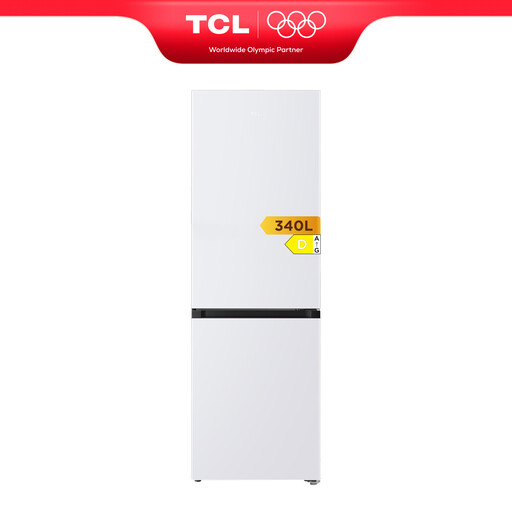 No image available
Worth comparing if you want to weigh the stated fridge capacity against the freezer capacity.
340 l total capacity: 223 l fridge space and 117 l freezer space; Total No Frost; energy class D.
 No image available
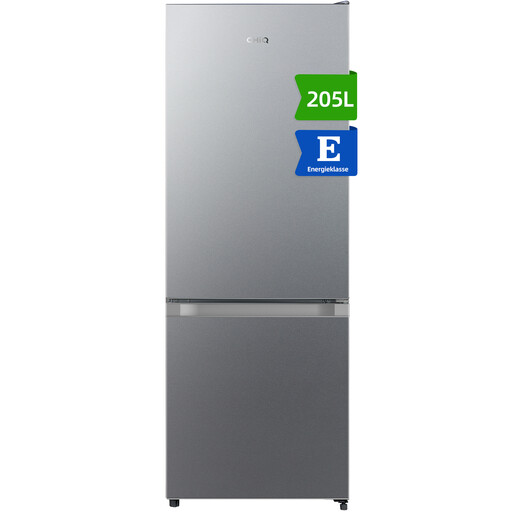
A more compact option for anyone who wants a freezer compartment as well as fridge space, and can check the dimensions in advance.
205 l total capacity: 153 l fridge space and 52 l freezer space; Low Frost; reversible door. Low Frost does not mean that manual defrosting is no longer needed.
The Netherlands Nutrition Centre recommends setting your fridge to 4 °C. Place a fridge thermometer in the middle of the bottom shelf and leave it there for half a day or overnight before checking the temperature.
For dishes containing raw egg, the Netherlands Nutrition Centre recommends storing them in the fridge for no more than 24 hours. It advises pregnant women, young children, older people and those with weakened immune systems not to eat these dishes; a fridge-freezer does not change this advice.
The energy label shows the energy class, which ranges from A to G. For models that suit your kitchen and the amount of food you store, also compare the stated annual consumption in kWh, as the Dutch government recommends when checking energy labels for household appliances.
According to ACM ConsuWijzer, if a product develops a fault sooner than reasonably expected under normal use, the seller is responsible for providing a solution under the legal guarantee. The Dutch government lists the shop or online retailer where you buy a new, similar appliance, and your local council recycling centre, as options for disposing of an old household appliance.