When choosing a fridge-freezer for desserts, start by checking the usable fridge shelves and whether you can control the temperature. The stated total capacity won’t tell you whether your dishes will fit. Next, measure the space where it will go and work out how much freezer space you really need. The Voedingscentrum recommends setting your fridge to 4 °C, but that setting doesn’t prove that every shelf or dessert is actually at that temperature.
Who is this guide for?
Workshop host making perishable desserts
For example, you store cream-filled cakes and want to be able to check the temperature. If you prepare or sell food as a business, you must also comply with the food safety requirements that apply to those activities; the NVWA sets out the relevant conditions.
Making several trays of desserts
You need fridge shelves that can accommodate your dishes. Measure them and check that they’ll fit through the door, too. The Consumentenbond points out that the stated capacity doesn’t always show how much you can practically fit in a fridge.
Workshop host with limited kitchen space
Your choice depends on the external dimensions, clearance for the door and the space available or the size of the built-in alcove. For a built-in model, you’ll also need to check the alcove and hinge type.
What should you look for?
Start with the space your desserts need and temperature control. Then compare installation requirements, energy use and how much freezer space you’ll actually use.
| What to consider |
What to look for when buying |
Who is this important for? |
| Temperature control |
Check whether the temperature is adjustable and use a thermometer to measure the temperature inside the fridge. A door alarm is no substitute for taking a measurement. |
If I’m storing perishable desserts, I don’t want to rely on the display alone; I want to be able to check the temperature. Around 33% of consumers put temperature control first when storing these kinds of desserts. |
| Space for dessert dishes |
Measure your largest dish, including its lid, and compare the dimensions with the shelf, available height and door opening. |
When I’m chilling several dishes at once, I want to be able to fit them in and reach them easily. Around 27% of consumers give fitting space for dessert dishes their top priority. |
| Positioning in the kitchen |
Measure the space, delivery route and doorway. For a built-in model, check the alcove dimensions and hinge type as well. |
If my kitchen is short on space, I want to know in advance whether a freestanding model or built-in appliance will fit. Positioning is the top priority for around 20% of consumers. |
| Energy use |
Compare the annual energy use in kWh of models with enough fridge space, and calculate the cost using your own electricity tariff. |
For regular workshops, I want to factor in annual energy use without choosing a bigger fridge than I need. Around 13% of consumers focus mainly on energy use. |
| Freezer space and maintenance |
Compare the separate freezer capacity and drawer dimensions with your needs. Also check whether the model has No Frost. |
If I want to freeze ingredients or desserts, usable freezer space matters. Otherwise, I don’t want to mistake it for fridge space for dishes. Around 7% of consumers prioritise freezer space or less defrosting. |
Common buying mistakes
-
Assuming the total capacity tells you how much space there is for dessert dishes
The stated capacity of a fridge-freezer includes both the fridge and freezer compartments, and doesn’t tell you how the shelves are arranged. If the layout doesn’t work for you, you may need a different way to keep things chilled.
Compare the fridge capacity separately and measure your largest dishes, including their lids.
-
Taking a temperature display or door alarm as proof that desserts are cold enough
The temperature you set for the fridge and the temperature of the food are not the same thing. A door alarm alerts you when the door is open, but it doesn’t measure the dessert.
Check the fridge temperature with a thermometer. If you’re preparing food as a business and the relevant rules apply, follow the food temperature checks in your food safety plan.
-
Choosing a built-in model based only on its external dimensions
A built-in fridge must also fit the alcove and have the right hinge type. Choosing the wrong model may mean altering your kitchen or arranging professional installation.
Compare your existing alcove and hinge type with the documentation for the exact model.
-
Prioritising extra freezer space or the purchase price over what you actually need
Extra freezer capacity won’t give you more fridge shelves. Annual energy use varies by model, and running costs also depend on your tariff and how you use it.
First work out how much fridge and freezer space you need. Then compare the annual energy use in kWh of models with a layout that suits you.
Brands to consider
Bosch
The freestanding KGN33NWDA is worth considering if you want to compare a model with a door alarm and separately stated fridge and freezer capacities.
- Bosch lists 189 l of fridge space, 90 l of freezer space, Total NoFrost and a door alarm for this model.
- These specifications don’t tell you whether your dishes will fit or what temperature a dessert will reach in a particular spot.
Inventum
According to Inventum, the freestanding KV1841B has separately stated fridge and freezer compartments.
- Inventum lists 205 l of fridge space, 110 l of freezer space, No Frost, 35 dB and an adjustable fridge temperature of 2 to 8 °C.
- The temperature you set is not the same as the measured temperature of the food. Check separately whether your dishes will fit.
Samsung
The freestanding RB38C7B6AB1/EF is worth comparing if you’re considering both fridge space and the energy label.
- Samsung lists a capacity of 387 l and an energy rating of A for this variant.
- Check the shelf dimensions and base your choice on specific specifications, not a brand’s claim about freshness.
Beko
The B3RCNO256S is worth looking into if you have limited space for the appliance.
- Beko lists a width of 54 cm, No Frost and energy class C for this model.
- The external width doesn’t tell you how much usable space the shelves offer.
Siemens
The built-in KI96NVFD0 is worth considering if your kitchen has a suitable alcove and you need a flat hinge.
- Siemens lists 215 l of fridge space, 75 l of freezer space and a door alarm for this model.
- Check the alcove dimensions and hinge type. Don’t choose a built-in model if you need a freestanding appliance.
Fridge-freezers at Joybuy
This selection includes freestanding and built-in fridge-freezers to compare for keeping desserts chilled during a cooking workshop.
 No image available
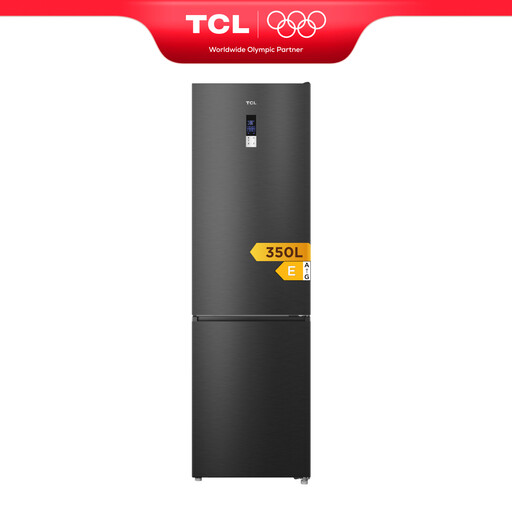
TCL RP455BBE0NL fridge-freezer
Worth comparing if you need plenty of fridge space for desserts and would also like a variable-temperature zone.
350 l total capacity, including 248 l of fridge space and 102 l of freezer space; variable-temperature zone and Total No Frost.
View at Joybuy
 No image available
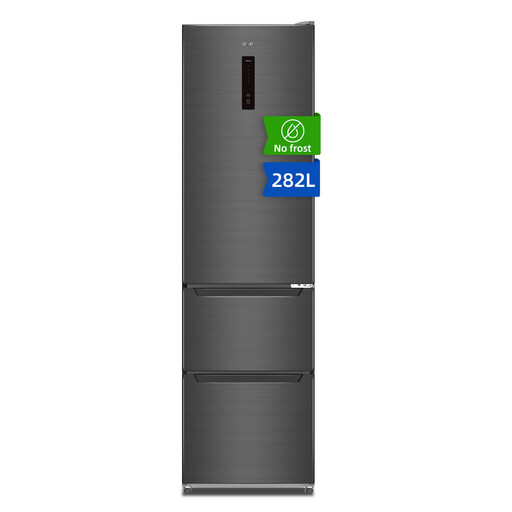
CHiQ CID282NEIBE fridge-freezer
A freestanding option worth comparing if you have limited width in your kitchen.
282 l total capacity and 197 l of fridge space; 540 mm wide, No Frost, Super Cool and Multi-Airflow.
View at Joybuy
 No image available
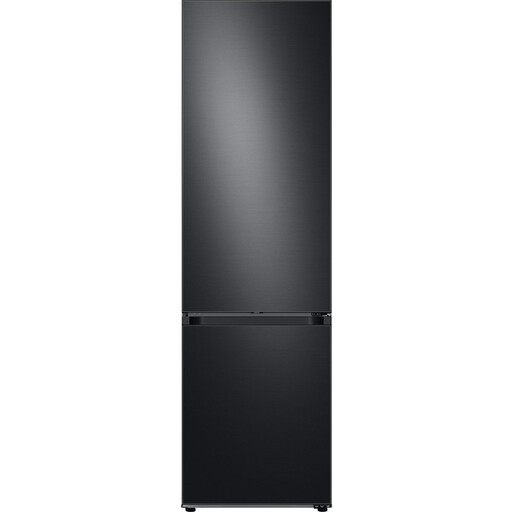
Samsung RB38C7B6AB1/EF fridge-freezer
A freestanding option worth comparing if you’re looking for plenty of fridge space and adjustable cooling.
387 l total capacity and 273 l of fridge space; No Frost, Cool Select+ with four settings and Power Cool; energy class A.
View at Joybuy
 No image available
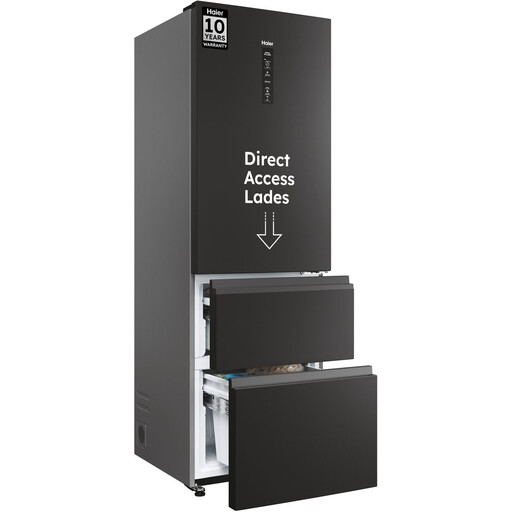
Haier HTW5618DNPT fridge-freezer
Worth comparing if you want to store chilled desserts on adjustable shelves.
235 l of fridge space; four glass shelves, three of them adjustable, Total No Frost and a reversible door.
View at Joybuy
 No image available
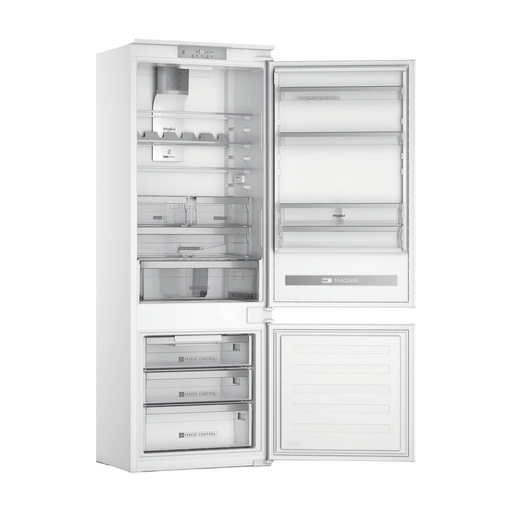
Whirlpool SP40812EU2 built-in fridge-freezer
A built-in option worth comparing if your kitchen has a suitable alcove and a door alarm would be useful.
299 l of fridge space, glass shelves and a door alarm. Required alcove: 194,4 × 72 × 55 cm; the product information states that professional installation is required.
View at Joybuy
Frequently asked questions
Is 4 °C a legal limit for all desserts at a workshop?
No. The Voedingscentrum recommends setting your fridge to 4 °C; this is not, in itself, a uniform legal limit for food products. For perishable food sold from home, the NVWA specifies a storage temperature below 7 °C and checks on the temperature of the food. If you’re operating a food business, follow the relevant hygiene code or food safety plan, as well as the requirements for the specific product.
Does every cooking workshop need an HACCP food safety plan?
You can’t determine that from the description of a workshop alone. The NVWA states that the requirement applies to businesses that prepare, process or sell food; whether it applies to your workshop depends on what you do. So don’t automatically treat a private workshop as a food business.
How can you check the fridge is cold enough before putting desserts in?
Set the fridge to 4 °C, in line with the Voedingscentrum’s advice, and check the temperature with a fridge thermometer. The NVWA says that, for the business food preparation described, the fridge display does not replace measuring the temperature of perishable food.
How do you compare energy use and arrange disposal of your old fridge?
Compare the annual energy use in kWh on the EU energy label and use your own electricity tariff to estimate running costs. According to the Dutch Government, the free old-for-new scheme applies to private individuals buying a similar new appliance; it does not apply to businesses.


