
Cookery workshop host using fresh ingredients
Needs well-organised fridge space for mushrooms and other ingredients, and wants to be able to check the temperature. The Netherlands Nutrition Centre recommends keeping mushrooms chilled.


Choose a fridge freezer based on the usable fridge space for mushrooms and other workshop ingredients. Then compare how much freezer space you really need, and check the external dimensions and annual energy consumption. The Netherlands Nutrition Centre recommends setting your fridge to 4 °C and checking the temperature: a freshness drawer or NoFrost function is no substitute for doing so. If you prepare or sell food commercially, also follow the applicable HACCP requirements and the storage instructions on product labels, as explained by the Netherlands Food and Consumer Product Safety Authority (NVWA).
Needs well-organised fridge space for mushrooms and other ingredients, and wants to be able to check the temperature. The Netherlands Nutrition Centre recommends keeping mushrooms chilled.
Needs enough fridge and freezer space within the available external dimensions. The Consumers’ Association points out that stated capacity is measured without drawers, shelves and racks, so the usable space may differ.
Wants to freeze food for later as well as store fresh ingredients, and weighs up the freezer space needed against energy consumption. The Netherlands Nutrition Centre recommends blanching mushrooms before freezing them.
First work out how much space your fresh ingredients need. Then choose the freezer capacity that suits the food you plan to store.
| What to consider | What should you look for? | Who is this important for? |
|---|---|---|
| Temperature for fresh mushrooms | The Netherlands Nutrition Centre recommends 4 °C. Check the actual temperature with a fridge thermometer and follow the storage advice for mushrooms. | If I want to store fresh mushrooms during the workshop, I want to be able to set and check the temperature. Around 37% of consumers prioritise temperature control for fresh ingredients. |
| Usable fridge space | Compare fridge and freezer capacity separately. Also check the shelves and drawers, and measure the space available for the appliance. | When I’m preparing ingredients for several participants at once, I want to know whether everything will fit practically in the fridge. Around 27% of consumers are most concerned about usable fridge space. |
| Space for frozen food | Decide which foods you’ll actually freeze, then compare the stated freezer capacity and layout. | If I want to store ingredients for later, a freezer compartment that suits my needs is more important than extra freezer space that will go unused. An estimated 18% of consumers prioritise freezer storage for food they’ll prepare later. |
| Energy consumption | For models of a suitable size, compare the EU energy label and annual consumption in kWh. Milieu Centraal recommends taking the energy label’s consumption figure into account. | If I use the appliance regularly, I want to compare annual energy consumption without choosing a larger model than I need. Around 18% of consumers consider energy consumption their main purchasing concern. |
Fridge and freezer capacities are separate figures. What’s more, the stated capacity isn’t all practically usable, as drawers and shelves take up space, for example.
Check the fridge space, shelves and drawers separately, and compare them with the ingredients you’ll be storing during the workshop.
An awkward layout could mean you need a second fridge, which would also require extra space.
A feature name doesn’t prove that mushrooms will keep for longer in a particular model. The actual temperature and storage advice still matter.
Follow the Netherlands Nutrition Centre’s advice and check the temperature independently of the features listed for a model.
The freestanding KGN33NLEB is an example of a fridge freezer with separate fridge and freezer compartments.
The RB38C607AB1/EF is a fridge freezer with a total capacity of 387 l, according to Samsung.
The CNdgc 5213 Pure NoFrost is a fridge freezer with EasyFresh.
The B5RCNE366HG is a freestanding fridge freezer with the freezer compartment at the bottom.
The RF260BSE0 is a model worth considering as you explore fridge freezers.
This selection includes fridge freezers for both limited installation space and storing more chilled ingredients alongside frozen food.
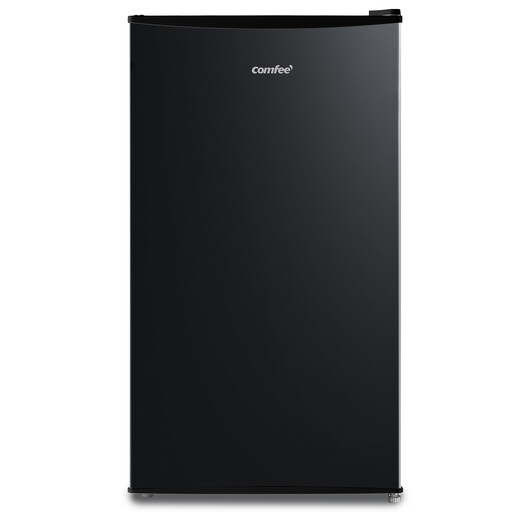 No image available
Suits a workshop kitchen where external dimensions need to be kept small, but both fridge and freezer space are required. The product information states that this appliance is intended for domestic food storage only; check that it’s suitable before using it commercially.
68 l of fridge space and 12 l of freezer space; dimensions 84,5 × 47,5 cm; reversible door; energy class E.
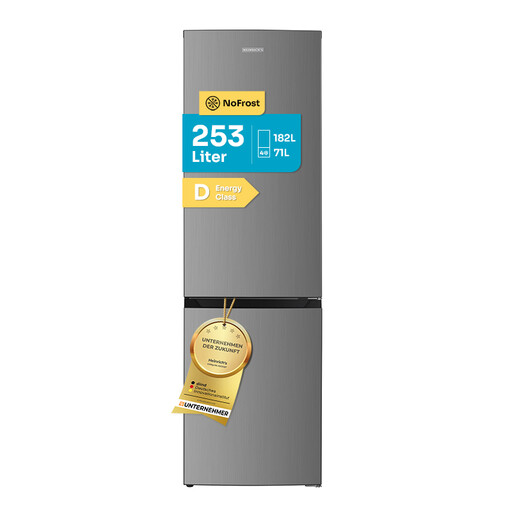 No image available
Suits anyone looking to divide space between chilled ingredients and food for the freezer.
182 l of fridge space and 71 l of freezer space; 39 dB; No Frost; reversible door; stainless steel finish.
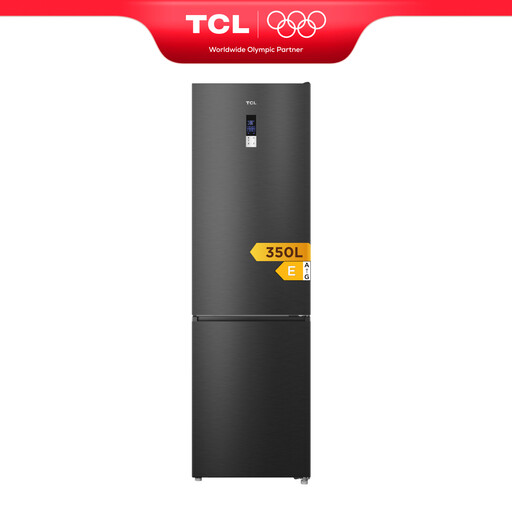 No image available
Suits anyone comparing models that offer plenty of space for chilled workshop ingredients as well as a separate freezer compartment.
248 l of fridge space and 102 l of freezer space; energy class E.
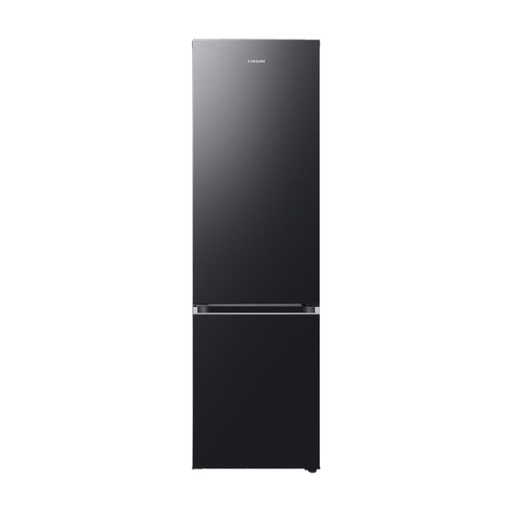 No image available
Suits anyone comparing a fridge freezer’s stated energy consumption and energy class, alongside the layout needed for their workshop.
108 kWh per year; energy class A; stated height 2030 mm; Premium Black Steel finish.
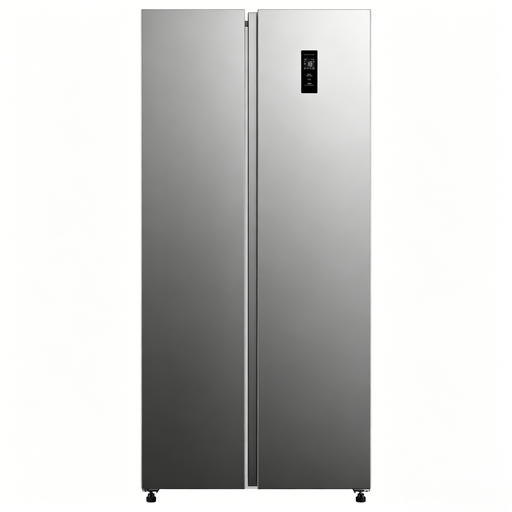 No image available
Suits anyone comparing a fridge freezer with a large fridge and freezer capacity who has enough space for the appliance.
276 l of fridge space and 168 l of freezer space; 83 cm wide; No Frost; digital temperature control; 40 dB; energy class E.
The Netherlands Nutrition Centre recommends storing opened mushrooms in a paper bag or sealed container, and gives a storage time of 3 days in the fridge for raw mushrooms. Ideally, set your fridge to 4 °C and check the temperature with a fridge thermometer.
No. The Netherlands Nutrition Centre recommends blanching mushrooms before freezing them. For raw mushrooms, it gives a storage time of 3 months in the freezer.
If a business prepares, processes or sells food, the NVWA requires a HACCP food safety plan or an appropriate, approved hygiene code. For pre-packed food, follow the storage temperature on the label. If no temperature is given, the NVWA specifies 7 °C or below, or −18 °C or below for frozen products. This is different from the Netherlands Nutrition Centre’s general recommendation to set a fridge to 4 °C.
The EU energy label for fridges and freezers includes the efficiency class on a scale from A–G, annual consumption in kWh, capacity and noise level. Compare models that are both the right size and layout for your workshop.
According to the Dutch government, if you make a claim under the statutory guarantee, the seller—not the manufacturer—must provide a solution. The Netherlands has no fixed statutory guarantee period; what you can expect depends partly on the product and normal use. For a business purchase, check the applicable terms separately.