For cooked chicken brought home from a market, being able to set the fridge compartment to 4 °C matters more than having a large freezer compartment. The Netherlands Nutrition Centre advises keeping this food covered in the fridge, not freezing it and eating it within one day. Choose your freezer capacity based on other shopping or portions you have cooked yourself. Also check the separate compartment capacities, external dimensions and annual energy consumption.
Who is this buying guide for?
Market-bought cooked chicken
You want to be able to put the food you bring home in the fridge, covered, as soon as possible, and follow the storage advice before choosing extra freezer capacity. The Netherlands Nutrition Centre advises storing takeaway food brought home at 4 °C and not freezing it.
Home cook with extra portions
You want to chill or freeze home-cooked chicken in sealed portions. This is a different storage scenario from takeaway food brought home; the Netherlands Nutrition Centre provides separate storage advice for cooked chicken breast.
Buyer with limited kitchen space
You need to consider the space available and whether to choose a freestanding or built-in model. Compare the external dimensions and the capacities of the fridge and freezer compartments separately, as Milieu Centraal and the Consumers' Association also recommend.
What should you look for when buying?
Start by checking the right storage method for the chicken you bring home. Then choose a fridge layout and freezer capacity to suit the rest of your shopping and your kitchen.
| What to consider |
What to look for when buying |
Who should prioritise this? |
| Chilling cooked chicken promptly |
Check whether the fridge compartment can be set to 4 °C and has room for a sealed container. |
If you bring cooked chicken home from the market, you’ll want to be able to chill it covered as soon as possible and follow the storage advice. Around 36% of consumers say chilling food promptly is their top priority. |
| Freezer space for other food |
Compare the freezer capacity and drawer layout; also check whether No Frost is useful for your needs. |
If you want to freeze other products or home-cooked portions as well as your market shopping, focus on usable freezer space. Around 29% of consumers put this need first. |
| Suitable dimensions and installation |
Measure the available space; for built-in models, also check the niche and door construction. |
If space is limited or you need to work with an existing kitchen design, you’ll want to know in advance whether the model will fit. Around 21% of consumers say a suitable fit is their top priority. |
| Energy consumption |
Compare the annual kWh consumption, compartment volumes and noise level on the EU energy label. |
If energy use is a factor for you, compare models with suitable capacities by their annual consumption. Around 14% of consumers put running costs first. |
Common buying mistakes
-
Thinking a freezer compartment will make chicken safe after a long journey
For takeaway food brought home, the Netherlands Nutrition Centre advises storing it at 4 °C, not freezing it and eating it within one day. A larger freezer compartment doesn’t change this advice.
Plan how you’ll chill the food when you get home and follow the advice that applies to the chicken’s source. Choose freezer capacity for other products or a different suitable storage scenario.
If the food can no longer be used in line with the relevant storage advice, it may go to waste.
-
Looking only at the total capacity
A suitable total capacity doesn’t tell you how much space is available separately for chilled chicken and frozen food.
Compare the fridge and freezer capacities separately, and check whether there’s room for a sealed container on a shelf.
-
Choosing a model based on width alone
Height and depth also determine whether a fridge freezer will fit in the space you’ve chosen. For built-in models, the niche and door construction matter too.
Before buying, check all the external dimensions and, for built-in models, the dimensions and construction of the niche as well.
Brands compared
Bosch
The freestanding KGN39VIBT fridge freezer is an example of a Bosch model with separately stated fridge and freezer capacities.
- Bosch lists No Frost, 260 l of fridge space, 103 l of freezer space and energy class B for the KGN39VIBT.
- The stated external dimensions are 203 × 60 × 66,5 cm. Check whether this specific size will fit; these details don’t automatically apply to other Bosch models.
Samsung
The freestanding RB38C7B6AB1/EF is a Samsung model whose external dimensions can be included when comparing the space available in your kitchen.
- Samsung lists a width of 595 mm, a height of 2030 mm and a depth of 658 mm for this model.
- Samsung’s product information gives both 387 l and 390 l. Check the product information sheet before using the capacity as a definitive comparison figure.
Liebherr
The freestanding CNsda 5723 Plus NoFrost is a Liebherr model with stated external dimensions and total volume.
- Liebherr lists external dimensions of 201,5 × 59,7 × 67,5 cm, a total volume of 371 l and a noise level of 34 dB for the CNsda 5723 Plus NoFrost.
- The total volume doesn’t show how much space is available for chilled chicken. Check the capacity of each compartment separately.
Beko
Beko’s range includes freestanding fridge freezers, such as the B3RCNO255W model.
- Beko lists the B3RCNO255W as a 54 cm-wide No Frost model.
- For this specific model, also check the other external dimensions and the capacity of the fridge and freezer compartments.
Fridge freezers at Joybuy
These are freestanding fridge freezers. Compare their fridge and freezer capacities, dimensions and features to find the right fit for your needs.
 No image available
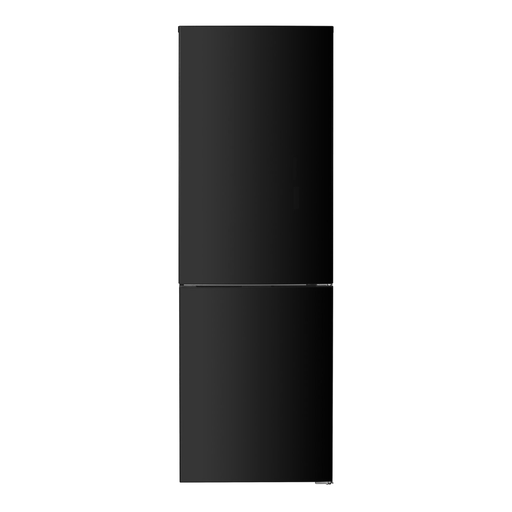
Exquisit KGC295‑80‑NF‑041EB
A freestanding model with separate fridge and freezer compartments, for comparing the capacity of both.
Stated capacity: 210 l fridge space and 83 l freezer space, 293 l total. No Frost. Dimensions: 186 × 60 × 62 cm. Energy class E.
View at Joybuy
 No image available
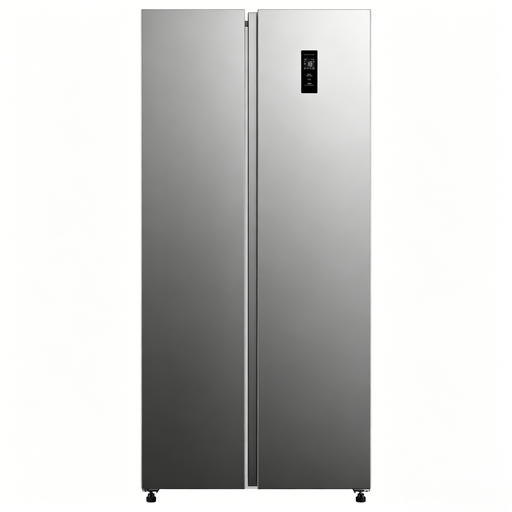
Sonlu CC-520WE
A side-by-side model to consider if you’re looking for a wide design with separate fridge and freezer compartments.
Stated capacity: 276 l fridge space and 168 l freezer space, 444 l total. Width: 83 cm. No Frost and digital temperature settings for the fridge and freezer. Energy class E.
View at Joybuy
 No image available
TCL RF338BSE0
A model to compare if you’re looking for a stated width of 55 cm and want to be able to set the fridge to 4 °C.
Stated capacity: 187 l fridge space and 73 l freezer space, 260 l total. The stated fridge temperature range is 2 to 8 °C. Reversible door. Energy class E.
View at Joybuy
 No image available
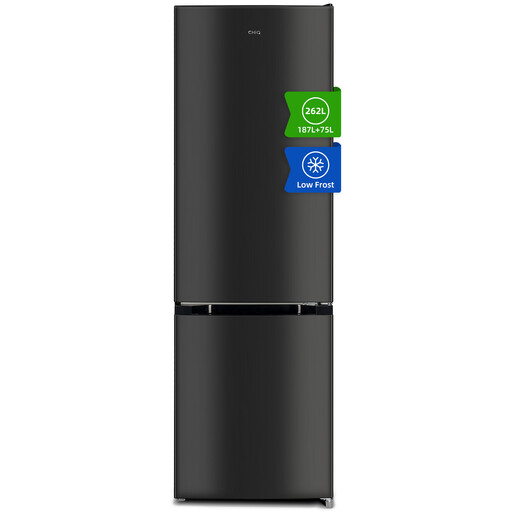
CHiQ JR263LGE
A model with a bottom freezer compartment to include when comparing layout and freezer features.
Stated capacity: 262 l. Low Frost, a 4-star freezer compartment and a reversible door.
View at Joybuy
 No image available
Midea MDRB457FGE46
A freestanding model with separately stated fridge and freezer capacities, so you can compare the split with your storage needs.
Stated capacity: 232 l fridge space and 98 l freezer space, 330 l total. Total Frost Free and Super Cooling. Dimensions: 59,5 × 57 × 186 cm. Energy class E.
View at Joybuy
Frequently asked questions
How long can I keep cooked chicken bought at the market in the fridge?
For takeaway food brought home, the Netherlands Nutrition Centre advises keeping it covered at 4 °C, not freezing it and eating it within one day. The general Storage Guide gives a different storage period for cooked chicken breast; don’t automatically apply it to takeaway food brought home.
Can I freeze chicken from a market stall if my fridge freezer has a large freezer compartment?
Not according to the Netherlands Nutrition Centre’s specific advice for takeaway food brought home: it advises against freezing it. Different storage advice applies to home-cooked chicken, so first check which scenario applies.
What should I do with takeaway food when I get home?
The Netherlands Nutrition Centre advises putting it in the fridge at 4 °C as soon as possible, covered and separate from other products. Leftovers should be piping hot all the way through when reheated; don’t reheat them for a third time.
What should I compare for energy use and warranty in the Netherlands?
On the EU energy label, compare details such as annual consumption in kWh, compartment volumes and noise level. According to the Dutch government, if there’s a problem with a product you’ve bought, the seller must provide a solution; an additional manufacturer’s warranty doesn’t replace your statutory warranty.
Do household fridge freezers in the Netherlands have an energy label?
Yes. Household fridges and freezers covered by EU rules are subject to energy labelling and ecodesign requirements. The European Commission states that, since 1 March 2021, current EU energy labels have used a scale from A to G; buyers aren’t required to choose a particular minimum class.


