
Host serving perishable desserts
You want to store cream cakes and other chilled desserts, and be able to check the actual fridge temperature. The Netherlands Nutrition Centre recommends setting your fridge to 4 °C.


Choose a fridge-freezer with shelves that can accommodate your dessert packaging flat, and check the actual fridge temperature with a thermometer; the Netherlands Nutrition Centre recommends setting it to 4 °C. Then compare the fridge and freezer capacities separately, the stated annual energy consumption and the space available for installation. Extra freezer space is only useful if you need it, and it does not replace space for desserts that need to stay chilled.
You want to store cream cakes and other chilled desserts, and be able to check the actual fridge temperature. The Netherlands Nutrition Centre recommends setting your fridge to 4 °C.
You need flat, accessible fridge space as well as room for your everyday groceries. The Consumers' Association points out that total capacity is not the same as the usable space on a shelf.
You want an appliance that suits your kitchen and daily needs, without unnecessary capacity or energy use. The Consumers' Association and Milieu Centraal recommend taking size and energy consumption into account.
First, work out which items need to stay chilled and how much space your kitchen has. Then compare annual energy consumption and freezer capacity based on your everyday needs.
| What to consider | What to check | Who it matters to |
|---|---|---|
| Storage temperature | Set it to 4 °C and check the temperature with a fridge thermometer. | If I’m storing cream cakes, I want to know how cold it is on the shelf, rather than relying on the dial alone. Around 36% of consumers give reliable storage temperature the highest priority. |
| Flat fridge space | Measure your largest item and compare usable shelf space and adjustability. | For a cake box, I need a flat shelf that’s big enough, without having to squeeze in the everyday groceries. Around 29% of consumers prioritise fridge space and layout. |
| Annual energy consumption | Compare the energy label and stated kWh per year for models with a suitable capacity. | As the fridge runs all year round, I want to weigh up the stated energy use against the capacity I’ll actually use. Around 21% of consumers prioritise everyday energy consumption. |
| Installation | Measure the access route and available space; check the external dimensions, door opening and ventilation clearance. For built-in models, also check the housing niche and door-fitting system. | If the space in my kitchen limits my choice, I want to know in advance whether the appliance will fit and the door will open. Around 14% of consumers give the best fit for installation the highest priority. |
The stated total capacity includes the freezer compartment too, and doesn’t tell you whether a box will fit flat on a shelf.
Measure your largest item and compare the fridge space and shelf layout separately.
An energy label alone doesn’t tell you how much capacity you need or what the stated annual energy consumption is. Milieu Centraal recommends choosing a suitable size and comparing energy use too.
Compare the kWh per year for models with fridge and freezer capacities that suit your needs.
Freezer space doesn’t replace room for desserts that need to stay chilled. The Netherlands Nutrition Centre says the quality of frozen cream cake may deteriorate.
Check the storage advice for each dessert and consider both fridge and freezer space.
The available space, door opening and ventilation clearance all affect installation. With built-in models, the housing niche dimensions and door-fitting system matter too.
Check the model’s manual and measure the access route, installation space and required clearance before ordering.
The freestanding KGN36VICT is a good example of a fridge-freezer that’s shorter than some taller models.
The GBV7280AEV is an example of a tall freestanding fridge-freezer with a folding shelf.
The RB38C607AS9/EF is a tall freestanding fridge-freezer with separate fridge and freezer compartments.
The CNsfd 5204 and ICNSd 5123 illustrate different installation options: freestanding and built-in.
These fridge-freezers are suitable for keeping desserts chilled alongside your everyday groceries. Compare the fridge space, shelf layout, stated annual energy consumption and available installation space.
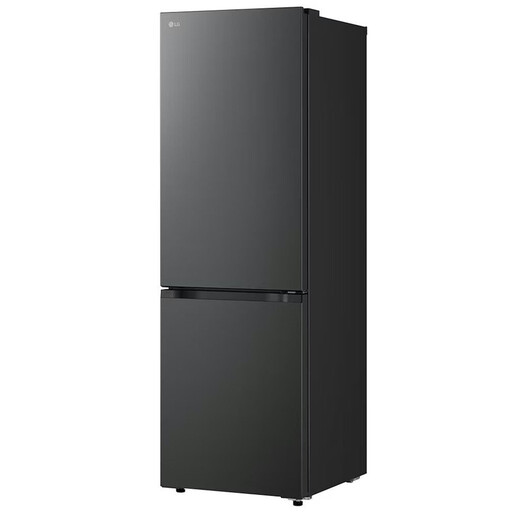 No image available
For chilled desserts alongside your everyday groceries, this model has 220 l of fridge space and adjustable glass shelves, according to the listed specifications.
The stated energy class is C, with annual energy consumption of 172 kWh.
Electronic temperature control and SuperCool are also listed.
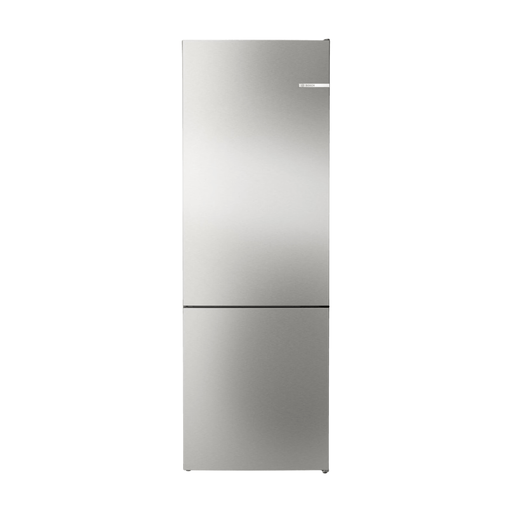 No image available
An option if you’re looking for a larger fridge-freezer; check the stated external dimensions before deciding where to put it.
The stated dimensions are 203 × 70 × 66,7 cm.
The stated energy class is A, with annual energy consumption of 122 kWh. SuperCooling and Multi Airflow are also listed.
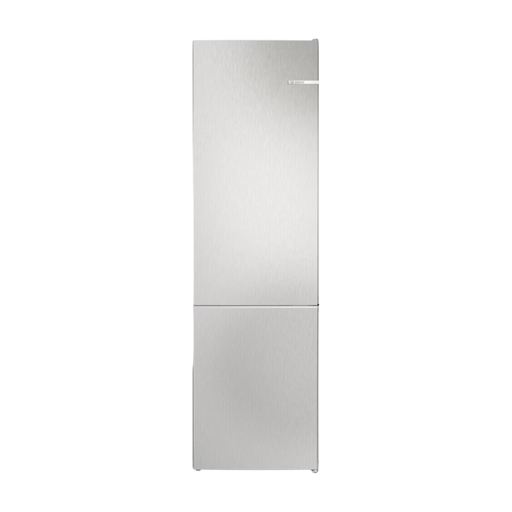 No image available
For desserts and everyday groceries, the product information lists 260 l of fridge space and separate electronic temperature control.
The stated energy class is A, with annual energy consumption of 112 kWh.
Pull-out EasyAccess shelves and SuperCooling are also listed.
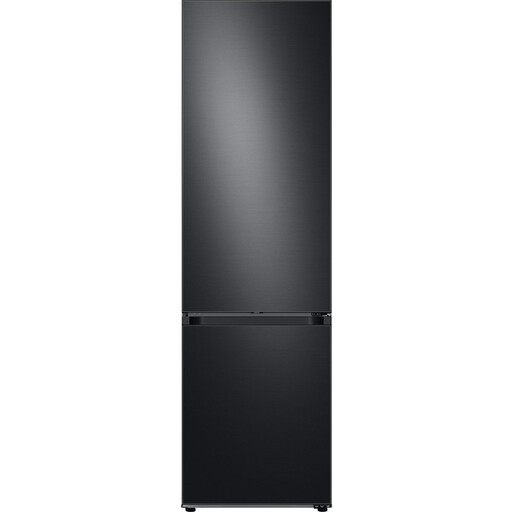 No image available
For chilled food alongside frozen supplies, the stated fridge capacity is 273 l and the freezer capacity is 114 l.
The stated energy class is A, with annual energy consumption of 108 kWh.
A digital temperature setting and a multifunctional rack are also listed.
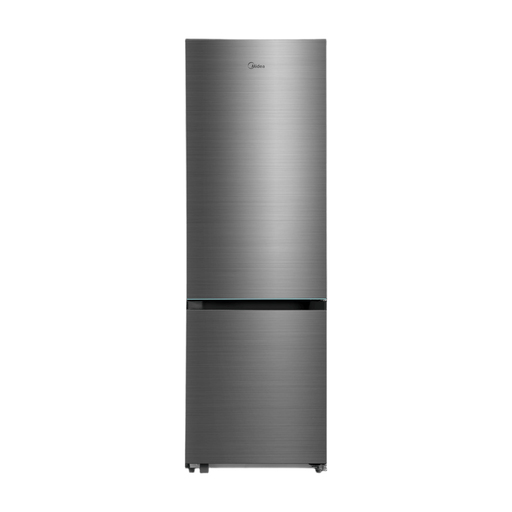 No image available
For chilled desserts alongside frozen food, the product information lists 232 l of fridge space and four fridge shelves.
The stated energy class is E, with annual energy consumption of 248 kWh.
Electronic temperature control and a reversible door are also listed.
Set the fridge to 4 °C and check the temperature with a fridge thermometer. The Netherlands Nutrition Centre recommends placing the thermometer in the middle of the bottom shelf and leaving it there for half a day or overnight. Adjust the fridge if the reading is too high.
According to the Netherlands Nutrition Centre, perishable food should not be left out of the fridge for more than 2 hours. Put it back in as soon as possible, and follow the storage advice for the specific dessert too.
According to the Netherlands Nutrition Centre’s storage guide, opened cream cake can be kept in the freezer for 1 month; its quality may deteriorate after that. For an unopened pack, follow the storage advice and date on the packaging.
The EU energy label shows, among other things, the energy class and annual consumption in kWh. Milieu Centraal recommends choosing a suitable size, so compare the annual energy consumption of models that offer enough fridge and freezer space. Your actual electricity costs also depend on your electricity tariff.
Yes. The European Commission states that energy labelling rules apply to household fridges and freezers. The Dutch Government explicitly lists fridges and freezers among the appliances that must have an energy label.