
Someone sharing chicken leftovers with housemates
You want to store cooked chicken in a sealed, clearly labelled container, separate from raw food, and be able to check the fridge temperature. This is in line with Voedingscentrum’s storage advice.


For cooked chicken in a shared kitchen, a fridge freezer is a suitable choice if you can set and check the fridge temperature at 4 °C, and store chicken in a sealed container, separate from raw food. Then choose based on the space you can actually reserve and the freezer capacity you need if you want to keep portions for longer than two days. Voedingscentrum advises eating cooked chicken breast within two days or freezing it.
You want to store cooked chicken in a sealed, clearly labelled container, separate from raw food, and be able to check the fridge temperature. This is in line with Voedingscentrum’s storage advice.
You make portions that won’t be eaten within two days and need enough usable freezer space for them. Voedingscentrum advises eating cooked chicken breast within two days or freezing it.
You need to fit the appliance into your kitchen while leaving enough fridge and freezer space for everyone to share. Consumentenbond highlights size and type as important factors when choosing; for example, Beko lists the B3RCNO256S as 54 cm wide.
Voedingscentrum advises keeping cooked chicken breast in the fridge for no more than two days and recommends a freezer temperature of at least −18 °C. So check both the temperature and how much space you can actually use in your shared kitchen.
| What to consider | What should you check? | Who is this most important for? |
|---|---|---|
| Safe chilling and separation | Can you set and check the temperature at 4 °C? Is there room for sealed containers, separate from raw food? | If I store cooked chicken alongside raw food in a shared fridge, I want to be able to check the temperature and keep containers separate. Around 33% of consumers prioritise safe chilling and separation. |
| Your own fridge space | Measure the width, height and depth. Also check the layout and agree with your housemates how much space you can use. | When I share shelf space with housemates, I want to know in advance how much room will be left for my sealed containers. Around 27% of consumers put having their own storage space first. |
| Freezer space for portions | Can the freezer compartment reach at least −18 °C? Will your dated portions fit in the available drawers? | If I make portions for later, I want to be able to freeze them without the shared drawers becoming cluttered. Around 20% of consumers prioritise freezing portions. |
| Annual electricity use | Compare the annual energy consumption in kWh on the current energy label for models of a suitable size. | If I choose an appliance that runs all the time, I want to compare the annual electricity use of suitable models. Around 20% of consumers put energy consumption first. |
No Frost or a freshness function doesn’t replace the advice to eat cooked chicken breast within two days or freeze it. It also says nothing about sealing food or keeping it separate from raw products.
Check the temperature, store chicken covered and separate from raw food, and date any portions you freeze.
An appliance may fit, but after you divide the space with your housemates, there may be little room left for your sealed containers.
Measure the space where the appliance will go and compare the separate fridge and freezer capacities, the layout and the space agreed for each housemate.
Fridges have no longer used energy labels with plus signs since 2021. So don’t compare old and current labels as if their ratings were equivalent.
Check the current A–G label and the model’s annual energy consumption in kWh. The European Union’s Your Europe website explains energy labels.
Beko lists the freestanding B3RCNO256S as 54 cm wide, with the freezer compartment at the bottom. This could be useful if you have a narrow space for the appliance.
Inventum lists separate fridge and freezer capacities for the freestanding KV1850B, which can help when comparing shared storage space and room for frozen portions.
Bosch describes the KGN36VLEC as a model with separately adjustable fridge and freezer temperatures.
Liebherr lists a total capacity of 330 l for the freestanding CNsdc 5203 Pure NoFrost.
Samsung lists a capacity of 344 l for the RB34C600ESA/EF fridge freezer.
This selection includes fridge freezers for shared chilled and frozen food, from a 55 cm-wide model to options with more spacious layouts.
 No image available
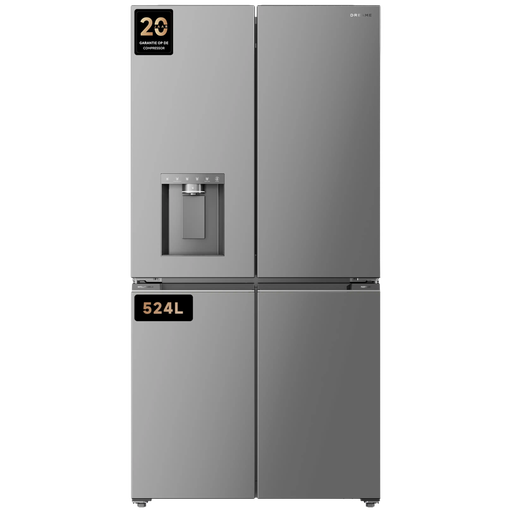
The four-door layout could suit anyone who wants to organise chilled and frozen food in separate zones.
No Frost, Wi-Fi and energy label E.
 No image available
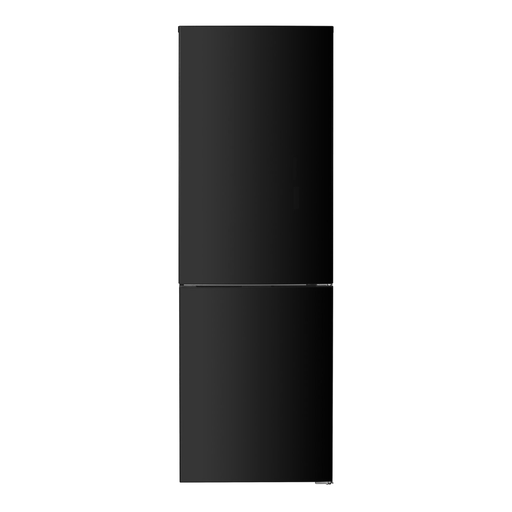
A fridge freezer for anyone who wants to store chilled and frozen food together; check that the layout suits the amount of space agreed for each housemate.
Capacity 293 l; energy label E; No Frost; black.
 No image available
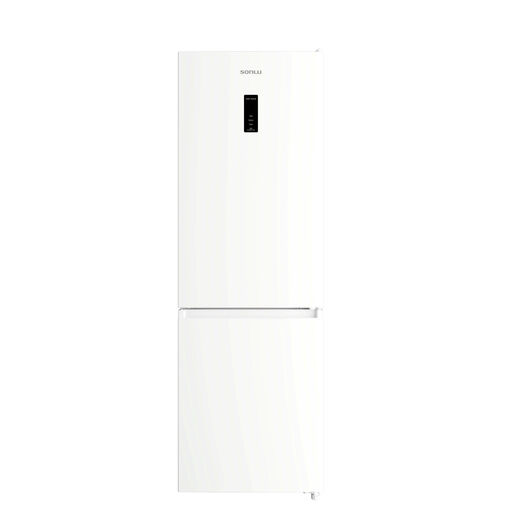
The separate fridge and freezer capacities can help you plan shared storage; measure the available space beforehand.
Fridge 211 l and freezer 99 l; energy label E; No Frost; electronic temperature control; reversible door.
 No image available
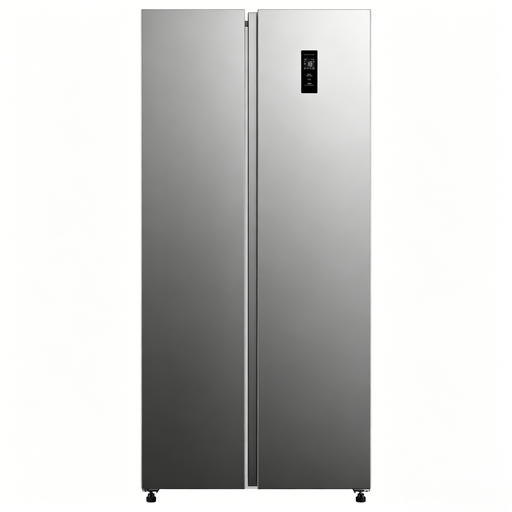
The side-by-side layout could suit anyone who wants to organise several chilled and frozen foods separately; check that it will fit in your kitchen.
Fridge 276 l and freezer 168 l; 83 cm wide; No Frost; digital temperature control; 40 dB; energy label E.
 No image available
The listed width could be useful if you have limited space for the appliance; also check how much usable room will be left for shared containers.
Fridge 187 l and freezer 73 l; energy label E; reversible door; adjustable feet.
Voedingscentrum recommends keeping cooked chicken breast in the fridge for two days and in the freezer for three months; after that, its quality may deteriorate. Cool leftovers quickly, store them in a well-sealed container and don’t leave them out of the fridge for more than two hours. This is storage advice, not a statutory shelf life for every chicken dish.
Voedingscentrum recommends 4 °C for the fridge and at least −18 °C for the freezer. According to this source, a freezer compartment with one or two stars can’t reach this freezing temperature; check the type of freezer compartment and its actual temperature.
Store cooked chicken covered and separate from raw food. In a shared fridge, agree which shelf and containers are for cooked food; having your own shelf doesn’t replace sealed storage and good hygiene.
For appliances of a suitable type and size, compare the annual energy consumption in kWh on the current A–G energy label. This lets you compare energy use side by side without relying on the energy rating alone.
For fridges covered by EU energy labelling rules, the label must also be clearly displayed online, according to the European Union’s Your Europe website. If a product is faulty, contact the seller; the Dutch government states that the Netherlands has no fixed statutory guarantee period.