What should you look for when buying?
Start by checking the fridge space and temperature for your portions of cheese. Then compare the space available and energy consumption, and assess the freezer compartment based on what you actually plan to freeze.
| What to consider |
What to check before buying |
Who should pay particular attention? |
| Fridge temperature |
Check whether you can set the fridge to 4 °C, then measure the temperature once it’s in place using a fridge thermometer. Store cheese sealed and follow the storage advice for that type. |
I want to store sealed portions of cheese alongside my everyday shopping and check they’re being kept cold enough. Around 31% of consumers prioritise storage temperature. |
| Fridge layout |
Compare the fridge capacity separately from the freezer capacity, and check whether the shelves can accommodate portions alongside your usual shopping. |
If I need to fit several portions alongside my everyday shopping, I want enough well-organised fridge space. Around 25% of consumers particularly value the fridge layout. |
| Suitable installation |
For a freestanding model, measure the space available. For an integrated model, check the exact niche dimensions and door fitting; if your kitchen is part of an open-plan living space, also check the stated noise level. |
If my kitchen limits where I can put the appliance, I want to know whether a freestanding or integrated model will fit. Around 19% of consumers consider installation their first priority. |
| Energy consumption |
Compare the stated annual energy consumption in kWh for models with a capacity that suits your needs; don’t base your decision on the energy label letter alone. |
I want to take energy consumption into account without choosing a larger appliance than I need. Around 13% of consumers prioritise annual energy consumption. |
| Usable freezer space |
Compare freezer capacity and No Frost if you freeze suitable foods or want to defrost less often by hand. Check whether freezing is appropriate for each type of cheese. |
If I regularly freeze suitable foods, I want enough freezer space without unnecessary maintenance. Around 12% of consumers prioritise freezer convenience. |
Fridge-freezers at Joybuy
The options below are fridge-freezers suited to storing portions of cheese and everyday shopping. The selection includes freestanding and integrated models, so check the space available and compare the fridge and freezer capacity of each model.
 No image available
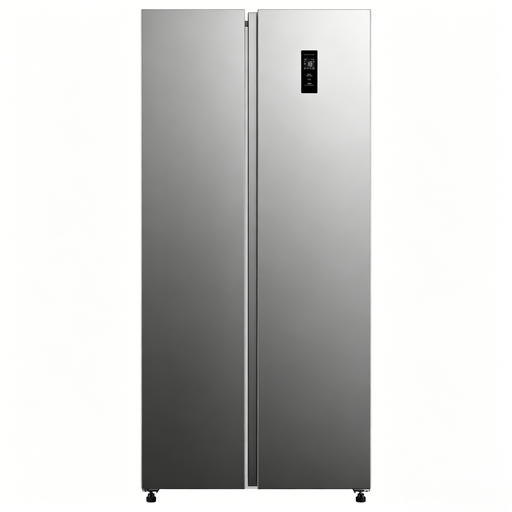
Sonlu CC-520WE side-by-side fridge-freezer
The separately listed fridge capacity may be useful if you want to store portions of cheese alongside other shopping; measure the space available first.
Total capacity 444 l: 276 l of fridge space and 168 l of freezer space. No Frost, separate temperature settings, four glass shelves in each compartment, 83 cm wide, 40 dB and energy label E. Allow space for ventilation and opening the doors.
View at Joybuy
 No image available
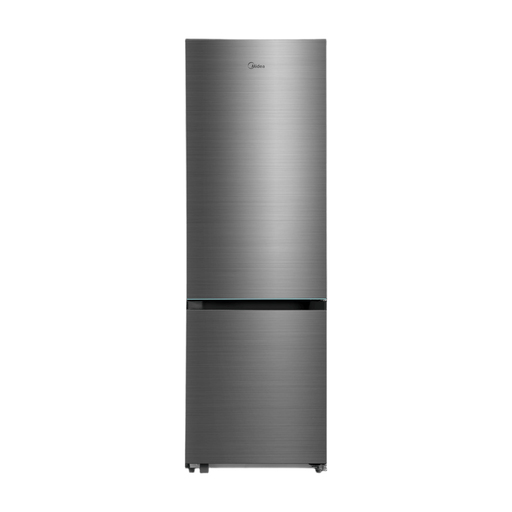
Midea MDRB457FGE46 fridge-freezer
The stated fridge capacity and four fridge shelves give you a good basis for checking whether sealed portions will fit alongside your everyday shopping.
Total capacity 330 l: 232 l of fridge space and 98 l of freezer space. Total Frost Free, four fridge shelves, reversible door, 35 dB and energy label E. The stated dimensions are 59,5 × 57 × 186 cm; also allow space for ventilation and opening the door.
View at Joybuy
 No image available
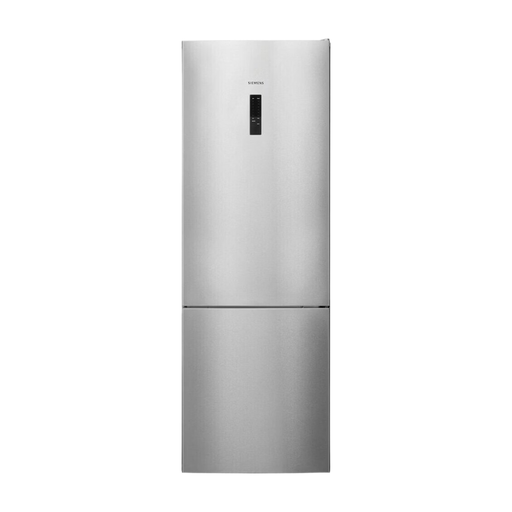
Siemens KG49NXIBF fridge-freezer
The five shelves can help you organise portions alongside your other shopping; use the stated dimensions to check whether the model will fit in your kitchen.
No Frost and Super Freeze. The stated external dimensions are 203 × 70 × 66,7 cm and the noise level is 35 dB. According to the product information, the separate 0 °C zone is designed for meat and fish; don’t assume it’s suitable for storing cheese.
View at Joybuy
 No image available
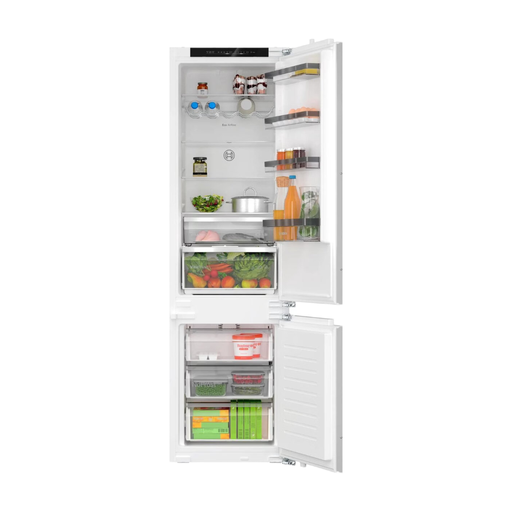
Bosch KIN96VFD0 integrated fridge-freezer
This integrated model is an option if your kitchen has a suitable niche; compare the stated dimensions with your existing housing.
No Frost and two separate cooling circuits. The specifications list 215 l of fridge space and 75 l of freezer space, a reversible door and minimum niche dimensions of 194 × 56 × 55 cm. Follow the installation instructions for this model.
View at Joybuy
 No image available
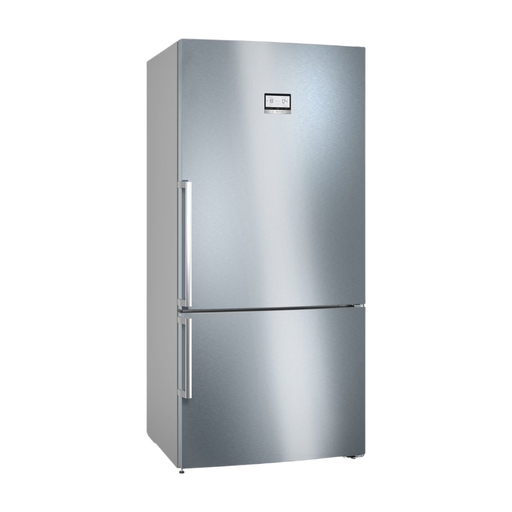
Bosch KGN86AIDR French-door fridge-freezer with water dispenser
The product information describes an XXL fridge with digital temperature settings; measure the space and door clearance before considering a large model.
No Frost. The stated external dimensions are 186 × 86 × 81 cm. The specifications list a VitaFresh Pro compartment.
View at Joybuy
Frequently asked questions
How can I check whether portions of cheese are being kept cold enough?
Set your fridge to 4 °C, as recommended by the Netherlands Nutrition Centre. Place a fridge thermometer in the middle of the bottom shelf and leave it there for half a day or overnight. Adjust the setting if the temperature reading is too high. Store cheese sealed and follow the storage advice for the type in question.
Can I freeze leftover soft cheese?
It depends on the type: the Netherlands Nutrition Centre says soft cream cheese is less suitable for the freezer, while it does recommend freezing fresh goat’s cheese 45+. Check the advice for the specific cheese before factoring freezer space into your decision.
What should I check before installing an integrated model?
Compare the dimensions and door-fitting method for the exact model with your existing niche. For example, Liebherr specifies a niche measuring 177,2–178,8 × 56–57 × 55,0 cm and door-on-door fitting for the ICNc 5103; these dimensions aren’t universal for integrated models.
How do I compare annual energy consumption?
Compare the stated annual energy consumption in kWh for models with a suitable capacity. Milieu Centraal gives approximate figures of 130 kWh per year for a new fridge-freezer with energy label B and 250 kWh for a model with label E; these figures don’t apply to every individual model.
Is there a fixed two-year statutory guarantee period in the Netherlands?
No. According to the Dutch government, there is no fixed statutory guarantee period in the Netherlands. You’re entitled to a product that does what you can reasonably expect it to do; if a product is faulty, contact the seller. Any manufacturer’s guarantee is separate.
Does a new fridge-freezer need an energy label?
EU rules for household refrigerating appliances include requirements for an energy label and product information sheet. EUR-Lex explains, among other things, that sellers must make the required product information clearly available; compare the label for the exact model.


