
A family storing fresh portions of cheese
You buy cheese for a meal or for the next few days and want to keep portions chilled, wrapped and easy to find. The Netherlands Nutrition Centre recommends keeping cheese sealed in the fridge.


Choose a fridge-freezer with enough usable fridge space for packaged cheese portions and the rest of your shopping, and set the fridge to 4 °C, as recommended by the Netherlands Nutrition Centre. Then compare the separate freezer capacity, dimensions and annual energy consumption. The Netherlands Nutrition Centre says that hard 40+ cheese is more suitable for freezing than soft cream cheese.
You buy cheese for a meal or for the next few days and want to keep portions chilled, wrapped and easy to find. The Netherlands Nutrition Centre recommends keeping cheese sealed in the fridge.
As well as fridge space, you want freezer space for cheese portions that are suitable for freezing. The Netherlands Nutrition Centre distinguishes between hard 40+ cheese and soft cream cheese.
You need to balance the available space with fridge and freezer capacity, energy consumption and, if you have an open-plan kitchen, noise. Milieu Centraal recommends choosing a size that meets your needs; the Consumers' Association points out that noise may be a factor in an open-plan kitchen.
Start by looking at the layout and usable fridge space for your cheese and other shopping. Then compare freezer space, energy consumption and how well the appliance will fit in your kitchen.
| What to consider | What to look for | Who should prioritise this? |
|---|---|---|
| Keeping cheese chilled | Set the fridge to 4 °C and check whether the shelves and compartments make it easy to store portions neatly. | If I store opened cheese and other perishable groceries, I want to keep them chilled and easy to find. Around 33% of consumers prioritise refrigeration. |
| Fridge and freezer space | Compare the fridge and freezer capacities separately and check that the drawers are practical for the portions you want to freeze. | For a family meal, I want to have room for other groceries as well as cheese, and only choose extra freezer space if I’ll use it. Around 27% of consumers prioritise space for the family. |
| Energy consumption | Compare the energy label and stated annual consumption in kWh for models that are the right size. | As the fridge is on all the time, I want to take its energy consumption into account when choosing and working out the costs. Around 20% of consumers put electricity costs first. |
| Fit and ease of use | Measure the available space and check the door opening, noise level and whether you want No Frost or LowFrost. | In a small or open-plan kitchen, I want the appliance to fit and be practical to use. Around 20% of consumers prioritise installation and ease of use. |
The Netherlands Nutrition Centre gives different storage advice for hard 40+ cheese and soft cream cheese. Extra freezer space is therefore not equally useful for every type of cheese.
Think about which types of cheese you actually store and check the advice for each type before factoring in extra freezer space.
The energy label lists fridge and freezer capacity separately. Milieu Centraal warns that a fridge that is too large can use electricity unnecessarily.
Compare the separate capacities and drawers with your shopping, and measure the space where the appliance will go.
Liebherr’s EasyFresh drawer and LG’s Fresh Balancer are described as being for fruit and vegetables. This does not show that they are especially suitable for storing cheese.
Follow the Netherlands Nutrition Centre’s advice on storing cheese, and don’t base your choice on a feature designed for vegetables.
According to the Dutch government, your statutory rights apply alongside any manufacturer’s warranty. If a product develops a fault, the seller must provide a solution; there is no single fixed statutory warranty period for all products.
Check what an additional warranty covers and what extra protection it offers.
The freestanding models listed differ in freezer capacity and defrost system.
Samsung describes the RB34C600CSA/EF as a freestanding fridge-freezer with a total capacity of 344 l and a C energy rating.
LG lists a total capacity of 375 l for the GBBS322CPY and says it can be installed close to a wall.
According to Liebherr, the CNsfd 5204 Pure combines No Frost with a total capacity of 319 l.
Beko describes the B5RCNE366HXB1 as a freestanding fridge-freezer with a bottom freezer and No Frost.
This selection includes freestanding fridge-freezers with separately stated fridge and freezer capacities, for cheese portions and the rest of the family’s shopping. Before choosing, check that the dimensions, layout and features suit your kitchen and how you plan to use the appliance.
 No image available
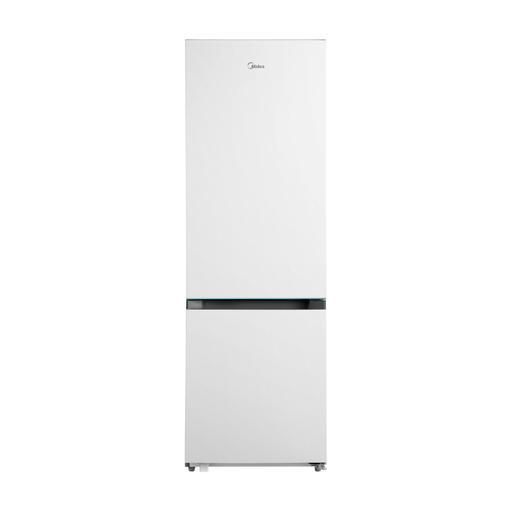
The separately stated fridge and freezer capacities can help you store fresh groceries and suitable portions separately.
Fridge capacity: 232 l; freezer capacity: 98 l; total capacity: 330 l. The product name lists Total No Frost and energy class E. The description mentions Multi Air Flow and electronic controls with an LED display.
 No image available
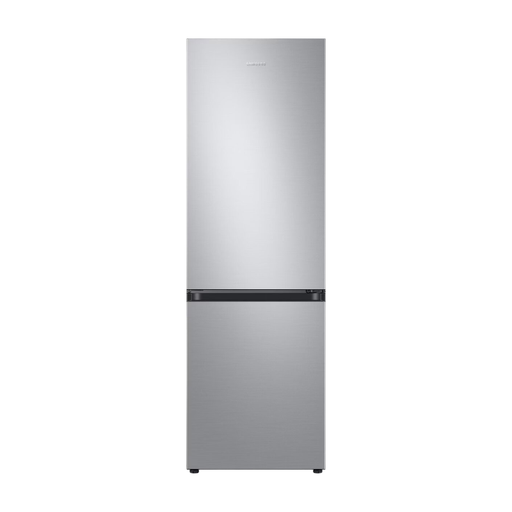
The stated fridge and freezer capacities help you work out how much space there is for family shopping and portions you want to freeze.
Fridge capacity: 230 l; freezer capacity: 114 l; total capacity: 344 l. The model features No Frost. Dimensions: 59,5 × 65,8 × 185,3 cm.
 No image available
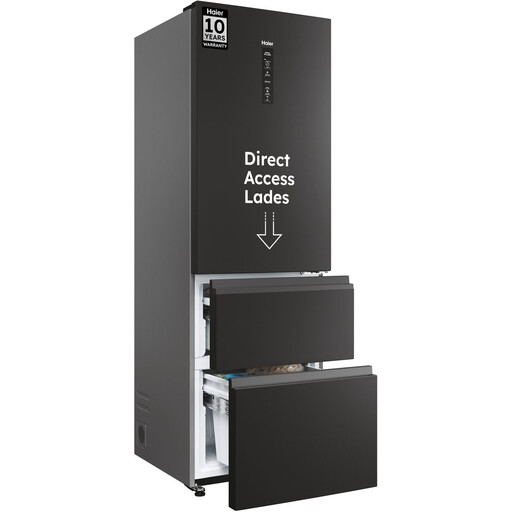
The adjustable shelves and separate freezer drawers offer different ways to organise your shopping and suitable portions for freezing.
Fridge capacity: 235 l; freezer capacity: 125 l. The description lists Total No Frost, two freezer drawers, four glass shelves (three adjustable) and five door shelves.
 No image available
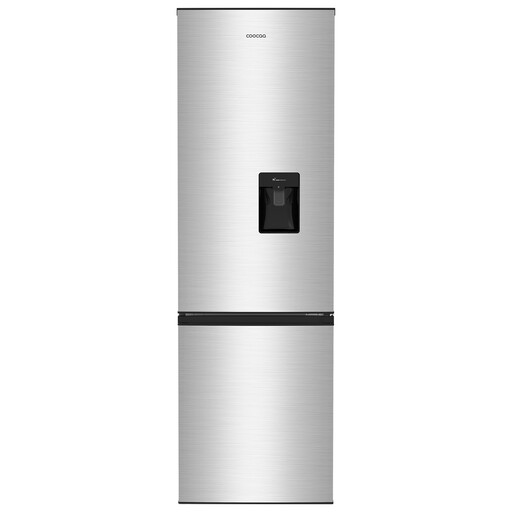
The stated width can help you decide whether this model will fit in a narrower space.
Fridge capacity: 197 l; freezer capacity: 71 l. The description lists a width of 55 cm, a reversible door, temperature control from 2–8 °C and three freezer drawers. The product name lists energy class E.
 No image available
The separately stated fridge and freezer capacities show how much space the product information lists for each section.
Fridge capacity: 187 l; freezer capacity: 73 l. The description lists a width of 55 cm, a reversible door, temperature control from 2–8 °C and three freezer drawers. The product name lists energy class E.
Set the fridge to 4 °C and keep cheese sealed, as recommended by the Netherlands Nutrition Centre. For an unopened pack, follow the storage advice and date on the packaging; recommendations vary by type of cheese.
It depends on the type of cheese. According to the Netherlands Nutrition Centre’s storage guide, opened hard 40+ cheese can be kept in the freezer for 2–4 months before its quality may deteriorate; soft cream cheese is less suitable for freezing. Set the freezer to at least −18 °C and freeze small portions.
Measure the available space and check the instructions for the exact model to make sure the doors and drawers can open fully. Bosch lists LowFrost for the KGE36EWCP; if you choose this model rather than No Frost, bear in mind that you’ll need to defrost it manually, although Bosch says this is needed less often.
Compare the annual consumption in kWh shown on the EU energy label for models that are the right size. Multiply this figure by your own price per kWh to estimate the annual electricity cost. According to the Dutch government, the seller must provide a solution if a product develops a fault; there is no fixed statutory warranty period for all products.
Yes. The European Commission states that EU energy-labelling rules apply to household fridges and freezers covered by the regulations. Current labels use a scale from A to G; check the label for the exact model.