
Vandaag of morgen in huis

Kwaliteit gegarandeerd

Welkomstaanbiedingen ontgrendelen: GRATIS bezorging | Tot 80% korting | Gratis 30 dagen JoyPlus-proefperiode
Download de app
A new fridge freezer may seem straightforward to choose at first glance. Yet many households buy a model that turns out not to be suitable after a few months. The capacity may disappoint, the door may not open fully or the noise level may become irritating in an open-plan kitchen.
Joybuy Product Recommendation Officer therefore filters the most important product specifications and sets out common pitfalls alongside practical solutions.
A fridge with a capacity of 300 litres does not automatically offer enough usable space. Always check how the capacity is divided between the fridge compartment and freezer section. A household that stores lots of frozen food will benefit more from greater freezer capacity than from extra fridge shelves.
Pay attention to the layout, too. Adjustable glass shelves, spacious door compartments and salad drawers determine how much you can actually store.
A No Frost fridge uses a system which, according to the product description, prevents ice build-up in the fridge and freezer compartments. With a Low Frost fridge, ice build-up is reduced, but manual defrosting may still be necessary.
Low Frost may be sufficient for a smaller household that does not often freeze large quantities of food. If you want to minimise maintenance, check whether the model actually states Total No Frost or Frost-Free. Refer to the official product information sheet rather than relying solely on a marketing name.
Measure not only the available space, but also doorways, lifts, staircases and the space beside the fridge. A freestanding fridge also needs sufficient ventilation space around it. The exact clearance is specified in the instruction manual.
A fridge with a reversible door offers extra flexibility. However, check whether you can reverse the door yourself and whether the necessary parts are included. With wide models, such as American-style fridge freezers, the door opening direction is often more limited.
Use these guidelines as a starting point:
As well as the capacity in litres, check the external dimensions. A model measuring 54 or 55 centimetres wide will often fit better in UK kitchens than a wide side-by-side model, but always check the height and depth.
EU energy labels range from A to G. The energy rating is useful when comparing models, but also check the stated annual energy consumption in kWh. A larger fridge may use more electricity despite having the same energy rating because it cools a greater volume.
Examples from the product specifications:
Actual consumption depends on the ambient temperature, usage and ventilation. Avoid overfilling the fridge and keep the door seals clean to help it achieve the stated performance more consistently.
Noise level is important for an open-plan kitchen, studio flat or office. Models rated at around 37 to 40 dB are described as relatively quiet in the product specifications. Always compare the official dB rating rather than relying only on terms such as “whisper-quiet”.
A quiet fridge will not eliminate every sound: the compressor and fan may be temporarily audible when starting up. Position the appliance level and use the adjustable feet to minimise vibrations.
Freezing capacity is expressed in kilograms per 24 hours. A higher figure is relevant if you regularly freeze fresh groceries. A 4-star freezer compartment is designed for long-term storage at around -18 °C; check the product specifications for the exact layout.
With Low Frost, maintenance is reduced but not always eliminated. No Frost generally reduces the need for manual defrosting. A fridge freezer without clear information about its defrosting system should be checked carefully before purchase.

Why it suits this profile: This combination offers 153 litres of fridge space and 52 litres of freezer space in a compact 54 × 55 × 144 cm design. It is a good fit for singles, couples and smaller kitchens.
The fridge and freezer capacities are listed separately. Low Frost is described as reducing ice build-up, rather than being completely maintenance-free. The door is reversible.
205 litres in total, 39 dB, energy rating E, adjustable feet and a freezing capacity of 2.4 kg per 24 hours.
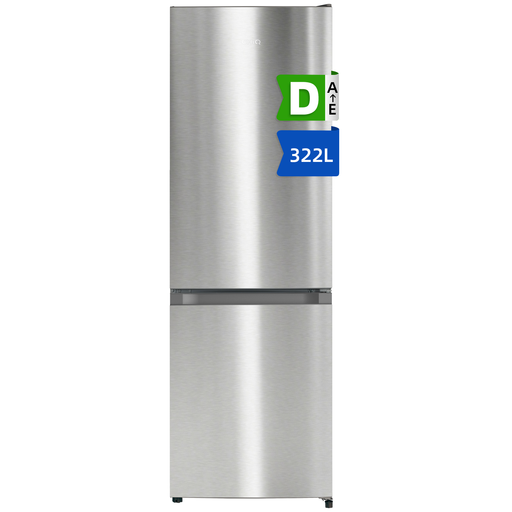
Why it suits this profile: According to the product specifications, this model has 226 litres of fridge space, 96 litres of freezer space, Total No Frost and an inverter compressor. It suits households that want to combine regular shopping with keeping a well-stocked larder.
According to the product description, the No Frost function eliminates the need for manual defrosting. However, the dimensions of 59.5 × 63.5 × 185.5 cm should be checked in advance.
Energy rating D, 37 dB, Multi-Airflow, reversible door, LED controls and stated annual consumption of 196 kWh.
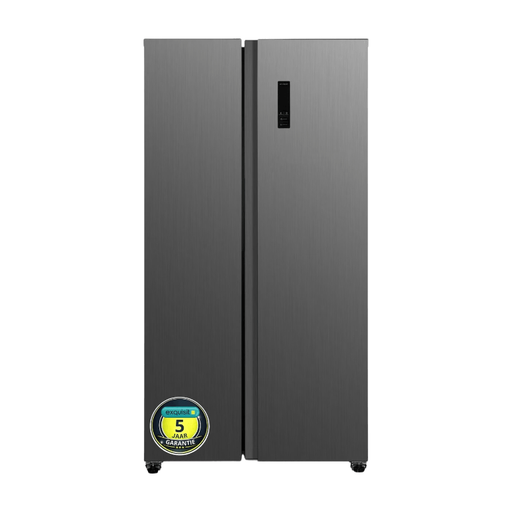
Why it suits this profile: According to the product specifications, this American-style fridge freezer offers 291 litres of fridge space and 151 litres of freezer space. It is designed for large households and people who buy in bulk.
The total capacity is broken down by compartment and the model uses No Frost. However, its 91 cm width and 73 kg weight mean that the delivery route should be checked in advance.
442 litres, No Frost, 39 dB, freezing capacity of 11.2 kg per 24 hours and a manual Ice Twister.
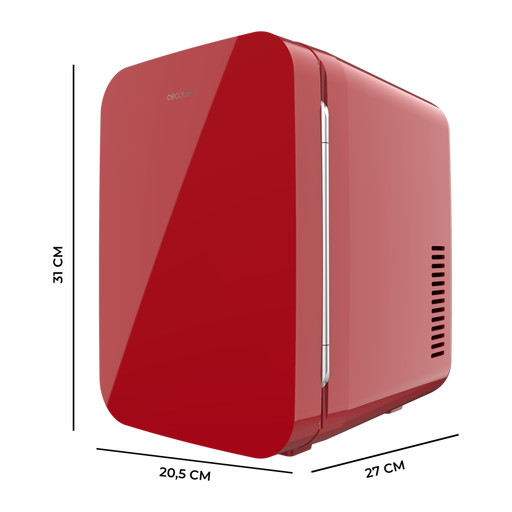
Why it suits this profile: This portable mini fridge is designed for use in a car, motorhome, at the campsite, in a bedroom or in an office. It is not a replacement for a fridge freezer, but a targeted solution for drinks and small quantities of food.
The 6-litre capacity and the absence of a freezer compartment are clearly specified. This makes it clear in advance that it is an additional cooling solution.
According to the product specifications, it operates on 12V and 220V, is portable and has a temperature range of 5 to 65 °C.
We have put together a complete, up-to-date list of products that fully meet these strict selection criteria and the applicable European safety regulations.
For two people, a model of around 200 to 280 litres is often a sensible choice. Also consider your shopping habits. If you regularly store fresh and frozen food, you will benefit from more freezer space and an adjustable layout.
No Frost can be useful if you want to reduce the need for manual defrosting. However, compare energy consumption, noise level and total capacity as well. Low Frost can be a practical choice when a lower purchase price or compact size is more important than completely maintenance-free operation.
Lifespan varies depending on the brand, usage, ventilation and maintenance. Clean the door seals, keep ventilation openings clear and position the appliance level. Check the warranty terms when purchasing. EU rules also provide consumers with statutory guarantee rights; the exact process depends on the problem and the circumstances that apply.
