
Vandaag of morgen in huis

Kwaliteit gegarandeerd

Welkomstaanbiedingen ontgrendelen: GRATIS bezorging | Tot 80% korting | Gratis 30 dagen JoyPlus-proefperiode
Download de app
A fridge freezer needs to suit your household, kitchen and shopping habits for years to come. Yet many buyers focus mainly on the capacity or a low sale price. This can lead to predictable problems: the fridge freezer won’t fit through the door, the freezer compartment is too small or energy consumption is higher than expected.
In this buying guide, you’ll find out what to look for in a fridge freezer, from a compact model to a spacious American-style fridge freezer.
A capacity of 300 litres doesn’t tell you how the space is divided. A model might have a large fridge compartment but very little usable freezer space. So always check the capacity of the fridge and freezer compartments separately. For a family, a freezer compartment of around 100 litres may be more practical than a larger appliance with only a small freezer compartment.
Don’t just measure the available width. Also check the height, depth, door-opening direction and required ventilation space. Take skirting boards, kitchen cabinets, an island and the route to the kitchen into account. A reversible door gives you extra flexibility, but check that the hinges can be moved according to the manual.
No Frost reduces ice build-up and means you won’t need to defrost the appliance manually as often. Low Frost does this to a lesser extent, so you may still need to defrost it periodically. No Frost doesn’t automatically mean low energy consumption, either. Compare the official energy rating on the A to G scale and check the annual consumption in kWh.
A compact fridge may be enough for one or two people. A household that buys lots of fresh produce will benefit more from a spacious fridge with a freezer compartment, adjustable shelves and a large crisper drawer. A fridge freezer of around 300 litres is often a practical mid-range option, but the right choice depends on how much you store and your cooking habits.
Look for:
The noise level is shown in dB(A). A difference of a few decibels can be noticeable in an open-plan kitchen, studio flat or home with a bedroom next to the kitchen. Models around 35 to 39 dB are generally considered suitable for quiet living spaces, but installation, flooring and resonance can affect the actual noise level.
So a quiet fridge freezer isn’t just about the number on the energy label. Make sure it’s on a level surface and follow the required ventilation clearances.
EU energy labels range from A to G. Always compare the stated annual consumption as well as the letter rating. A larger appliance may use more kWh than a smaller model, even if it has a good rating. Calculate the running costs using:
annual consumption in kWh × your electricity rate per kWh
Features such as a water dispenser, ice maker, display or smart connectivity can be convenient, but aren’t essential for every household. Also check whether a water dispenser needs a mains water connection or has a manually filled reservoir.
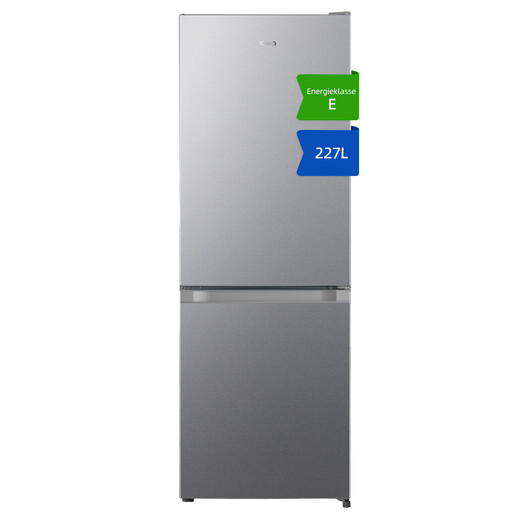
Why it suits this type of buyer: At 54 cm wide, with a total capacity of 227 litres, this model is designed for smaller kitchens, student accommodation and households with limited storage needs.
The capacities are clearly listed separately: 153 litres for the fridge and 74 litres for the freezer. Low Frost reduces ice build-up, but the appliance still needs periodic maintenance.
Reversible door, LED lighting, adjustable shelves, 39 dB and an E energy rating.
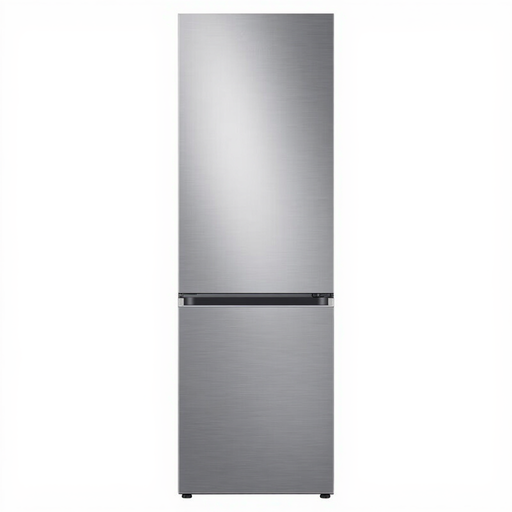
Why it suits this type of buyer: With a capacity of 344 litres, there’s room for families and anyone who likes to keep things well organised, without needing to opt for a wide American-style fridge freezer.
The product specifications list No Frost, so according to the product description, manual defrosting isn’t needed. Check the official manual for maintenance guidance.
C energy rating, 35 dB, No Frost and SmartThings connectivity according to the product specifications.
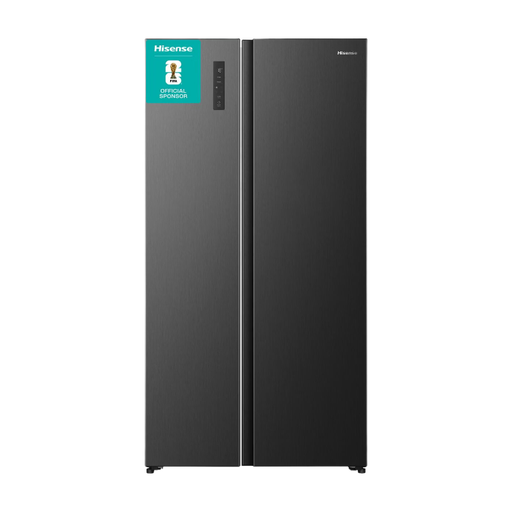
Why it suits this type of buyer: This side-by-side fridge freezer has a capacity of 558 litres, making it suitable for large households, bulk shopping and plenty of storage.
The fridge and freezer capacities are listed separately: 347 and 197 litres. Before buying, measure the space carefully: it needs a width of over 91 cm, and you’ll need to check the doorway too.
No Frost, 37 dB, D energy rating, water dispenser and Super Cool/Fast Freeze according to the product specifications.
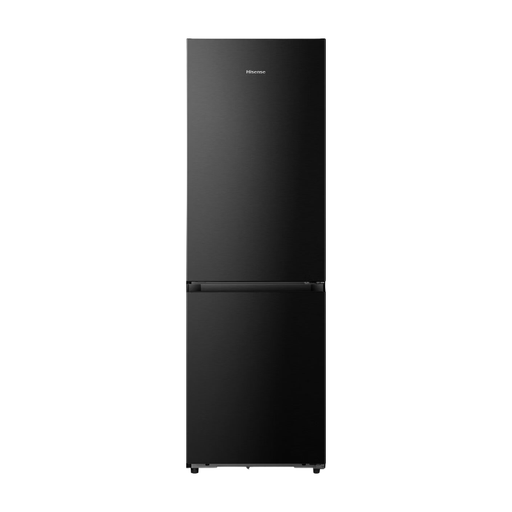
Why it suits this type of buyer: At 59.5 cm wide, with a capacity of 330 litres and a relatively low stated noise level, this model is a good fit for family kitchens with a standard layout.
The dimensions, 215-litre fridge capacity and 115-litre freezer capacity are all listed separately. This makes it easier to choose storage that suits your shopping habits.
No Frost, LED lighting, 35 dB, D energy rating and a door-open alarm according to the product details.
We’ve put together a complete, up-to-date list of products that meet these strict selection criteria and comply with current European safety regulations.
Before buying, check that the plug, ventilation openings and door will all remain fully accessible. If the appliance has been transported on its side, leave it upright first, following the manufacturer’s instructions. As a general guide, set the fridge to around 4 °C and the freezer compartment to around -18 °C, unless the manual recommends different temperatures.
Don’t put a hot pan straight into the fridge, and don’t block the air vents with food packaging. If your fridge freezer has a water dispenser, use drinking water only and clean the reservoir regularly. A mains water connection also requires you to check the hose, filter and connection point.
It depends on the number of people in your household, how often you cook and how much food you store. Don’t just look at the total capacity: compare the fridge and freezer space separately. If your family freezes a lot of food, a larger freezer compartment is often more important than extra door storage.
No Frost can be useful if you don’t want to defrost your appliance manually. The system reduces ice build-up in the fridge and freezer compartments. Also compare the energy rating, annual kWh consumption, noise level and dimensions. No Frost alone doesn’t determine how energy-efficient a model is.
Its lifespan depends on how it’s used and maintained, ventilation and the quality of its components. Clean the seals, keep the ventilation openings clear and make sure the appliance is stable. Keep your proof of purchase, and check the statutory guarantee and any additional manufacturer’s warranty before ordering.
