
Vandaag of morgen in huis

Kwaliteit gegarandeerd

Welkomstaanbiedingen ontgrendelen: GRATIS bezorging | Tot 80% korting | Gratis 30 dagen JoyPlus-proefperiode
Download de app
A new fridge-freezer may seem straightforward to choose at first glance. In practice, however, a model can turn out to be too wide for the available space, too small for a family or unnecessarily expensive to run. Marketing terms such as “quiet”, “frost-free” and “energy-efficient” only tell you something once you have checked the technical specifications.
The main pitfalls are:
A fridge with freezer usually consists of a fridge compartment and a freezer compartment. For a single person or student, a compact fridge-freezer of around 200 to 260 litres may be sufficient. Families or people who buy in bulk will often benefit more from a fridge with plenty of capacity, such as 400 litres or more.
Pay attention to the individual capacities. A model with 260 litres in total could, for example, have 187 litres of fridge space and 73 litres of freezer space. If you mainly buy fresh food, a larger fridge compartment is practical. If you use lots of frozen food, a spacious freezer compartment is more important.
A mini fridge or tabletop model is particularly suitable for drinks, an office, bedroom, student room or holiday home. Check carefully whether it has a freezer compartment: many compact models offer refrigeration only.
Measure the available space at three points: width, depth and height. Also allow for ventilation space as specified in the manual. Do not place a freestanding fridge tightly against a wall or heat source such as an oven, and avoid direct sunlight.
A reversible door is useful in a small kitchen or studio flat. You can adjust the opening direction to suit the layout, but check beforehand whether you are allowed to carry out the conversion yourself and which parts are included. Also consider the passage through the front door, staircase and kitchen; a large model may be considerably wider in its packaging.
The European energy label shows, among other things, the energy class, capacity and annual consumption in kWh. Compare models on a like-for-like basis. You can estimate the annual cost using:
annual consumption in kWh × your electricity tariff per kWh
An energy-efficient fridge is therefore not identified solely by its letter class. Check the stated consumption as well. Under the current EU system, the scale runs from A to G. A model with a D rating may work out more favourably over a year than a larger model with an E rating, but capacity and features also play a role.
For an open-plan kitchen, bedroom or home office, the noise level is relevant. Models rated at around 37 to 40 dB are described as relatively quiet in product specifications. The official noise class and measurement method remain the key factors; “whisper-quiet” is not a unit of measurement.
A No Frost fridge uses air circulation to limit or prevent ice build-up in the freezer compartment. As a result, manual defrosting is usually not required. Do check whether No Frost applies to both the fridge and freezer compartments, as product descriptions may specify this for each compartment separately.
Low Frost reduces the amount of ice, but does not always eliminate the need for manual defrosting. It can be a suitable middle ground for anyone who wants less maintenance without choosing a more advanced system.
With a manual defrosting system, you need to remove ice periodically. Do not use sharp objects, and always unplug the appliance before cleaning it.

Why it suits this profile: The 153-litre fridge compartment and 52-litre freezer compartment are aimed at single people, couples and small households. Its 54 cm width fits in many compact kitchens.
The product sheet lists separate capacities, dimensions and annual consumption of 191 kWh. Low Frost limits ice build-up, but does not mean that defrosting is no longer necessary.
205 litres in total, reversible door, adjustable feet and a stated noise level of 39 dB.
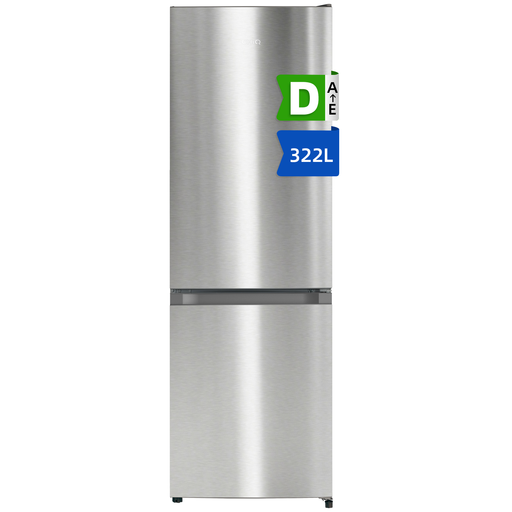
Why it suits this profile: This model provides 226 litres of fridge space and 96 litres of freezer space for households that do larger weekly shops and want a well-organised layout.
The specifications mention Total No Frost, Multi-Airflow and an energy class of D. Before buying, check the exact dimensions of the available space: the appliance is 595 mm wide and 1,855 mm high.
322 litres of capacity, 37 dB according to the product sheet, reversible door and an LED touchscreen display.
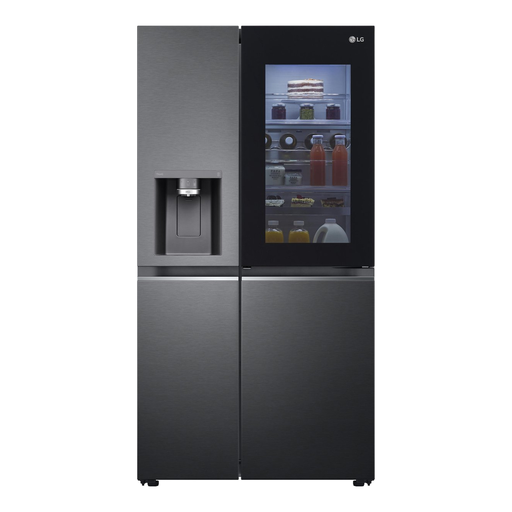
Why it suits this profile: With 416 litres of fridge space and 219 litres of freezer space, this type of American-style fridge freezer is designed for large households, bulk shopping and intensive everyday use.
The capacity is broken down by compartment and the stated annual consumption is 348 kWh. Measure the available space beforehand: the model is approximately 91.3 cm wide and 73.5 cm deep.
635 litres in total, No Frost according to the product description, water and ice dispenser, and a stated noise level of 36 dB.
We have put together a complete, up-to-date list of products that fully meet these strict selection criteria and the applicable European safety regulations.
For one person, around 150 to 250 litres may be suitable, depending on how often you shop. Couples and small families often choose between 200 and 350 litres. Larger households may benefit from 400 litres or more. Use this guideline as a starting point, but focus particularly on the split between fridge and freezer space.
The lifespan depends on usage, ventilation, maintenance and the quality of the components. There is no fixed service life that applies to every model. Clean the door seals, keep ventilation openings clear and ensure the appliance is level. Also check the statutory guarantee and any additional manufacturer’s warranty before buying a fridge-freezer.
Multiply the stated annual consumption in kWh by your current electricity tariff. Despite having a favourable energy class, a larger model may use more electricity than a compact fridge. Therefore, always compare energy class, annual consumption and capacity together.
