
Vandaag of morgen in huis

Kwaliteit gegarandeerd

Welkomstaanbiedingen ontgrendelen: GRATIS bezorging | Tot 80% korting | Gratis 30 dagen JoyPlus-proefperiode
Download de app
Picking out a new fridge-freezer seems simple, until you delve into the specifications. Manufacturers use all sorts of terms that promise a lot but don't always deliver. Before you invest in an appliance that will be a fixture in your kitchen for years, it's wise to know what to look for. As a Product Recommendation Officer at Joybuy, I see daily which specifications truly make a difference and which are mostly marketing. Here are the three most common pitfalls and how to navigate them.
A common mistake is to rely on the total 'gross' capacity. A large fridge doesn't automatically mean a lot of usable space. Thick insulation walls, awkwardly placed drawers, or an ice maker that takes up half a freezer compartment can significantly reduce the net storage space. Therefore, always look at the net capacity in litres, separately for the fridge and freezer sections. This gives you a realistic idea of how many groceries you can actually fit.
The term No Frost is standard nowadays, but its implementation varies enormously. A basic No Frost system prevents ice build-up but can lead to dry air that causes unpackaged vegetables to wilt faster. More advanced systems, often labelled as Multi Air Flow or similar names, distribute cold air evenly throughout the entire space. This ensures a more stable temperature and better humidity, keeping your food fresh for longer.
In an open-plan kitchen or a smaller home, the sound of a fridge can be a constant source of irritation. The noise level is expressed in decibels (dB). A difference of just 3 dB is a doubling of the perceived sound. A quiet fridge has a noise level of 38 dB or lower. Models above 41 dB can be perceived as disruptive, especially at night.
To avoid a bad purchase, focus on the specifications that matter in practice. These are the three most important checkpoints.
Since 2021, the energy label runs from A (most efficient) to G (least efficient). An energy-efficient fridge will save you money on your energy bill in the long run. Pay attention to the annual energy consumption in kWh. A model with a C label consumes significantly less than a model with an E or F label, which can save you tens of pounds annually. An inverter compressor often contributes to this by operating more efficiently and quietly.
Measure the available space accurately before making a choice. Allow for at least 5 cm of extra space at the back and top for ventilation.
Most modern fridges have a stainless steel or metal-look finish. Some are equipped with an anti-fingerprint coating, which makes cleaning much easier. A smooth back panel (without a visible condenser) collects less dust and is easier to keep clean.
Below are some models that score well on the above criteria, matched to different households.
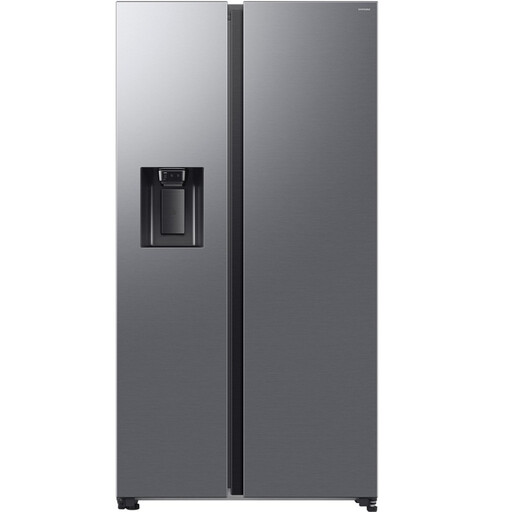
Why This Fits Their Persona: With a massive net capacity of 640 litres, this model is perfect for families who buy in bulk. The water and ice dispenser offers extra convenience, and the layout is designed for maximum storage, including a large vegetable drawer.
The net capacity is clearly specified, so there are no surprises. The All-Around Cooling system is an advanced form of No Frost that keeps the temperature even throughout, preventing food from drying out.
Very spacious and flexible layout. Smart features via the SmartThings App for remote control. At 36 dB, it's remarkably quiet for its size.
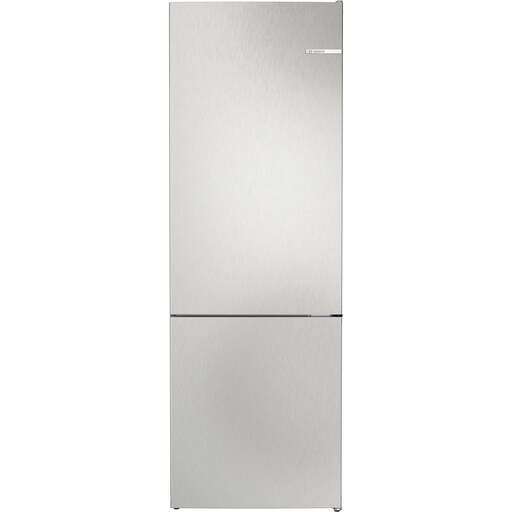
Why This Fits Their Persona: This Bosch combines a sleek stainless steel design with a very low noise level of 35 dB, making it an excellent quiet fridge for an open-plan kitchen. The spacious 391-litre capacity is ideal for couples and families who value peace and style.
With an objectively measured noise level of 35 dB, you avoid the pitfall of a loud appliance. The VitaFresh drawers offer specialised cooling that goes beyond a standard No Frost system, keeping delicate products fresh for longer.
The VitaFresh system keeps vegetables, fruit, fish, and meat fresh for longer. The Perfect Fit design allows the fridge to be placed flush against a wall or in a corner.
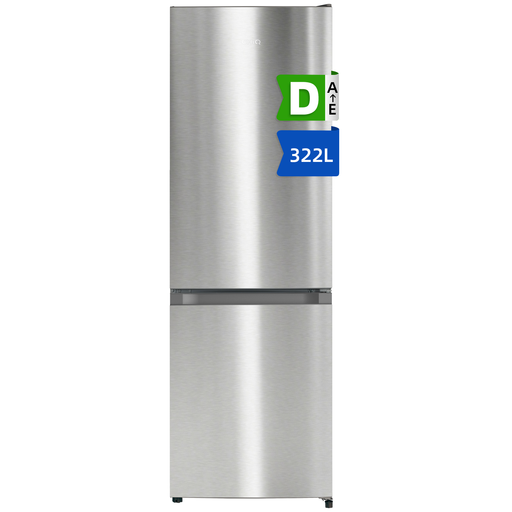
Why This Fits Their Persona: This model offers an excellent balance of price, performance, and consumption. With 322 litres of net capacity, it's spacious enough for first-time buyers or small households. The energy-efficient D-label and accessible price make it a smart choice.
This fridge offers Total No Frost and a quiet inverter compressor (37 dB), features often missing in budget models. So you get modern technology without the premium price, avoiding the inconvenience of manual defrosting and noise.
Great value for money with a favourable D energy label. The reversible door provides flexibility for placement in smaller kitchens.
We have compiled a complete, up-to-date list of products that fully meet these strict selection criteria and local regulations.
Generally, it is recommended to leave at least 5 to 10 centimetres of free space at the back and top of a freestanding fridge. On the sides, 2 to 5 centimetres is usually sufficient. This is crucial for heat dissipation and ensures the appliance operates efficiently. Always consult the manual of the specific model for the exact requirements.
The difference can be significant. A fridge-freezer with a C energy label consumes on average around 140-170 kWh per year. A comparable model with an E label can easily consume 220-250 kWh. At an average electricity price, this can mean a difference of ?25 to ?40 per year. Over the lifespan of the fridge (10-15 years), this amount adds up considerably.
A good rule of thumb for the required net capacity is:
Also, consider your lifestyle. If you often buy in bulk or use a lot of frozen products, opt for a model with a more spacious freezer section.
