
Vandaag of morgen in huis

Kwaliteit gegarandeerd

Welkomstaanbiedingen ontgrendelen: GRATIS bezorging | Tot 80% korting | Gratis 30 dagen JoyPlus-proefperiode
Download de app
Buying a new fridge freezer seems straightforward, until you discover just how many models, features and technical terms there are. A fridge-freezer combination, separate freezer, American-style fridge freezer or compact fridge may look appealing on paper, but it won’t always suit your home, household or shopping habits.
Most unsuitable purchases come down to three common pitfalls:
Read on to find out which features to check before buying a fridge freezer, and which models suit different needs.
Check the net capacity in litres, not just the external dimensions. A fridge-freezer combination with, for example, 260 to 282 litres may suit a small family, while a household that buys in bulk may benefit more from a model with around 400 litres or more.
Consider how the space is split between the fridge and freezer:
Check the layout, too. Adjustable shelves, freezer drawers and a bottle rack are useful if you regularly store large packs or stock up on food.
Measure more than just the alcove. Check:
A reversible door is useful in a small kitchen. Adjustable feet also help if the floor isn’t completely level. Always follow the manufacturer’s instructions for the required clearance.
The European energy label shows the energy rating, annual consumption in kWh and noise level in dB(A), among other details. The scale runs from A to G. Compare the annual consumption of models with a similar capacity; looking at the letter alone won’t give you the full picture.
An energy-efficient fridge could save you money over time, but the purchase price and capacity matter too. A model using 193 kWh per year isn’t directly comparable with an American-style fridge freezer using 348 kWh per year, as their capacities differ considerably.
If you’re looking for a quiet fridge, the stated decibel rating is more useful than a marketing description. Product details may list ratings such as 37, 39 or 40 dB. The actual noise level can also depend on the floor surface, ventilation and compressor cycle.
Cooling technology terms mean the following:

Why it suits this household: This 55 cm-wide fridge-freezer combination is designed for homes with limited space that still need separate fridge and freezer compartments.
The product details specify the external dimensions, 260 litres of total capacity and a reversible door. This makes it easier to check in advance that it will fit your space.
187 litres of fridge space, 73 litres of freezer space, LED lighting and adjustable feet. The stated noise level is 40 dB.
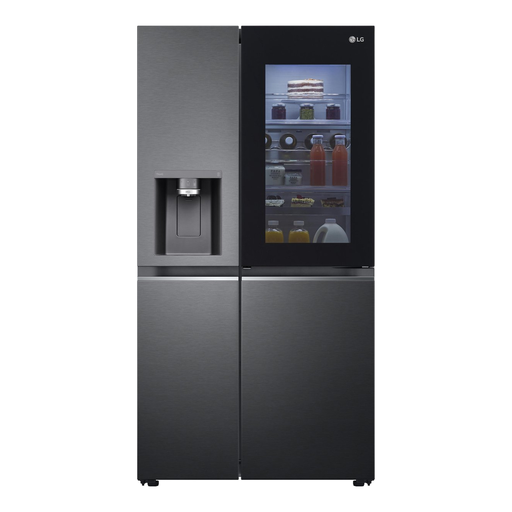
Why it suits this household: With a total capacity of 635 litres, a water and ice dispenser, and app control, this model is designed for large households that keep plenty of food in stock.
At 91.30 cm wide and 73.50 cm deep, this model needs to be measured carefully before you buy. Its capacity and annual consumption of 348 kWh are listed separately.
416 litres of fridge space, 219 litres of freezer space, 36 dB and No Frost, according to the product description. The model has an E energy rating.
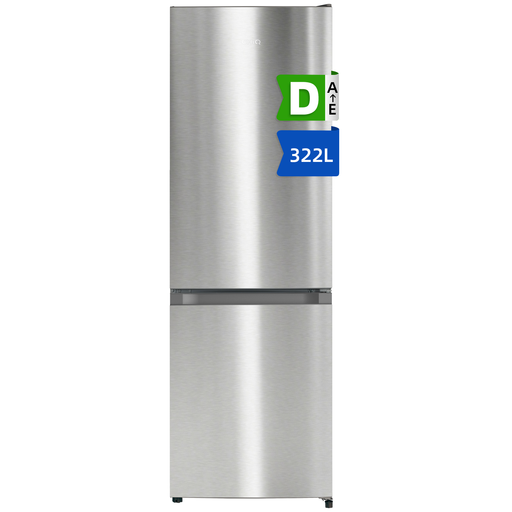
Why it suits this household: With 226 litres of fridge space and 96 litres of freezer space, this model is a good fit for families who do a weekly shop and want to keep maintenance to a minimum.
The official product information lists a 322-litre capacity, 37 dB noise level, D energy rating and No Frost technology. This lets you compare capacity, noise and energy use with other models.
Total No Frost, Multi-Airflow, inverter compressor, LED touch display and reversible door. The stated annual consumption is 196 kWh.
We’ve put together a full, up-to-date list of products that meet these strict selection criteria and the current European safety regulations.
That depends on the number of people in your household and your shopping habits. A compact fridge of around 90 to 130 litres may be enough for one person or as an extra appliance. For a family, a fridge-freezer combination of around 260 to 322 litres is often more practical. If you keep plenty of food in stock, consider a larger model or a separate freezer.
No Frost can be useful if you want to avoid defrosting by hand as often. Check whether No Frost applies to both the fridge and freezer compartments. Low Frost models may still need occasional maintenance. Also compare the energy rating, annual consumption and capacity; an extra feature doesn’t automatically make an appliance more cost-effective.
Lifespan depends on how you use the appliance, ventilation, maintenance and the quality of the installation. Keep the ventilation openings clear, make sure the appliance is level and clean the door seals. When buying, check the difference between the statutory guarantee and any additional manufacturer’s or compressor guarantee. A longer compressor guarantee doesn’t automatically mean that all parts are covered for the same length of time.
