
Preparing a meal to share
You cut carrot sticks in advance and need enough easy-to-reach fridge space for sealed containers and other ingredients.


Choose a fridge-freezer with enough fridge space for sealed containers of carrot sticks and your other ingredients. The Netherlands Nutrition Centre recommends setting your fridge to 4 °C. Then compare the fridge and freezer capacities separately, along with the external dimensions and annual energy consumption. Extra space or features are only worthwhile if they suit your everyday food shop and kitchen too.
You cut carrot sticks in advance and need enough easy-to-reach fridge space for sealed containers and other ingredients.
You want to fit food for guests alongside your everyday fridge and freezer supplies. That makes the separate capacities and layout important.
You need to consider the external dimensions, the delivery route and the space needed to open the door.
First check whether sealed containers and your other ingredients will fit in the fridge. Then compare energy use and where the appliance will go.
| What to consider | What to look for | Who is this most important for? |
|---|---|---|
| Keeping carrot sticks chilled | Check that sealed containers will fit and set the fridge to 4 °C, as recommended by the Netherlands Nutrition Centre. | If you cut carrot sticks in advance, you’ll want to keep them sealed and properly chilled; around 36% of consumers make this their top priority. |
| Fridge space for guests | Compare the fridge and freezer capacities separately, and check that the shelves and containers will work together. | If you want to chill ingredients and containers for several people at once, usable fridge space is essential; around 29% of consumers prioritise this need. |
| Energy consumption | Compare the annual consumption in kWh on the EU energy label or in EPREL for models with a suitable capacity. | If you use the appliance every day, factor in its energy consumption once you know how much space you need; around 21% of consumers make energy consumption their top consideration. |
| Fitting and opening the door | Measure the space, the delivery route and the clearance needed for the door to open; check the installation instructions for the exact model. | In a small kitchen, the appliance needs to fit through the door and open normally once it’s in place; that’s why around 14% of consumers start by checking where it will go. |
Some of the total capacity is taken up by the freezer. So it doesn’t tell you how much space will be left for sealed containers and other chilled ingredients.
Compare the fridge and freezer capacities separately, and check the layout against the dimensions of your containers.
A drawer feature doesn’t automatically change the storage advice for cut raw vegetables.
Keep the carrot sticks in a sealed container, set the fridge according to the advice and check that your containers fit in a drawer or on a shelf.
The extra space you need for a meal with guests may be different from what you need every day.
First work out how much capacity you normally use, then compare the annual consumption in kWh.
The KGN36VICT is a freestanding fridge-freezer with separately stated fridge and freezer capacities.
According to LG, the freestanding GBBS726AEV has a total capacity of 375 l and a Fresh Converter+ feature.
According to Liebherr, the CNdgc 5213 Pure has an EasyFresh drawer and a NoFrost freezer compartment.
According to Beko, the freestanding B5RCNE366HG has NoFrost and a vegetable drawer.
Samsung lists a capacity of 387 l and energy class B for the RB38C7B5BS9/EF.
This selection features fridge-freezers with No Frost. Focus on comparing the fridge capacity, layout, external dimensions and stated energy information with what you need at home.
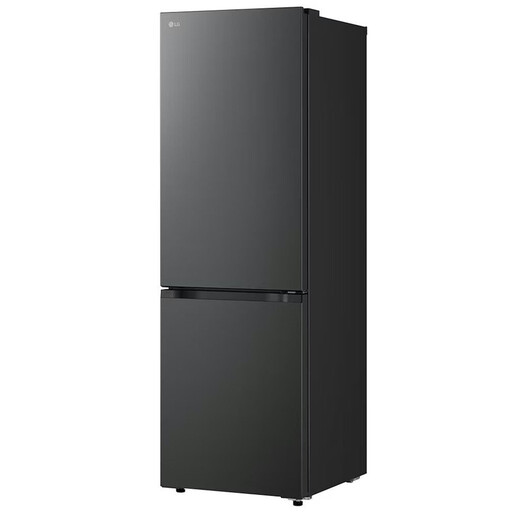 No image available
An option if you’re looking for fridge and freezer space in one freestanding appliance.
Fridge capacity: 220 L; freezer capacity: 113 L.
Energy class C; stated dimensions: 595 × 1860 × 674 mm. The door is reversible.
No Frost, a vegetable drawer, SuperCool, DoorCooling+™ and LinearCooling™ are listed in the product information.
 No image available
The separate compartment capacities help you work out how much space is available for chilled ingredients.
Fridge capacity: 232 L; freezer capacity: 98 L.
Energy class E; stated consumption: 248 kWh per year.
Dimensions: 59,5 × 57 × 186 cm. The door is reversible; the product information lists a vegetable drawer and electronic temperature control.
Total Frost Free is stated in the product name.
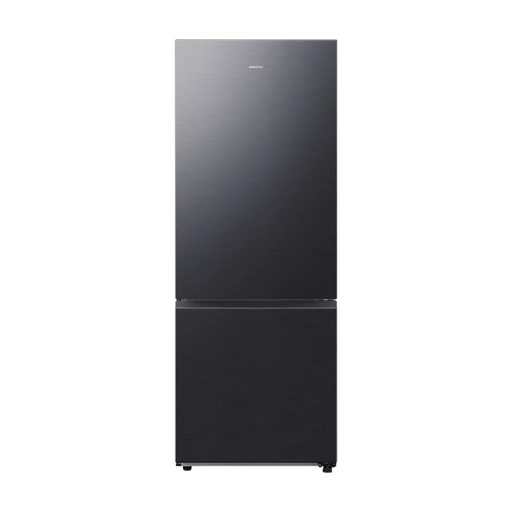 No image available
A French-door model to consider if you’re looking at a larger appliance. Measure first to make sure it will fit in your kitchen and along the delivery route.
Energy class A; stated consumption: 128 kWh per year.
Dimensions: 75,9 × 203 × 71,1 cm. The product information lists No Frost and a flexible Optimal Fresh+ drawer.
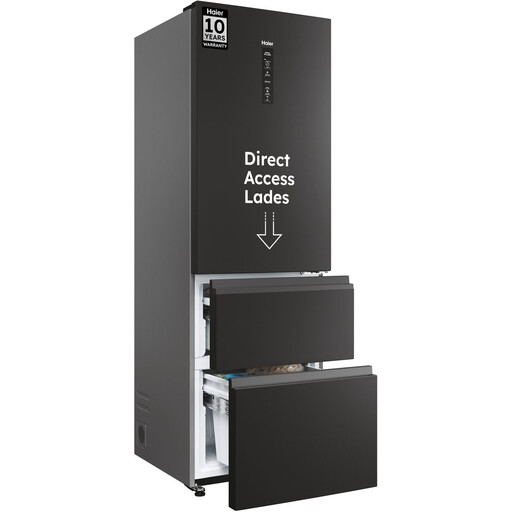 No image available
The stated fridge capacity and adjustable shelves are useful if you want to store containers and other ingredients at the same time.
Fridge capacity: 235 L; freezer capacity: 125 L.
Dimensions: 59,5 × 185 × 66,7 cm. The door is reversible.
The product information lists two vegetable drawers, three adjustable shelves and Total No Frost.
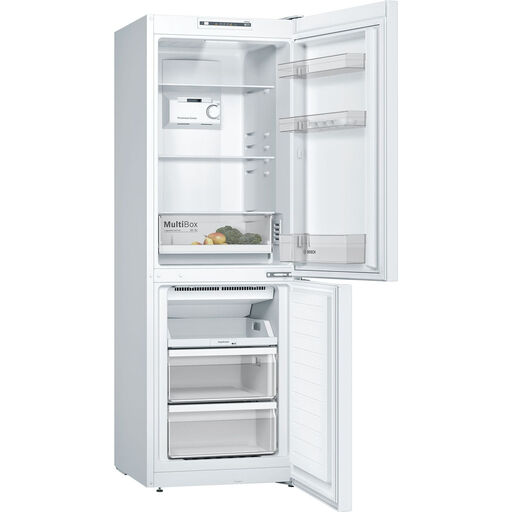 No image available
The separate compartment capacities are helpful if you’re weighing up fridge space for meal preparation against the amount you keep in the freezer.
Fridge capacity: 193 L; freezer capacity: 89 L.
Dimensions: 60 × 176 × 66 cm.
The product information lists No Frost, a MultiBox vegetable drawer and a pull-out EasyAccess shelf.
Store freshly cut raw vegetables in a sealed container in the fridge, and set it to 4 °C, as recommended by the Netherlands Nutrition Centre. For opened raw vegetables without dressing, the Centre recommends keeping them in the fridge for two days, so don’t prepare the carrot sticks unnecessarily early.
No. A special drawer doesn’t replace sealed packaging and proper refrigeration. Check that your container fits in the drawer or on a shelf, and keep an eye on the fridge temperature.
Measure the available space and the route to the kitchen, and check how much clearance the door needs. For the LG GBBS726AEV, LG specifies a minimum gap of 4 mm between the side of the appliance and the wall to allow the door to work properly; this measurement won’t necessarily apply to other models.
Compare the stated annual consumption in kWh of models with a capacity that suits your needs, then work out the cost using your own electricity tariff. The EU energy label and EPREL provide information to help you compare models.
You’re entitled to a product that works properly, and you can contact the seller if something goes wrong. According to the Dutch government, there is no fixed statutory warranty period for all products; the expected lifespan and the circumstances of the fault are relevant.