
Vandaag of morgen in huis

Kwaliteit gegarandeerd

Welkomstaanbiedingen ontgrendelen: GRATIS bezorging | Tot 80% korting | Gratis 30 dagen JoyPlus-proefperiode
Download de app
A new fridge freezer might seem straightforward to choose at first glance. However, there are clear differences in capacity, installation, noise level and maintenance. A model that looks spacious in product photos can, in practice, have too little freezer space. And a low purchase price doesn't automatically tell you anything about the annual energy consumption.
With this guide, you can compare fridge freezers purposefully for a flat, family kitchen, student room, garage or larger home.
The total volume consists of fridge and freezer space. A 260-litre appliance might, for example, have 187 litres of fridge space and 73 litres of freezer space. That's a different ratio to a model with 153 litres of fridge and 74 litres of freezer.
So think about this beforehand:
A No Frost fridge removes moisture and, according to the product specification, prevents ice build-up in the fridge and freezer compartments. This means manual defrosting is usually not required. With Low Frost, less ice forms than with a traditional system, but occasional defrosting may still be necessary.
Also pay attention to models with manual defrosting. The TCL RF338BSE0, for example, states "Manual Defrost". This can work perfectly well, but requires more maintenance than a fridge freezer with automatic defrosting.
Don't just measure the alcove or the spot on the floor. Also check the door swing direction, hallways, stairs and the required ventilation space. A freestanding fridge freezer needs to release heat from the back and sides. Also take into account skirting boards, walls and kitchen cabinets.
A reversible door is handy in a compact kitchen. With a built-in fridge freezer, you also need to check that the alcove height, door system and hinges match your kitchen.
For one person or a couple, a compact fridge with freezer may be sufficient. The CHiQ JR205LSE, for example, has 205 litres total, split into 153 litres of fridge space and 52 litres of freezer space. For a family or someone who buys in bulk, a capacity from around 260 litres is often more suitable.
As well as litres, also look at:
The EU energy label for fridges runs from A to G. You should always look at the energy class together with the annual consumption in kWh. A larger appliance often uses more energy in absolute terms, even if it has a better label.
Examples from the product specifications:
The actual cost depends on your energy tariff and usage. So don't be guided solely by a marketing term like "energy efficient"; check the label and the kWh value.
In an open-plan kitchen, studio or flat, a quiet fridge can be a real bonus. The noise level is expressed in dB(A). A difference of a few decibels can be noticeable, but placement, resonance and an unlevel fridge also affect the sound.
The range includes models around 35 to 40 dB, including the Samsung at 35 dB, the Midea at 35 dB and the CHiQ JR318WSD at 37 dB. Also check the official noise emission class on the energy label.
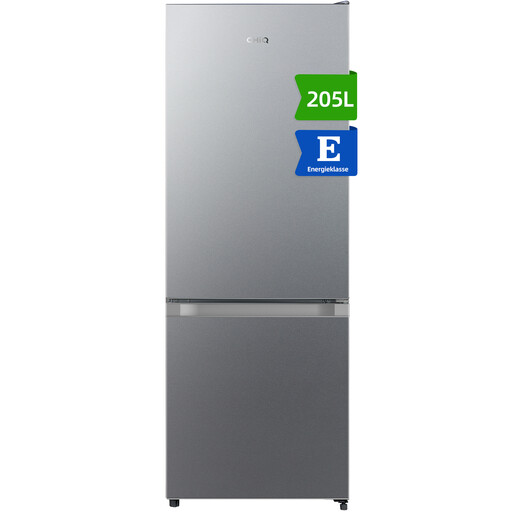
Why this fits the profile: The compact 54 cm width and reversible door make this model suitable for a smaller kitchen, studio or student room.
The fridge and freezer capacities are listed separately: 153 litres and 52 litres. Low Frost limits ice build-up, but doesn't fully replace No Frost.
205 litre capacity, 39 dB, adjustable feet and energy class E.
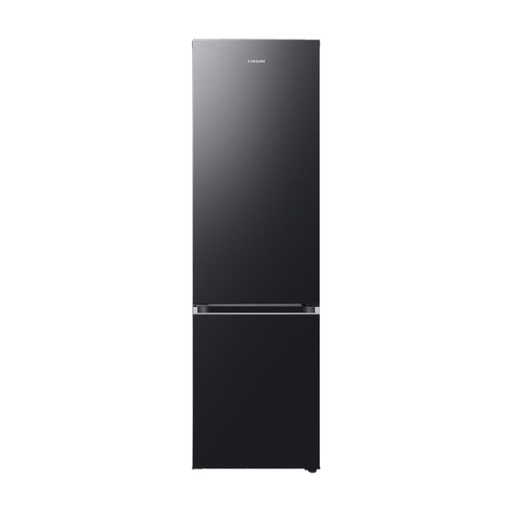
Why this fits the profile: This tall model offers 387 litres of capacity for households that do regular big shops and value automatic features.
The product specifications list No Frost+, 35 dB and an annual consumption of 108 kWh. Do check the height of 203 cm beforehand.
387 litre capacity, energy class A and automatic defrosting according to the product description.
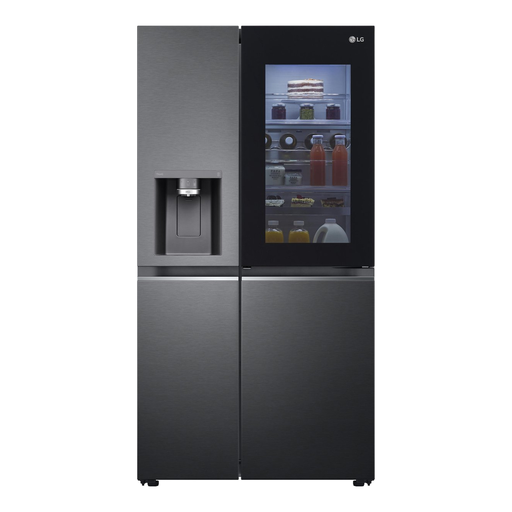
Why this fits the profile: With 635 litres total capacity, a water and ice dispenser and a wide American-style fridge layout, this model is aimed at large households.
The fridge space of 416 litres and freezer space of 219 litres are specified separately. Carefully measure the required width of 91.3 cm and depth of 73.5 cm.
635 litre capacity, No Frost according to the product description and a noise level of 36 dB.
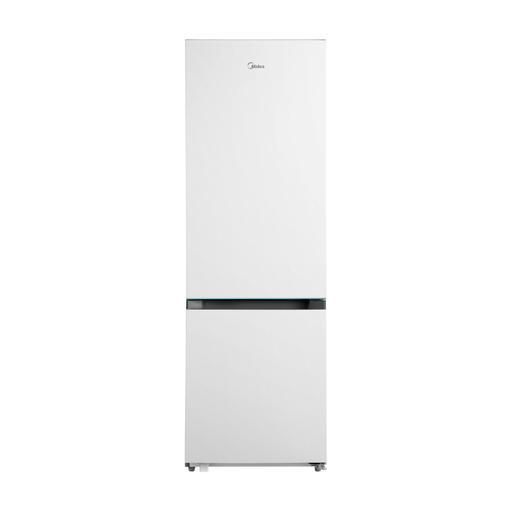
Why this fits the profile: The split of 232 litres of fridge space and 98 litres of freezer space suits households that store both fresh produce and frozen supplies.
Total No Frost limits ice build-up and the noise level is specified at 35 dB. Check the required ventilation space of at least 795 × 645 × 1960 mm.
330 litre capacity, reversible door, electronic display and energy class E.
We've put together a full, up-to-date list of products that fully meet these strict selection criteria and current European safety regulations.
For one or two people, around 200 to 260 litres can be suitable, depending on your shopping habits. Families often need 300 litres or more. Pay particular attention to the separate fridge and freezer capacity, not just the total.
No Frost can make maintenance easier because, according to the product specification, manual defrosting is not required. Low Frost is an alternative if you want less ice build-up but are happy with occasional defrosting. Also compare the energy consumption and purchase price.
The lifespan depends on usage, ventilation, cleaning and the quality of the door seal. Make sure the appliance is level, keep ventilation openings clear and regularly check that the door closes properly. Always consult the manual for maintenance and warranty conditions.
