
Vandaag of morgen in huis

Kwaliteit gegarandeerd

Welkomstaanbiedingen ontgrendelen: GRATIS bezorging | Tot 80% korting | Gratis 30 dagen JoyPlus-proefperiode
Download de app
Buying a new fridge freezer seems straightforward until you have to choose between capacity, dimensions, energy use and features. A fridge that looks spacious enough on paper may not offer enough freezer space in practice. A cheap model can also prove awkward if the door doesn’t open properly or you have to defrost it regularly.
In this buying guide, you’ll find out what to look for in a fridge freezer, which specifications matter and which type is right for your household.
A 260-litre fridge freezer sounds spacious, but the split between the fridge and freezer compartments is just as important. Always check both figures separately. A household that stores lots of frozen food will get more use from 70 to 140 litres of freezer space than from a large fridge with a small freezer compartment.
Pay attention to the layout, too. Drawers, adjustable shelves and door bins all affect how much of the stated capacity is actually usable.
A fridge for a small kitchen doesn’t just need to fit into the available space. Check:
A compact fridge freezer around 54 to 55 cm wide will often fit more easily in an apartment. An American-style fridge freezer, on the other hand, needs plenty of floor space and a wide access route.
Claims such as “keeps food fresh for longer” or “saves energy” aren’t automatically comparable across brands. It’s better to look at verifiable information such as energy rating, annual consumption in kWh, noise level and cooling technology.
Some brands claim, based on their own research, that special systems can reduce bacteria or odours. Treat these as product information from the brand, rather than a guaranteed result for every user. For everyday use, a well-sealed door, the right temperature and enough ventilation are just as important.
A mini fridge with a capacity of 15 to 92 litres may be enough for one person or a student, with room for drinks, snacks and a few fresh items. A fridge with a freezer compartment and a capacity of around 170 to 210 litres is often a good fit for single people, couples or smaller kitchens.
For a family, around 250 to 360 litres is a practical starting point. If you do a big weekly shop or want extra storage, look at models with a capacity of 400 litres or more. An American-style fridge freezer usually offers plenty of space, but it’s wider and often uses more electricity than a standard fridge freezer.
The European energy label runs from A to G. Don’t compare just the letter: check the stated annual consumption in kWh as well. A larger model will naturally use more energy, while a more efficient model may offer better energy use per litre of storage.
The stated figure is a standardised indication. Actual consumption depends on factors such as room temperature, how often you open the door and how full the fridge is.
A No Frost fridge freezer uses air circulation to limit ice build-up in the fridge and freezer compartments. This means you usually won’t need to defrost it by hand. Low Frost reduces ice build-up, but the appliance may still need occasional maintenance.
Check the noise level, too. A quiet fridge at around 39 or 40 dB is often more comfortable in an open-plan kitchen or studio apartment. The difference between models may look small on paper, but a fridge that runs day and night can be noticeable in a small home.
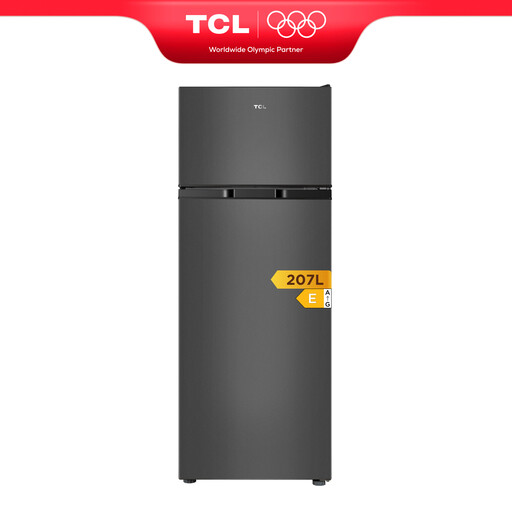
Why it suits this household: At 55 cm wide, with a total capacity of 207 litres, this model is a good fit for a smaller kitchen, an apartment or a household that shops for everyday essentials.
The 167-litre fridge compartment and 40-litre freezer compartment are listed separately, so you can see how the total capacity is divided before you buy.
Power Cool and Power Freeze, adjustable shelves, adjustable feet and an E energy rating.
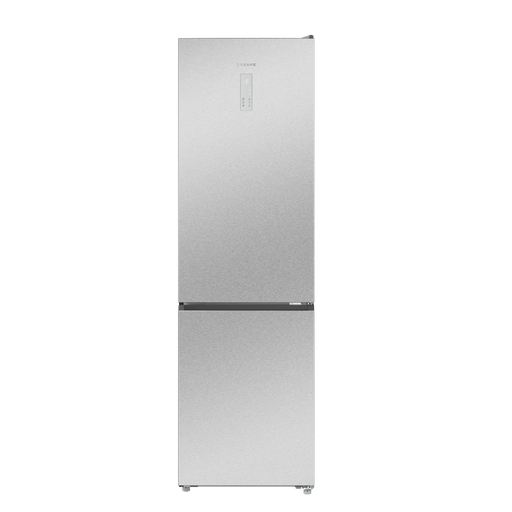
Why it suits this household: With 314 litres of fridge space and 142 litres of freezer space, this model is designed for families and households that need room for both bigger shops and frozen food.
It’s 59.5 cm wide, 68 cm deep and 201 cm high. These measurements make it clear that you’ll need to check the installation space carefully.
No Frost, a C energy rating, around 190 kWh per year and a stated noise level of 39 dB.
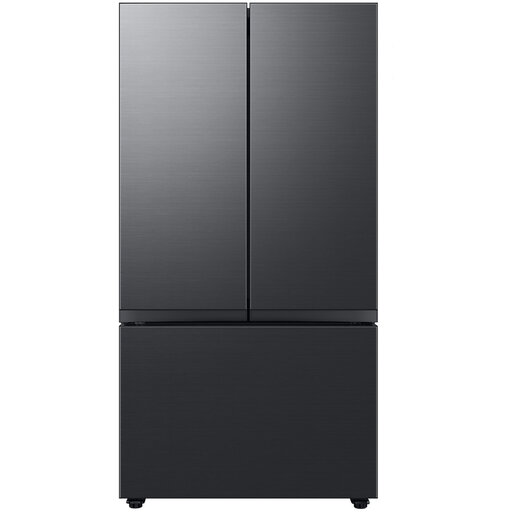
Why it suits this household: With a capacity of 674 litres, including 487 litres of fridge space and 187 litres of freezer space, this model is a good fit for large households and anyone who stores plenty of food at once.
The dimensions of 90.8 × 73 × 177.8 cm and weight of 136 kg are clearly stated. So measure not just the kitchen but the doorways and access routes too.
No Frost, 38 dB, an automatic ice maker and two separate cooling circuits, according to the product description.
Place your fridge freezer on a flat, stable surface and leave the ventilation space recommended in the manual. Don’t put it right next to a radiator or oven, or in direct sunlight. After transporting it, leave the fridge freezer upright for the period specified by the manufacturer before plugging it in.
A temperature of around 4 °C in the fridge compartment and -18 °C in the freezer compartment is often used as a guide, but always follow the product manual. Allow hot food to cool, covered, before putting it away, and make sure the air vents aren’t blocked.
A reversible door can be useful for a fridge freezer for a small kitchen, but make the change according to the instructions. Once installed, check that the door seals properly all the way round.
We’ve put together a complete, up-to-date list of products that meet these strict selection criteria and the applicable European safety regulations.
A single person can often manage with around 150 to 220 litres. For two people, 200 to 300 litres is usually a good choice. Families generally need more than 300 litres, depending on how often they shop and how much freezer space they use. Always check the fridge and freezer capacities separately.
No Frost usually means you won’t need to defrost the appliance by hand and helps to limit ice build-up. However, energy use varies from model to model. So compare the energy rating and annual consumption in kWh on the energy label, rather than relying on the No Frost name alone.
Lifespan depends on use, ventilation, maintenance and the quality of the components. Clean the door seals, keep the ventilation openings clear and don’t place the appliance next to a heat source. When you buy, check the statutory guarantee and any additional manufacturer’s warranty.
