
Vandaag of morgen in huis

Kwaliteit gegarandeerd

Welkomstaanbiedingen ontgrendelen: GRATIS bezorging | Tot 80% korting | Gratis 30 dagen JoyPlus-proefperiode
Download de app
A fridge freezer seems easy to pick at first glance. Yet many buyers run into the same problems: the appliance doesn’t fit through the door, the freezer space turns out to be too small, or the energy use is higher than expected. Features such as No Frost, a water dispenser and smart controls sometimes get more weight than the basics.
A good choice therefore starts not with looks, but with the available space, capacity and consumption. Below you’ll find what to look for and which models suit different Dutch households.
Total volume doesn’t tell the whole story. A 300-litre fridge freezer might, for example, have lots of fridge space and a relatively small freezer. Always check the split between fridge capacity and freezer capacity. For a household that stores lots of frozen food, a generous freezer matters more than a big total figure.
Also consider the layout. Adjustable shelves, deep freezer drawers and wide door shelves determine how much of the stated capacity is practically usable.
An American-style fridge or side-by-side fridge freezer offers lots of storage, but is often about 90 centimetres wide and more than 70 centimetres deep. Measure not only the recess, but also:
A large fridge may technically fit the kitchen, yet still be impractical if a door cannot open far enough.
No Frost makes manual defrosting unnecessary or less frequent according to the product specification. That’s convenient, but it doesn’t automatically mean every No Frost model uses little electricity. For that, look at the EU energy label, the annual consumption in kWh and the energy class.
A fridge with a water dispenser can add extra convenience. Check whether the reservoir needs filling by hand or whether a fixed water connection is required. A refillable reservoir is easier to place, whereas a plumbed-in connection may require extra installation work.
Measure the available space carefully and compare it with the product dimensions. Allow for ventilation as per the manual. For a compact kitchen, a 54-centimetre-wide model may be more suitable than a wide American-style fridge freezer.
As a guideline, consider your lifestyle:
These amounts aren’t a fixed rule. If you cook fresh often, you’ll need more fridge space; if you freeze lots of supplies, focus on freezer capacity.
The European energy label for fridges runs from A to G. Compare the annual consumption as well as the class. Two models with the same class can still have different kWh values due to their size and technology.
For example, the Samsung RB38C607AB1/EF is listed with energy class A and a stated consumption of 108 kWh per year. By comparison, the CHiQ JR318WSD has energy class D and a stated consumption of 196 kWh per year, with 322 litres of capacity. The figures come from the supplied product specifications; always check the current energy label at the time of purchase.
For an open-plan kitchen, studio or a home with a sleeping area next to the kitchen, the noise level matters. Models around 35 to 40 dB are indicated in the product specifications as relatively quiet, but the actual noise can vary when the compressor cuts in.
Also check the door seal, ventilation and placement. A poorly closing door can affect consumption and temperature stability.
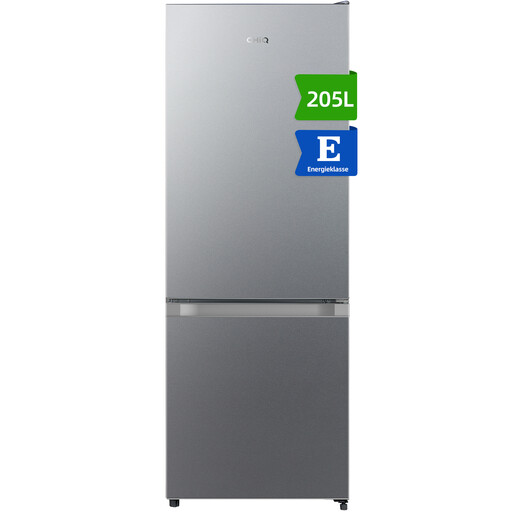
Why this fits the profile: The compact fridge-freezer combination is 54 cm wide and offers 153 litres of fridge space plus 52 litres of freezer space. That makes it a good match for a smaller kitchen, flat or a household of one or two people.
The external dimensions and separate capacities are clearly stated. According to the product information, Low Frost reduces ice build-up, although manual defrosting may still be needed.
Reversible door, adjustable feet, 205 litres in total and 39 dB, according to the product specifications.
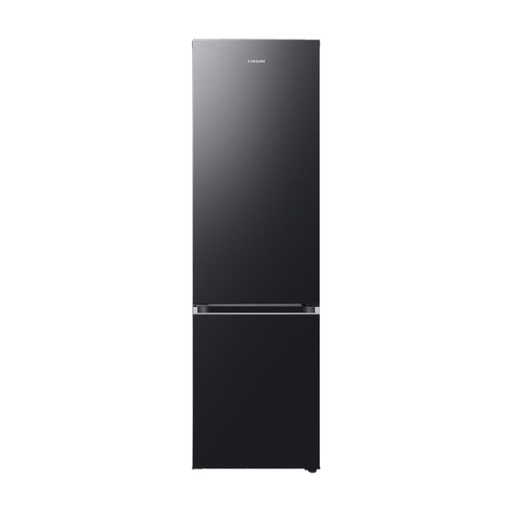
Why this fits the profile: This model combines 387 litres of capacity with No Frost+, a quoted noise level of 35 dB and energy class A. It suits households that pay attention to consumption, capacity and maintenance.
The combination of energy label, annual consumption and noise level makes comparison more concrete than looking at smart features alone.
Energy class A, 108 kWh per year, 387 litres of capacity and No Frost+, according to the product specifications.
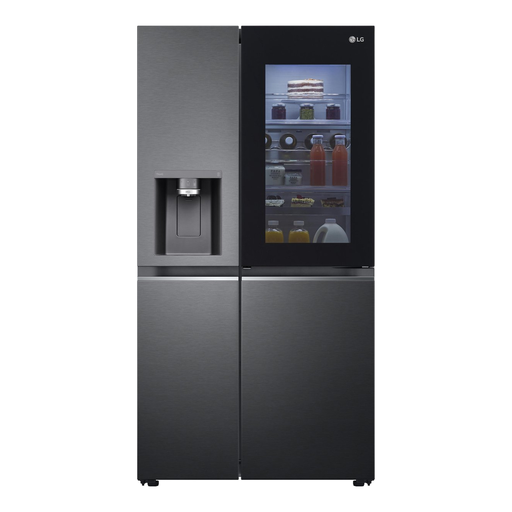
Why this fits the profile: With 635 litres, a water and ice dispenser, Door-in-Door and control via ThinQ, this model is aimed at large households and people who keep plenty of supplies.
The generous capacity is split into 416 litres of fridge space and 219 litres of freezer space. Measure the 91.3 cm width, 73.5 cm depth and access route in advance.
635 litres of capacity, Total No Frost, water and ice dispenser and 36 dB, according to the product information.
Use this short checklist:
We’ve compiled a complete, up-to-date list of products that fully meet these strict selection criteria and the applicable European safety regulations.
That depends on your household and shopping pattern. A compact fridge of around 200 litres may be suitable for one or two people. Families often look at 300 litres or more. Always check how much of that is available for the freezer compartment.
No Frost can reduce maintenance because ice build-up is automatically limited or removed according to the product specification. The added value depends on your preference for convenience, the energy use and the price difference. Compare the EU label and the annual kWh figure.
Lifespan depends on use, ventilation, door seals and maintenance. Keep ventilation openings clear, don’t place the appliance next to a heat source and clean the interior regularly. Before buying, also check the statutory warranty and any additional manufacturer’s warranty.
