
Vandaag of morgen in huis

Kwaliteit gegarandeerd

Welkomstaanbiedingen ontgrendelen: GRATIS bezorging | Tot 80% korting | Gratis 30 dagen JoyPlus-proefperiode
Download de app
You usually buy a new fridge freezer for several years. Yet many people focus mainly on capacity and price. This can lead to problems: the fridge freezer does not fit through the door, the freezer compartment turns out to be too small or energy consumption is higher than expected.
So look beyond an attractive exterior. The following pitfalls are common:
The total capacity does not tell you everything. Check the capacity of the fridge and freezer compartments separately. A household that often cooks with fresh ingredients may benefit more from a large fridge freezer with a smaller freezer compartment. Anyone who buys frozen food in bulk will need more freezer space instead.
As a guideline, you can consider:
Also pay attention to the layout. Adjustable shelves, wide door compartments and a separate salad drawer make the available space more useful than a large total capacity without any flexibility.
Do not measure just the alcove. Also check:
A fridge freezer with a reversible door is useful in a small kitchen. For example, the CHiQ JR227LSE and JR205LSE are 54 cm wide and have a reversible door. This makes them suitable for compact kitchens, provided the available depth and ventilation are adequate.
Width is especially important with an American-style fridge freezer. Models measuring around 90 cm will not necessarily fit every kitchen layout. Also check whether a water dispenser requires a mains water connection. A model with a refillable reservoir is easier to install than a fridge freezer that must be connected to the water supply.
Since the European energy label was revised, ratings have ranged from A to G. Above all, compare the stated annual energy consumption in kWh. This is more specific than looking only at the letter on the label.
Examples from the product specifications:
The actual cost depends on your electricity tariff and usage. Do not leave the door open unnecessarily, do not place hot pans directly inside the appliance and keep the ventilation openings clear.
Noise level is relevant in an open-plan kitchen. Product specifications for various models state a figure of around 35 to 40 dB. Also look at the airborne acoustical noise emission class, rather than relying only on rounded marketing terms such as ‘whisper-quiet’.
A No Frost fridge freezer removes moisture and generally distributes cold air throughout the fridge and freezer compartments. According to manufacturers’ product information, this means less manual defrosting is required. However, check for each model whether No Frost applies to both compartments.
A Low Frost fridge freezer reduces ice build-up according to the product description, but does not rule out manual defrosting. This system may be a good choice if the purchase price, compact size and simple layout are more important to you than completely hassle-free maintenance.
Also check the freezer rating. According to the product specification, a 4-star freezer compartment is suitable for long-term storage at approximately -18°C. The stated freezing capacity, for example 2.4 or 3.4 kg per 24 hours, indicates how much fresh food the appliance can freeze under the specified conditions.

Why it suits this profile: With 153 litres of fridge space, 52 litres of freezer space and a width of 54 cm, this model is well suited to single people, couples and small kitchens.
The product information states that it has Low Frost, a reversible door and adjustable feet. However, check whether occasional defrosting is acceptable for you.
205 litres of capacity, 39 dB according to the product information sheet, a 4-star freezer compartment and energy rating E.
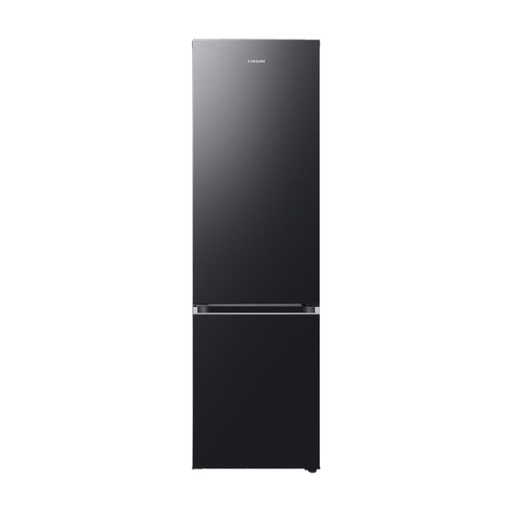
Why it suits this profile: This model combines 387 litres of capacity with No Frost+, a stated noise level of 35 dB and energy rating A for households that want to keep a close eye on energy consumption over the long term.
The product specifications state both the annual consumption of 108 kWh and No Frost+. This allows you to compare energy use and maintenance more precisely.
387 litres of capacity, 108 kWh per year, energy rating A and No Frost+, according to the supplied product information.
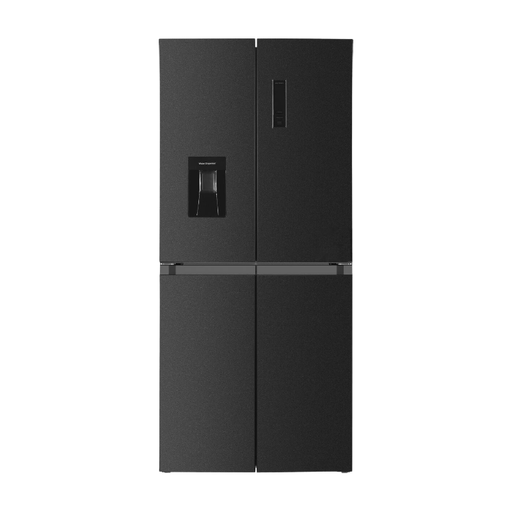
Why it suits this profile: For families that store a lot of food, this American-style fridge freezer offers 419 litres, four doors, No Frost and a refillable water dispenser without requiring a mains water connection.
The dispenser uses a refillable reservoir. This avoids the need for a fixed connection, but it does require regular cleaning and refilling.
419 litres in total, 269 litres of fridge space, 150 litres of freezer space, energy rating C and 182 kWh per year according to the product specifications.
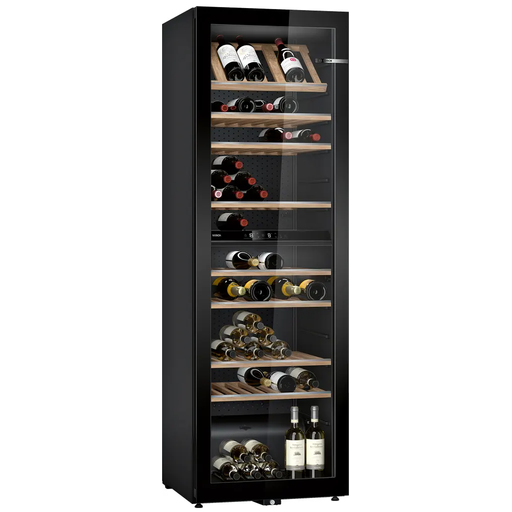
Why it suits this profile: If you mainly need a standard fridge freezer for food and want to store wine separately, a wine cooler with two temperature zones may be worth considering.
This is not a replacement for a fridge freezer. Its dedicated purpose makes the choice clearer and prevents you from counting wine storage as standard fridge space.
Two temperature zones, space for up to 199 bottles according to the product information, LED lighting and a stated noise level of 38 dB.
We have put together a complete, up-to-date list of products that fully meet these strict selection criteria and the applicable European safety regulations.
That depends on the number of people in your household, how often you shop and how much food you freeze. For a family, 300 to 450 litres is often a sensible guideline. Always check the fridge and freezer capacities separately. A large fridge freezer may appear spacious, while the freezer compartment is relatively limited.
Not automatically. No Frost can reduce maintenance, but energy consumption is determined by the appliance’s overall design, capacity, insulation and usage. Therefore, compare the annual consumption in kWh on the European energy label. Low Frost may be the right choice when a lower purchase price and compact dimensions matter more than fully automatic defrosting.
Its lifespan depends on build quality, usage, ventilation and maintenance. Keep the condenser and ventilation openings clear, check the door seals and make sure the appliance is level. For information about the warranty and your statutory rights, consult the seller and manufacturer. This helps prevent an installation problem or poorly sealing door from causing unnecessary energy consumption.
