
Vandaag of morgen in huis

Kwaliteit gegarandeerd

Welkomstaanbiedingen ontgrendelen: GRATIS bezorging | Tot 80% korting | Gratis 30 dagen JoyPlus-proefperiode
Download de app
Choosing a new fridge-freezer might seem straightforward at first. Yet many households end up with a model that won’t fit through the doorway, doesn’t have enough freezer space or uses more electricity than expected. Features such as No Frost, a water dispenser and an app may sound useful, but not every kitchen needs them.
So, keep an eye out for these three common pitfalls:
A compact fridge or fridge-freezer with a capacity of around 200 to 280 litres may be enough for one or two people. Families who often shop for several days at a time will usually benefit from 350 litres or more.
Don’t just look at the total capacity. A model with a large fridge section but a small freezer compartment, for example, may suit someone who mainly stores fresh food. If you use lots of frozen meals, bread or frozen vegetables, you’ll need a generous freezer section with several drawers.
An American-style fridge-freezer or side-by-side fridge-freezer often offers plenty of space and a clear layout. A four-door fridge-freezer can be useful if you want to open separate compartments individually. Bear in mind, though, that these models are wider and heavier than a standard fridge-freezer.
The European energy label for fridges runs from A to G. As well as the energy rating, compare the stated annual consumption in kWh. This figure is more useful for comparing models than a marketing term such as “energy-efficient”.
Examples from the range:
Actual consumption depends on the ambient temperature, how the appliance is used and loaded, and how often the door is opened. Treat the label as a standardised way to compare models, not as a guarantee of what your energy bill will be.
A quiet fridge-freezer is especially important in an open-plan kitchen, studio flat, office or bedroom. Models rated at around 35 to 40 dB are generally considered relatively quiet. The Samsung RB38C607AB1/EF is listed at 35 dB; the CHiQ JR318WSD at 37 dB.
According to the product description, No Frost prevents ice from building up through automatic defrosting. Low Frost generally leads to less ice than a fully manual system, but you may still need to defrost it from time to time. So check whether a model uses Total No Frost, No Frost, Low Frost or manual defrosting.
Before you buy, measure:
A reversible door is handy in a small kitchen. The doors on wider American-style models often can’t be reversed, so always check the product specifications.

Why it suits this household: With a capacity of 205 litres, a width of 54 cm and a reversible door, this model is designed for people living alone, couples and small kitchens.
The fridge and freezer capacities are listed separately: 153 litres for the fridge and 52 litres for the freezer. This makes it easier to see where the space is.
205 litres in total, Low Frost, five fridge settings and a stated noise level of 39 dB.
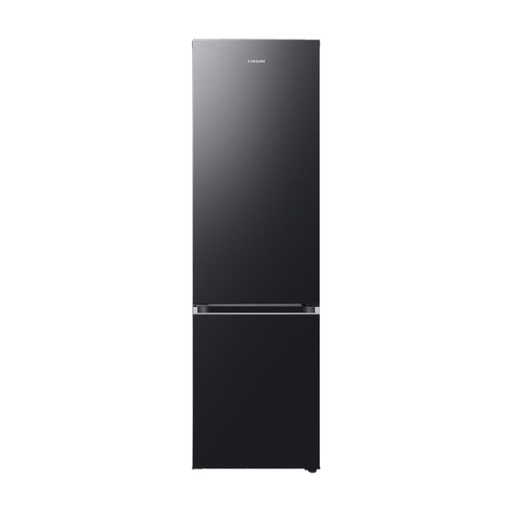
Why it suits this household: This model combines a 387-litre capacity with an A energy rating. It’s a good choice for households that care about energy performance and quiet operation.
Its stated A rating, 108 kWh annual consumption and 35 dB noise level give you specific points of comparison, rather than vague marketing claims.
387 litres of capacity, No Frost+ according to the product description, and separate fridge and freezer controls.
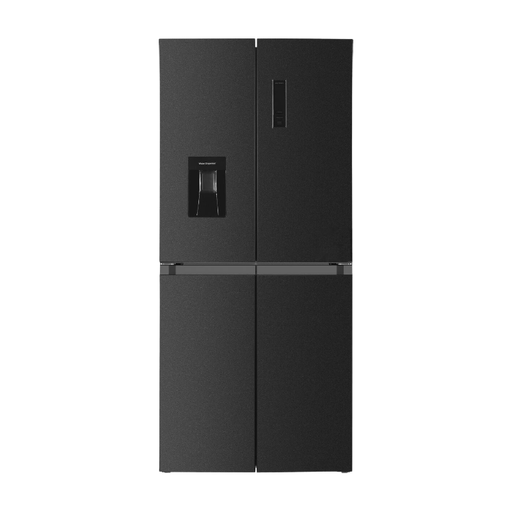
Why it suits this household: With a capacity of 419 litres, two fridge compartments and a water dispenser with a refillable reservoir, this model is well suited to families who shop frequently and in large quantities.
The water dispenser uses a reservoir, so it doesn’t need a fixed water connection. The total capacity is split into 269 litres for the fridge and 150 litres for the freezer.
Energy rating C, Total No Frost, 39 dB and dimensions of 180 × 79 × 70 cm.
After transporting a freestanding fridge-freezer, leave it upright for the period specified by the manufacturer before plugging it in. Make sure the appliance is level and keep the ventilation openings clear. Don’t place a fridge-freezer right next to an oven, radiator or other heat source.
Set the fridge to around 4 °C as a general guide, and check the manual for the freezer compartment. Don’t put hot pans straight into the appliance, and keep the door seals clean. If your fridge-freezer has a water dispenser, use drinking water only and clean the reservoir regularly.
A mini fridge is handy for an office, student room or studio flat, but check whether the model actually has a freezer compartment. Some compact fridges, such as drinks coolers, are designed for cooling only.
We’ve put together a complete, up-to-date list of products that meet these strict selection criteria and the applicable European safety regulations.
One person or a couple can often manage with around 200 to 300 litres. For a family, 300 to 450 litres is more practical, depending on cooking habits and how often you shop. Always consider how the capacity is divided between fridge and freezer space.
No Frost reduces the need to defrost manually. This saves time on maintenance, but the system can affect the price, energy consumption and noise level. So compare the energy label and dB rating as well as the No Frost feature.
Multiply the annual consumption shown on the energy label by your electricity tariff. A model rated at 108 kWh per year uses less electricity according to the standardised figure than a model rated at 250 kWh per year, but actual costs depend on how it’s used and the price of energy.
