
Vandaag of morgen in huis

Kwaliteit gegarandeerd

Welkomstaanbiedingen ontgrendelen: GRATIS bezorging | Tot 80% korting | Gratis 30 dagen JoyPlus-proefperiode
Download de app
A fridge freezer is an appliance you’ll use every day for years. Yet many buyers focus mainly on capacity and price, overlooking important details: will it fit through the door, is the layout practical, and how much will it cost to run each year?
Marketing terms can be confusing too. A water dispenser sounds convenient, but a model with a mains water connection needs more installation. No Frost reduces maintenance, but it doesn’t automatically mean a fridge freezer uses little energy. And a large fridge freezer isn’t always practical if there isn’t enough room for its doors and drawers to open or for ventilation.
An American-style or side-by-side fridge freezer often offers plenty of capacity, but it also takes up considerably more space. Check more than just the external dimensions: consider the door width, clearance for opening the doors and the route into your kitchen. A model that’s 90 cm wide may not fit in a narrow alcove or a flat with a shared gallery walkway.
Also consider how the capacity is split between the fridge and freezer. A large freezer is useful for storing food in bulk, while households that mainly buy fresh food may benefit more from extra fridge space.
The European energy rating scale runs from A to G. Always compare the rating with the stated annual energy consumption in kWh. A larger appliance may use more electricity than a compact fridge, even if its energy rating is favourable.
For example, the Samsung RB38C607AB1/EF is listed with an energy rating of A and annual consumption of 108 kWh. The LG GSXV91MCAE, by contrast, has a much larger capacity of 635 litres, an energy rating of E and stated consumption of 348 kWh per year. This difference depends not only on the rating, but also on the appliance’s size and features.
A fridge freezer with a water dispenser, Wi-Fi controls or InstaView can be convenient, but these features don’t guarantee less food waste or lower energy consumption. According to LG’s product description, InstaView technology is designed to reduce how often you open the door. The actual effect depends on how you use it every day.
If you’re considering a water dispenser, check whether it has a refillable reservoir or needs a mains water connection. A reservoir is generally easier to set up. With an American-style fridge freezer that has an ice function, you’ll also need to consider cleaning and the space available.
Measure the space, including skirting boards and any handles that stick out. Allow for:
A reversible door is useful in a small kitchen. According to their product information, models such as the CHiQ JR318WSD and Wiggo WL-TT82D(B) offer flexible door fitting.
A compact fridge with a capacity of around 90 to 130 litres may be enough for a small household. Families usually need more capacity, with a fridge freezer of around 250 to 400 litres. Larger households, or people who buy a lot of food in one go, could consider a side-by-side fridge freezer.
Don’t just look at the litres. Check:
A fridge freezer with the freezer at the bottom keeps fresh food within easy reach at eye level. A top freezer may be more convenient if you often take out frozen food.
According to the product description, a No Frost fridge freezer limits or prevents moisture and ice build-up in the fridge and freezer compartments. This generally means you won’t need to defrost it by hand. Low Frost reduces ice build-up, but may still require occasional maintenance.
Noise levels are given in decibels, often as dB(A). Product specifications describe models between 35 and 40 dB as relatively quiet, but how noticeable the noise is also depends on the floor, the room and the compressor cycles. If your kitchen is open-plan, or you live in a studio or have a bedroom nearby, a quiet fridge freezer is an important factor to compare.
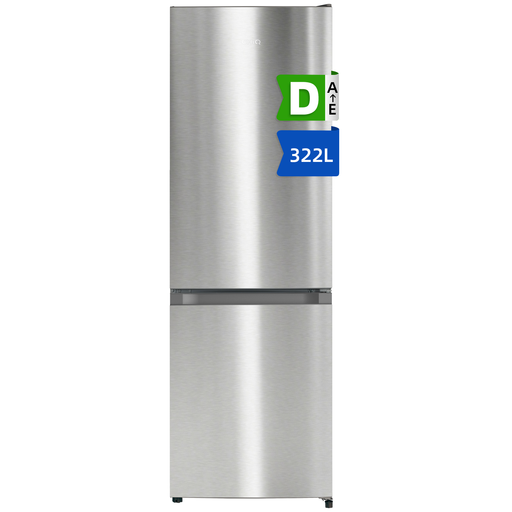
Why it suits this type of buyer: A practical fridge freezer for households looking for a full-size model without the dimensions of an American-style appliance. It has 226 litres of fridge space and 96 litres of freezer space.
The stated dimensions are 185,5 × 59,5 × 63,5 cm. According to the product description, Total No Frost means you won’t need to defrost it by hand, while the reversible door gives you more flexibility when positioning it.
322 litres in total, energy rating D, 37 dB, Multi-Airflow and a door-open alarm.
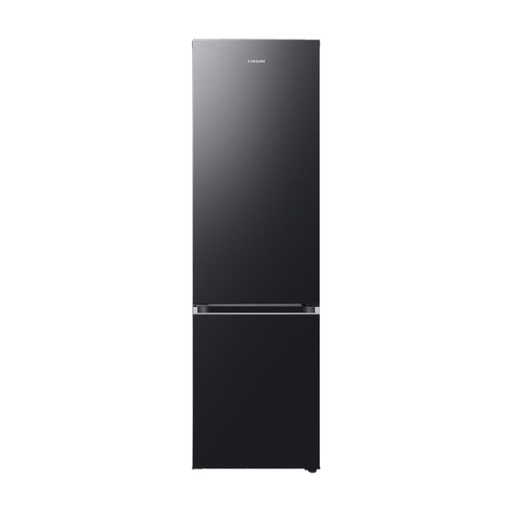
Why it suits this type of buyer: This fridge freezer offers 387 litres of capacity and a relatively low stated annual energy consumption of 108 kWh.
The specifications list No Frost+, energy rating A and a noise level of 35 dB. Do check that the height of 203 cm will fit in your kitchen.
Energy rating A, 108 kWh per year, 35 dB and an Optimal Fresh+ drawer, according to the product description.
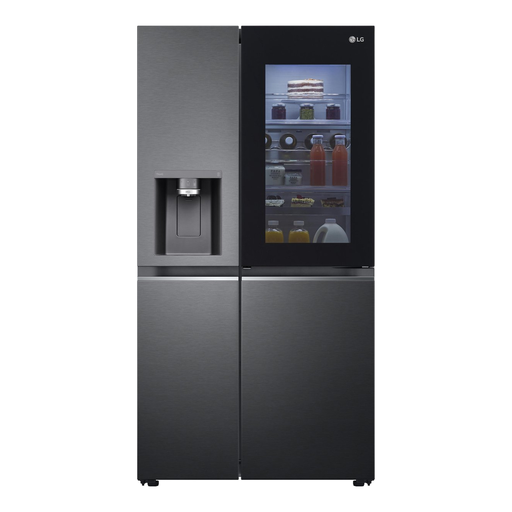
Why it suits this type of buyer: Ideal for large families or households that store a lot of chilled and frozen food. According to the specifications, this American-style fridge freezer has 416 litres of fridge space and 219 litres of freezer space.
The capacity is clearly split between the fridge and freezer. You can use this to check whether the width of 91,3 cm and depth of 73,5 cm will work in your home before ordering.
635 litres in total, No Frost, 36 dB, water and ice dispenser, and ThinQ Wi-Fi, according to the product information.
Short on space, or looking for an extra fridge for an office, student room or utility room? The Wiggo WL-TT82D(B) has a capacity of 126 litres, stands 84,5 cm tall and has a reversible door. It has a stated energy rating of D, annual consumption of 72 kWh and a noise level of 39 dB. It’s not a full-size fridge freezer for a family, but it’s a practical choice for everyday use on a smaller scale.
With any compact model, check that it has a usable freezer compartment. Some models, such as drinks coolers and fridges for small households, only offer fridge space.
We’ve put together a complete, up-to-date list of products that meet these strict selection criteria and the applicable European safety requirements.
Around 200 to 300 litres may be enough for one or two people. Families often need more, typically 300 to 400 litres. If you buy in bulk or freeze a lot of food, you could consider a larger fridge freezer or an American-style model. Always check the separate fridge and freezer capacities.
No Frost can reduce maintenance because, according to the product description, you won’t need to defrost the appliance by hand. Compare energy consumption, noise levels and price too. The term No Frost alone doesn’t tell you how much electricity a model uses.
Its lifespan depends on how you use it, ventilation, maintenance and the quality of its door seals. Clean the seals, keep the air vents clear and don’t place the appliance next to a heat source. Before buying, also check the statutory guarantee and any additional manufacturer’s warranty.
