
Market-goer with limited space
You want space for yoghurt and a small amount of other shopping in a compact kitchen. Focus on the external dimensions and usable fridge capacity, as the Consumers’ Association also recommends when choosing a model.


Choose an under-counter fridge if space is limited and its capacity is enough for you; opt for a tall fridge without a freezer compartment if you often bring home larger amounts of fresh shopping. A fridge-freezer is mainly suitable if you genuinely need freezer space too. The Netherlands Nutrition Centre recommends storing chilled dairy products at 4 °C: keep your yoghurt cool on the way home and check your fridge’s temperature once you’ve put it away.
You want space for yoghurt and a small amount of other shopping in a compact kitchen. Focus on the external dimensions and usable fridge capacity, as the Consumers’ Association also recommends when choosing a model.
You regularly come home with several chilled products and want plenty of well-organised fridge space. The Netherlands Nutrition Centre recommends keeping chilled dairy products refrigerated, so consider how much space you need for your fresh shopping.
As well as space for yoghurt, you have a specific need for a freezer compartment. Compare the fridge and freezer capacities separately so you know how much room is available for fresh food.
Start by checking the temperature and considering how much fridge space you need. The Netherlands Nutrition Centre recommends storing chilled dairy products at 4 °C; a stated feature or setting is no substitute for measuring the temperature in your own fridge.
| What to consider | What to look for | Who is this important for? |
|---|---|---|
| Checking the temperature | Check whether you can adjust the temperature, then measure it with a fridge thermometer once the fridge is in place. | I want to know whether my yoghurt is kept chilled at home. Around 31% of consumers put temperature control first. |
| Fridge space and dimensions | Compare the fridge capacity in litres with the external dimensions and the space available; don’t count freezer litres as fridge space. | If I come home with fresh shopping and have limited kitchen space, both the fridge and its contents need to fit. Around 25% of consumers prioritise suitable fridge capacity and dimensions. |
| Freezer compartment | Compare the fridge and freezer capacities separately, and only choose a fridge-freezer if you need freezer space too. | I want to store frozen food as well as yoghurt and need to know how much fridge space will remain. Around 19% of consumers prioritise freezer space. |
| Electricity consumption | Compare the energy label and the stated annual consumption in kWh for the exact model. | Once I’ve found a fridge that fits, I also want to take its stated electricity consumption into account. Around 13% of consumers prioritise energy consumption. |
| Noise | Compare the stated dB rating of the exact models; this figure isn’t a measurement of the noise in your room. | I’m placing the fridge near a living or sleeping area and want to consider its stated noise level. Around 12% of consumers prioritise noise where the appliance will be used. |
A feature description doesn’t prove what temperature your yoghurt reaches in the fridge. The Netherlands Nutrition Centre recommends storing chilled dairy products at 4 °C.
Measure the temperature with a fridge thermometer once the fridge is in place, and adjust the settings if needed.
The freezer compartment isn’t available for yoghurt and other chilled shopping.
So you’ll have less usable fridge space than the total capacity suggests.
Compare the stated fridge and freezer capacities separately before choosing a model.
Your fridge at home won’t keep your yoghurt cool while you’re travelling back from the market.
The Netherlands Nutrition Centre recommends buying perishable products last and using a cool bag on the way home. Put them away as soon as you get home, following the label instructions.
The KK550 is an under-counter model with no stated freezer compartment, for anyone who values compact external dimensions.
The models listed include both a tall fridge without a freezer compartment and a fridge-freezer.
The Rc 1400 Pure is a compact under-counter model whose stated noise level and temperature settings may be worth considering.
The RSSE415M41WN is a spacious freestanding fridge with no freezer compartment stated.
This selection includes under-counter and compact fridges, as well as fridge-freezers. With a fridge-freezer, always compare the fridge capacity separately from the freezer capacity.
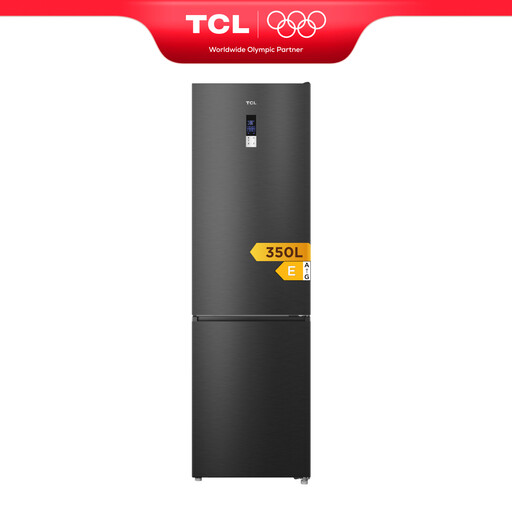 No image available
Suited to anyone who needs freezer space as well as room for fresh shopping.
Total capacity: 350 l; fridge space: 248 l; freezer space: 102 l. Energy rating E.
The description mentions adjustable shelves and a Fresh Zone drawer.
 No image available
An under-counter fridge without a freezer compartment, for anyone short on space who doesn’t need a freezer.
Fridge space: 88 l. Energy rating E. The description mentions mechanical temperature control and adjustable shelves.
According to the product description, manual defrosting is needed if a lot of ice has built up.
 No image available
Suited to anyone looking for a compact appliance for chilled shopping and a separate freezer compartment.
Total capacity: 109 l; fridge space: 95 l; freezer space: 14 l. Energy rating C.
The description mentions adjustable glass shelves.
 No image available
A compact option for anyone looking for a main fridge compartment and a separate chiller box.
Capacity: 90 l. The stated temperature range for the main fridge compartment is 0–10 °C; this range doesn’t prove what temperature the yoghurt will reach in use.
The stated dimensions are 449 × 485 × 842 mm.
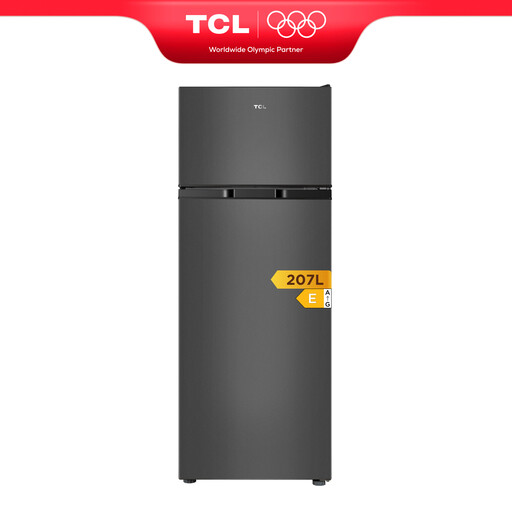 No image available
Suited to anyone who wants to store fresh shopping and frozen food in one appliance.
Total capacity: 207 l; fridge space: 167 l; freezer space: 40 l. The stated width is 55 cm. Energy rating E.
The description mentions adjustable shelves and a Crisper Drawer.
The Netherlands Nutrition Centre recommends buying perishable products last and carrying them in a cool bag. As soon as you get home, put the yoghurt away according to the storage advice on the packaging; your fridge at home won’t keep it cool on the way back.
The Netherlands Nutrition Centre recommends storing chilled dairy products at 4 °C. Place a fridge thermometer in the middle of the bottom shelf, keep the fridge closed for half a day or overnight, then adjust the temperature if needed. This is storage advice, not a guarantee that every model will maintain that temperature in all conditions.
For the specific semi-skimmed yoghurt described, the Netherlands Nutrition Centre gives a guideline of 5–7 days after opening when kept chilled. Use clean cutlery and follow the label for an unopened pack; don’t automatically apply this storage period to every type of yoghurt.
Compare the energy label for the exact model and its stated annual consumption in kWh. Since 1 March 2021, the EU energy label for household fridges has used a scale from A to G; the stated annual consumption isn’t a guarantee of what it will cost you at home.
No, buying an extended warranty isn’t a legal requirement in the Netherlands. According to the Dutch government, consumer products are covered by a statutory guarantee, and if a product is faulty, the retailer must provide an appropriate solution. Compare the terms of any extended warranty with the rights you already have.