
Cooking for a shared meal
You’re storing lettuce and other fresh ingredients for several people and want to keep everything organised and separate until dinner.


Start with a fridge that has a usable salad drawer, where you can keep lettuce separate from raw meat or fish. The Netherlands Nutrition Centre recommends a fridge temperature of 4 °C. Then choose a model based on the cooling capacity you need, its layout, the space available and its stated annual energy consumption. A freshness compartment doesn’t change storage instructions or the shelf life of lettuce.
You’re storing lettuce and other fresh ingredients for several people and want to keep everything organised and separate until dinner.
You also need room for other groceries and want to check whether the fridge compartment and salad drawer offer enough usable space.
The available floor or alcove space determines your choice. For a built-in model, you’ll also need to check the recess dimensions and door mounting.
First, check that you can keep lettuce chilled and separate from other foods. Then choose the capacity, installation type and annual energy consumption to suit your household.
| What to consider | What should you check? | Who should pay extra attention? |
|---|---|---|
| Storing lettuce safely | Check the temperature setting and whether the salad drawer is suitable for keeping lettuce separate from raw meat or fish. | If I’m serving lettuce raw, I want to keep it chilled and away from meat or fish juices. Around 33% of consumers prioritise safe storage. |
| Usable fridge space | Compare the net fridge capacity separately from the freezer capacity, and check whether the drawer and shelves suit your groceries. | If I want to chill ingredients for several people at once, I need enough usable space. Around 27% of consumers prioritise fridge capacity. |
| Size and installation | Measure the available space. For a built-in model, also check the recess dimensions and door mounting for the exact model. | If there’s only one set place for the fridge in my kitchen, it needs to fit there properly. Around 20% of consumers prioritise fit. |
| Energy consumption | For models that fit your space, compare both the energy rating and the stated annual consumption in kWh. | If I’m choosing a fridge for everyday use, I want to take its annual energy consumption into account. Around 20% of consumers prioritise energy consumption. |
Storage instructions depend on the type of lettuce, its packaging and the date on the pack. A freshness claim for a drawer doesn’t give the lettuce a new use-by date.
Check the date and follow the storage instructions for the specific product. Only choose extra freshness features if the layout also suits your other groceries.
In a fridge freezer, some of the capacity is taken up by the freezer. So the total capacity doesn’t tell you how much room there is for lettuce and other fresh ingredients.
First compare the fridge capacity you need and the external dimensions. Then check the stated annual energy consumption of models that fit.
Recess width, recess depth and door mounting vary between models and also affect whether the fridge can be installed.
Measure the entire recess and check the installation details for the exact model before making your choice.
The brand offers freestanding fridge freezers and built-in fridges, with BioFresh features that vary by model.
The range includes freestanding fridge freezers and built-in fridges, with VitaFresh features that vary by model.
Beko offers freestanding fridges and fridge freezers, including models with a separate salad drawer.
These product suggestions are for anyone looking for a practical place to store lettuce and other fresh ingredients, with options for built-in installation, different sizes and fridge-freezer layouts.
 No image available
An option to compare if you’re looking for a fridge with a salad drawer. Check that the usable drawer space and external dimensions suit your meal ingredients and kitchen.
The product name lists a 54 cm fridge in white, with energy class E.
 No image available
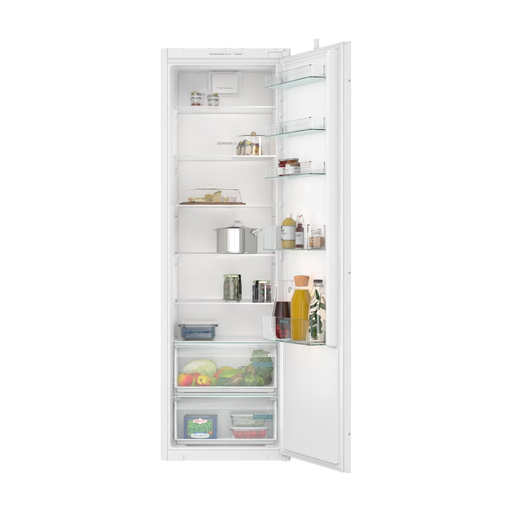
A built-in option if you’re mainly looking for fridge space for fresh groceries. Check the recess and door mounting before choosing this model.
The product name lists a height of 80 cm, a fixed hinge, LED lighting and a reversible door.
 No image available
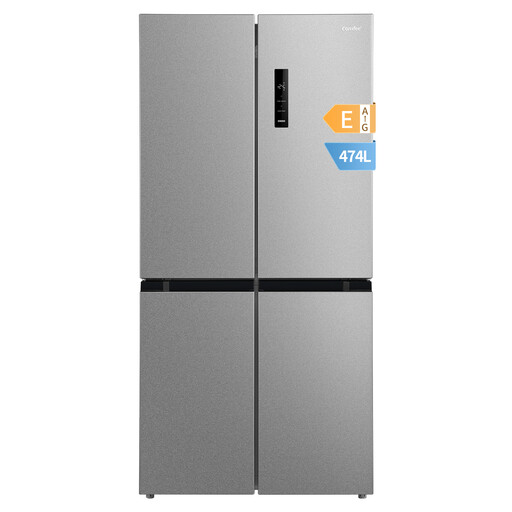
An option to compare if you’re looking for a salad drawer with several temperature settings. Check that the layout offers enough usable space and that the appliance will fit.
The product name lists a four-door fridge, a Vario Box, a salad drawer with three temperature settings and energy class E.
 No image available
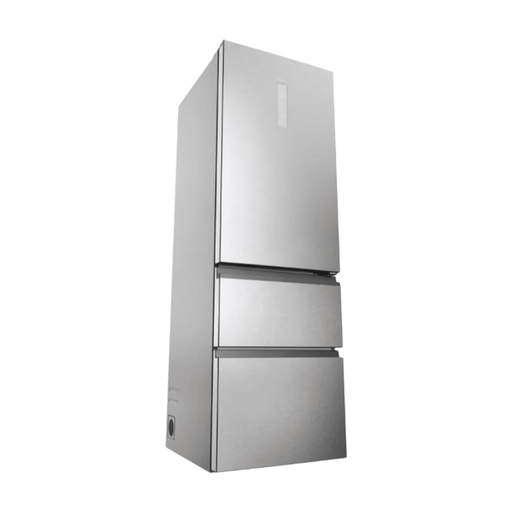
A freestanding fridge freezer to compare if you need freezer space as well as fridge capacity. Check how much room remains for fresh ingredients.
The product name lists a 360 l capacity, Total No Frost, an inverter motor and Wi-Fi connectivity.
 No image available
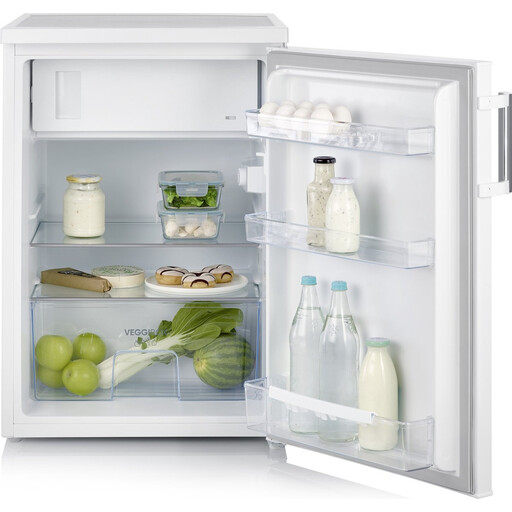
The product name describes this as a tabletop model with a freezer compartment. Compare its stated capacity and installation dimensions with the space you need for lettuce and other groceries.
The product name lists a 120 l capacity and energy class C.
The Netherlands Nutrition Centre recommends a fridge temperature of 4 °C. Keep lettuce that needs chilling according to the packaging and the instructions for that specific product.
Don’t assume it can. Keep the lettuce chilled, check the date and follow the instructions on the packaging. A fridge feature claim isn’t a reason to assume you can store it for longer.
According to the Netherlands Nutrition Centre, keep chilled vegetables in the salad drawer and prevent them from coming into contact with juices from raw meat or fish. Clean the drawer regularly.
Compare the recess and door mounting with the specifications for the exact model. For example, Bosch lists a recess measuring 1775 × 560 × 550 mm for the KIR81ADC0; these dimensions don’t automatically apply to other fridges.
Compare the stated annual consumption in kWh for fridges that meet your space requirements. To estimate your personal costs, multiply the difference in annual consumption by your own price per kWh. Actual consumption may vary.