
Cook with small amounts of leftover herbs
You use a little parsley, coriander or basil at a time and want to check whether your storage method and fridge temperature are suitable. Voedingscentrum offers advice on storing fresh herbs.


You don’t automatically need a different fridge for a small amount of leftover herbs. First, check that your existing fridge is set to around 4 °C, and store leftovers on the bottom shelf wrapped in damp kitchen paper, as advised by Voedingscentrum. If you do need a replacement or extra fridge space, choose a size that suits all your shopping; a freezer compartment is mainly useful if you want to freeze herbs. A vegetable or freshness drawer alone is no guarantee that herbs will keep for longer.
You use a little parsley, coriander or basil at a time and want to check whether your storage method and fridge temperature are suitable. Voedingscentrum offers advice on storing fresh herbs.
You’re looking for a fridge that will fit in a small kitchen and want to know how much usable cooling space and room for installation it requires. Consumentenbond highlights the difference between under-counter models and larger fridges when choosing.
You want to freeze unused herbs in small portions and are weighing up whether you need a fridge with a freezer compartment. Voedingscentrum lists freezing as a way to store fresh herbs.
Suitable when: there’s room for the herbs on the bottom shelf and a thermometer reads around 4 °C.
Trade-off: you avoid buying another appliance, but you’ll need to check the temperature yourself.
Suitable when: you’re replacing a fridge anyway or regularly need more fridge space for herbs and other shopping.
Trade-off: you can’t freeze herbs in this appliance.
Suitable when: you regularly want to freeze small portions of herbs and don’t have a suitable freezer.
Trade-off: check that the freezer compartment is suitable for this and how much fridge space will remain.
| What to consider | What should you check? | Who is this most relevant to? |
|---|---|---|
| Keeping herbs at the right temperature | Measure the temperature at the bottom of the fridge and check whether there’s room for small amounts of leftover herbs. | I want to check whether my current fridge can store herbs properly before buying another appliance. This is the main priority for around 36% of consumers. |
| Size and fridge capacity | Compare the external dimensions and required ventilation space, and check the fridge capacity separately from any freezer capacity. | I have limited space but still want enough room for my regular shopping. A suitable size and usable fridge capacity are the main priorities for around 29% of consumers. |
| Energy consumption | Compare the energy label and stated annual consumption in kWh for models with a suitable capacity and features. | I want to factor in ongoing energy use, especially if I’m considering buying an extra fridge. This is the top priority for around 21% of consumers. |
| Being able to freeze herbs | Check whether you already have a suitable freezer. If not, see whether the model’s freezer compartment is suitable for freezing fresh food. | I want to freeze unused herbs and don’t have another suitable freezer. This is the main priority for around 14% of consumers. |
Your current fridge may already be suitable for small amounts of leftover herbs. Milieu Centraal points out that two cooling appliances use more electricity together than one large appliance.
First, measure the temperature and check whether there’s enough room for the leftovers on the bottom shelf.
Manufacturers often describe these drawers as being for fruit and vegetables; that doesn’t prove they offer a specific benefit for fresh herbs.
Use a drawer to organise your food if it’s convenient, but follow the storage method and time recommended for the herb in question.
The fridge and freezer compartments serve different purposes, and not every freezer compartment is suitable for freezing fresh food.
Compare the fridge and freezer capacities separately, and check what the specific freezer compartment can do.
The TLT4702W is an under-counter model without a freezer compartment, while the TRT4702W has one. Both models may be worth considering if you’re deciding whether you only need fridge space.
According to Inventum, the KK55EXP is an under-counter model without a freezer compartment and has 131 litres of fridge space. It may be worth considering if you’ll also be storing your regular shopping in the fridge.
According to Bosch, the KTR15NWEB is an under-counter model without a freezer compartment, with a Multi Box and SuperCooling.
According to Liebherr, the Rci 1620 Plus is an under-counter model with EasyFresh and a total capacity of 141 litres.
According to AEG, the RTB414D2AW is a freestanding fridge without a freezer, which may suit you if you have more space than a very narrow under-counter model requires.
These models are designed for compact storage of leftover herbs and other shopping, with options both without a freezer compartment and with one.
 No image available
A compact option for keeping leftover herbs and other shopping chilled, without a freezer compartment.
88 litres of fridge space, E energy rating, three adjustable shelves and a vegetable drawer.
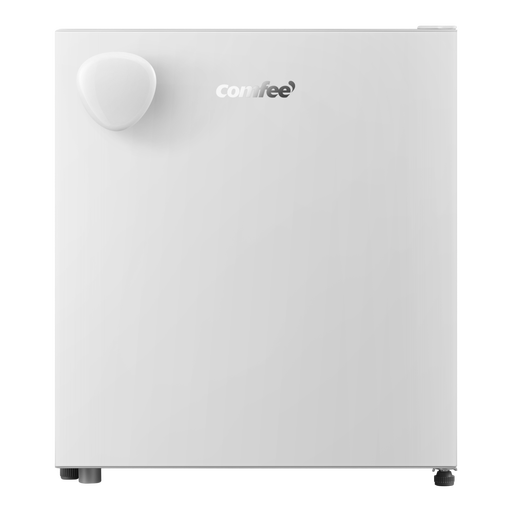 No image available
A compact fridge for leftover herbs and other chilled shopping in a small kitchen.
The stated width is 44,5 cm; the model is described as suitable for installation under a worktop. According to the product description, the separate cooling zone is for short-term chilling only; don’t store food in it for longer than 2 hours.
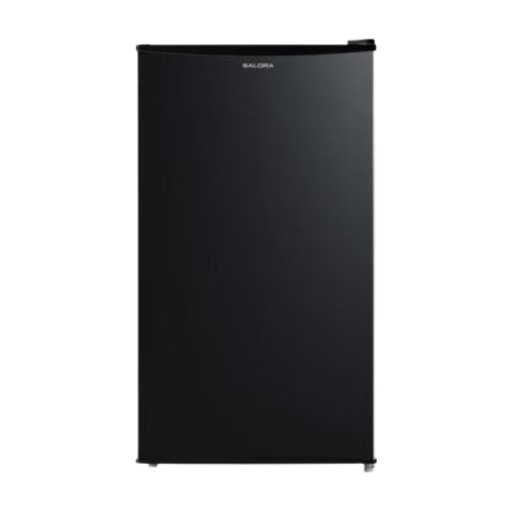 No image available
An option if you want to keep herbs chilled and also need a freezer compartment.
68 litres of capacity, a 4-star freezer compartment, E energy rating and a stated noise level of 41 dB.
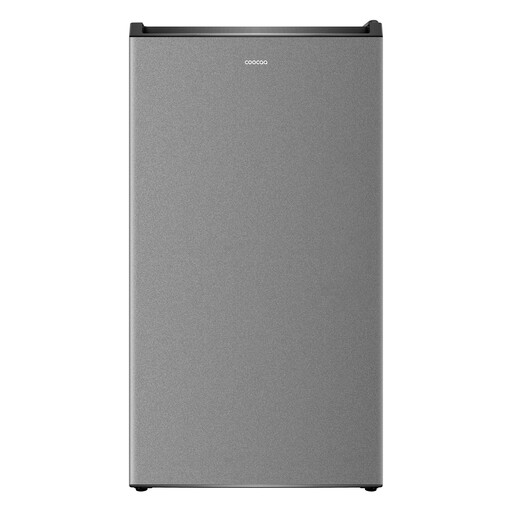 No image available
A compact model without a freezer compartment for chilled leftovers and other shopping.
83 litres of fridge space, E energy rating, a vegetable drawer and adjustable feet. The product description lists temperature control.
 No image available
A compact model without a freezer compartment for small portions and other chilled shopping.
92 litres of capacity, 47 cm wide, E energy rating, adjustable glass shelves and a vegetable drawer. The product name states that the model has seven temperature settings. The chill drawer is described as suitable for short-term storage of meat or fish, not as a storage zone for herbs.
Not necessarily. First, check whether your existing fridge is at around 4 °C and whether the herbs fit on the bottom shelf. An extra fridge also means extra ongoing energy use; Milieu Centraal says that two cooling appliances use more electricity together than one large appliance.
Voedingscentrum advises wrapping leftover herbs in sheets of damp kitchen paper and storing them at the bottom of the fridge. For opened parsley and coriander, Voedingscentrum recommends 4 days in the fridge; follow the label for an unopened pack.
Place a fridge thermometer in the middle of the bottom shelf and leave it there for half a day or overnight, as advised by Voedingscentrum. Adjust the fridge if the reading is above the recommended 4 °C.
Compare the stated annual consumption in kWh on the energy label. To estimate your own costs, multiply this figure by your own price per kWh; actual consumption also depends on how and where the appliance is used.
If a product is faulty, the retailer is your point of contact for your statutory guarantee; according to Rijksoverheid, there is no set statutory guarantee period in the Netherlands. When you buy a new fridge, you can return an old, similar fridge under the old-for-new scheme. Fridges must also have an energy label.