What should you look for?
Start by considering where you’ll store sealed containers and at what temperature; then decide whether you also need freezer space. An extra fridge also takes up room and uses electricity, so compare having your own appliance with using the fridge you already share.
| What to consider |
What to look for |
Who should prioritise this? |
| Keeping food cold |
Check the storage spot with a fridge thermometer and adjust the setting towards 4 °C. |
If I want to know whether my containers are cold enough on the shelf, I don’t rely on the thermostat setting alone. Around 33% of consumers prioritise this check. |
| A dedicated space and layout |
Measure the space and your containers; check the fridge capacity, shelves, door clearance and ventilation requirements. |
If I need an accessible spot for sealed containers in a shared kitchen, I want to know whether the layout will work. Around 27% of consumers put space and accessibility first. |
| Storing food for longer |
Check whether the freezer compartment has a four-star rating and compare the fridge and freezer capacities separately. |
If I want to freeze portions rather than just keep them chilled, I check the type of freezer compartment. This is a priority for around 20% of consumers. |
| Energy consumption |
Compare the annual energy consumption in kWh of appliances that are the right size for your needs. |
If I’m considering an extra appliance, I want to factor in its energy use alongside that of the shared fridge. Around 13% of consumers focus most on energy consumption. |
| Noise |
Compare the stated noise levels of the exact models and consider where the appliance will go. |
If the fridge will be close to a living or working area, I want to take the stated noise level into account without treating it as a measurement of the noise in my kitchen. Around 7% of consumers give noise the greatest weight. |
Fridges at Joybuy
These are tabletop fridges designed for compact spaces; the selection below includes models both with and without a freezer compartment. Before choosing, check that the layout suits your containers, then measure the temperature at the storage spot once the fridge is in place.
 No image available
Bella BKV555-040CW tabletop fridge with freezer compartment
A potential fit if you’re looking for a compact fridge with a freezer compartment; check how much room will be left for everyday containers.
95 l fridge compartment, two glass shelves, salad drawer and three door compartments.
Energy class C; stated annual energy consumption of 89 kWh.
View at Joybuy
 No image available
Exquisit KS16-4-051CW tabletop fridge with freezer compartment
A potential fit if you want to combine chilled storage and freezer space in one tabletop model; bear in mind the room taken up by the freezer compartment.
107 l fridge capacity and 13 l freezer capacity.
Energy class C; stated annual energy consumption of 87 kWh.
View at Joybuy
 No image available
Wiggo WL-BTT88E(W) tabletop fridge, 54 cm
A potential fit if you’re looking for a tabletop fridge without a freezer compartment for sealed containers; measure the available space and door clearance.
129 l fridge capacity, two glass shelves, salad drawer and adjustable shelves.
Energy class E; stated annual energy consumption of 92 kWh.
View at Joybuy
 No image available
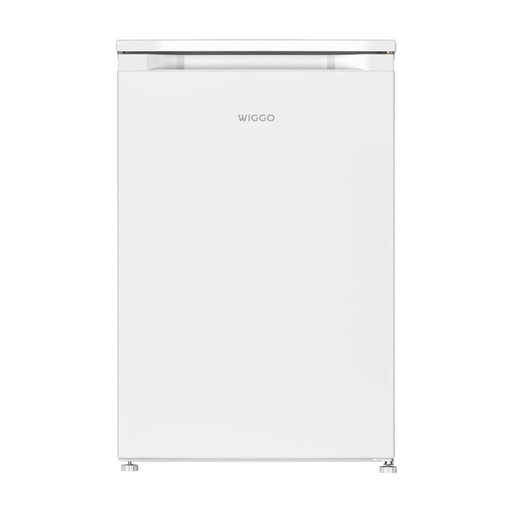
Wiggo WL-TT82D(W) tabletop fridge, 55 cm
A potential fit if you’re considering a separate fridge without a freezer compartment for containers; measure the space and check the storage temperature once it’s in place.
107 l fridge capacity, with a glass shelf, salad drawer and door compartments.
Mechanical temperature control, reversible door and built-in defrost function.
View at Joybuy
 No image available
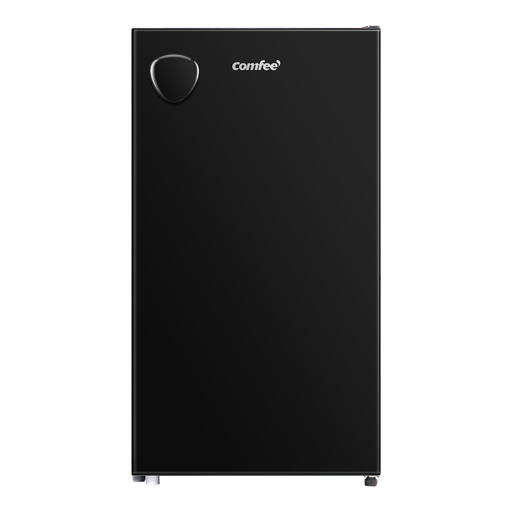
COMFEE' RCD92BL2EUY(E) under-counter fridge
A potential fit if you’re looking for a compact fridge for a small kitchen or workspace; check the available installation and ventilation space.
88 l capacity, removable glass shelves and salad drawer.
Adjustable thermostat, reversible door and energy class E.
View at Joybuy
Frequently asked questions
How long can cooked vegetables be kept in the fridge?
The Netherlands Nutrition Centre recommends keeping them in the fridge for two days. Let leftovers cool, put them in the fridge in a well-sealed container within two hours and store them at 4 °C. For longer storage, the Centre recommends freezing them.
How do I check the temperature in a shared fridge?
The Netherlands Nutrition Centre recommends placing a fridge thermometer in the middle of the bottom shelf and leaving it there for half a day or overnight. Adjust the fridge if the reading is above 4 °C, and agree that leftovers will be sealed and stored separately from raw food.
Can I freeze leftovers in any small freezer compartment?
No. Check the star rating of the exact model. According to the Dutch Consumers’ Association, a four-star freezer compartment is suitable for freezing fresh food.
What should I consider when installing my own fridge?
Follow the manual for the specific model when it comes to ventilation and installation. For example, the Inventum KK550 manual specifies 10 cm of clearance all around; this distance doesn’t automatically apply to other models.
How do I compare the energy consumption of fridges?
Compare the stated annual energy consumption in kWh of models that are the right size for your needs, then calculate the cost using your own electricity tariff. The Dutch Government lists fridges among the appliances that require an energy label; the EU scale runs from A to G.
What consumer rights apply if a fridge doesn’t work properly?
When you buy as a consumer, you’re entitled to a product that conforms to the agreement. According to the Dutch Government, you should contact the seller first if there’s a fault; the Netherlands has no fixed statutory guarantee period.


