
Cook who needs to chill leftovers quickly
You cook around an evening class and want to store your lentils in a sealed container in the fridge promptly. Temperature control and storage time matter more than extra fridge features.


To store cooked lentils after an evening class, choose a fridge with enough room for sealed portions and set the fridge compartment to 4 °C; then check the actual temperature. Cool the lentils quickly and refrigerate them in a sealed container within 2 hours of cooking. A freezer compartment is most useful if you want to keep portions for more than 2 days, but in a compact model it takes up space that could otherwise be used for chilled food.
You cook around an evening class and want to store your lentils in a sealed container in the fridge promptly. Temperature control and storage time matter more than extra fridge features.
You need room for sealed portion containers without having to fit in a large appliance. The external dimensions, usable fridge space and layout all help determine what will fit.
You often cook more lentils than you can eat within 2 days and want to weigh up whether a freezer compartment or a larger fridge-freezer suits your storage routine.
The Netherlands Nutrition Centre advises cooling lentils quickly, putting them in a sealed container in the fridge or freezer within 2 hours of cooking, and eating chilled leftovers within 2 days. Set the fridge to 4 °C and check the actual temperature.
| What to consider | What should you check? | Who is this important for? |
|---|---|---|
| Prompt, verifiable chilling | Check how to set the temperature, then measure it after installation with a separate fridge thermometer. Also plan to cool the lentils quickly and store them in a sealed container within 2 hours of cooking. | After an evening class, I want to chill my lentils quickly in a covered container and check the actual temperature; around 36% of consumers say prompt, verifiable chilling is their main concern when buying. |
| External dimensions and fridge space | Measure the height, width and depth of the space, then compare the fridge compartment’s capacity with the dimensions of your containers. | In a small kitchen, I want to store portion containers alongside my other shopping without the appliance taking up too much room; around 29% of consumers focus mainly on the available space and usable fridge capacity. |
| Keeping food for longer | Compare the fridge and freezer capacities separately and check whether your portions will fit in the freezer compartment. If there is no freezer compartment, you will need a separate freezer to store food for longer. | If I won’t eat my lentils within 2 days, I want to be able to freeze portions; around 21% of consumers say keeping food for longer is their main concern when buying. |
| Energy use and noise | Compare the annual energy use in kWh and the fridge capacity on the EU energy label. Also consider the stated noise level in relation to where you plan to put the fridge. | If the fridge is close to where I sleep or work, I want to take its stated noise level and annual energy use into account; around 14% of consumers focus mainly on running costs or noise in the location where the appliance will be installed. |
The Netherlands Nutrition Centre advises not leaving leftovers unrefrigerated for more than 2 hours. An extra fridge feature cannot make up for an earlier break in your storage routine.
Cool the lentils quickly and refrigerate them in a sealed container; only then consider any extra features.
In a compact model with a freezer compartment, some of the capacity is taken up by frozen storage. That leaves less room for chilled containers.
Compare the fridge and freezer capacities separately, and measure your containers before choosing a model.
According to the Netherlands Nutrition Centre, the set temperature or display may not match the actual temperature inside the fridge.
After installation, check the temperature with a separate fridge thermometer and adjust it towards 4 °C if needed.
As well as the energy rating, the EU energy label shows energy use and the capacity of the compartments. The rating alone therefore does not tell you how much space you will get or how much energy the appliance will use each year.
Compare the annual energy use in kWh with the fridge space you need; calculate the cost using your own electricity tariff.
The KK550 and KV550 are examples of compact under-counter models, with and without a freezer compartment.
The Bosch KTR15NWEB is an under-counter model without a freezer compartment, useful for comparing fridge capacity and specifications.
The Rc 1400 Pure is an under-counter model to consider if width, depth and stated noise level are important to you.
The MDRB600MIC46 is a larger fridge-freezer for households that store more than just lentils.
This selection includes compact under-counter models for chilled portions, models with a freezer compartment and a fridge-freezer. Compare the separate fridge and freezer capacities with your portions and the space available.
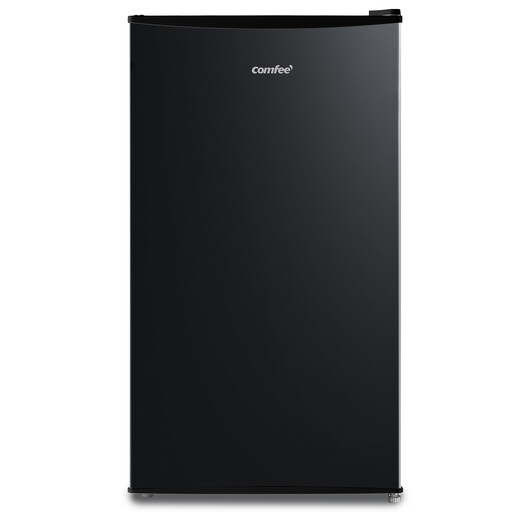 Image unavailable
For chilled portions and small amounts you want to freeze; check that the separate compartments will fit your containers.
68 l fridge space and 12 l freezer space; temperature control; height 84,5 cm; energy rating E.
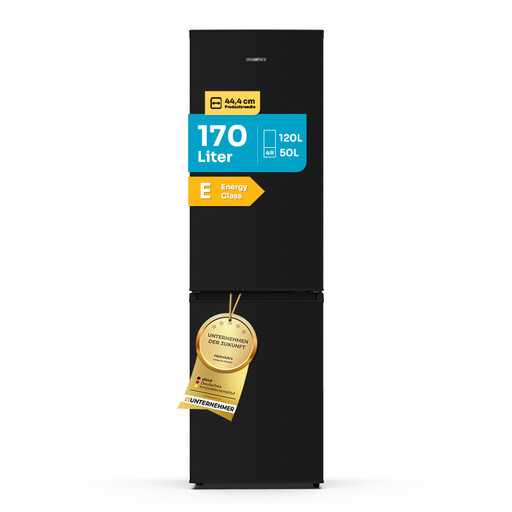 Image unavailable
A combination appliance for storing chilled portions and larger frozen portions separately; measure the space available for the appliance too.
120 l fridge space and 50 l freezer space; stated noise level 40 dB; energy rating E.
 Image unavailable
An under-counter model for chilled portions; check that the stated fridge capacity and shelf layout suit your containers.
88 l fridge space; three adjustable glass shelves; mechanical temperature control; energy rating E.
 Image unavailable
For anyone who wants to store chilled portions and portions to freeze in one compact appliance; check the space in each compartment.
95 l fridge space and 14 l freezer space; two glass shelves; adjustable temperature control; energy rating C.
 Image unavailable
An under-counter model for chilled portions alongside your other shopping; measure the space and check whether the shelf layout works for you.
129 l capacity; two adjustable glass shelves; temperature control; 54 cm wide; energy rating E.
The Netherlands Nutrition Centre recommends 4 °C. Place a fridge thermometer in the middle of the bottom shelf and leave it there for half a day or overnight; adjust the fridge if the measured temperature is higher. Don’t rely only on the temperature setting or display.
First, cool the leftovers quickly, then put them in a sealed container in the fridge or freezer within 2 hours of cooking. Don’t put a large amount of hot food in the fridge, as this can raise the temperature of other food.
Not if you’ll eat the chilled leftovers within 2 days at most. If you want to keep them for longer, the Netherlands Nutrition Centre recommends freezing them; you can also use a separate freezer.
On the EU energy label, compare the annual energy use in kWh alongside the capacity of the fridge and freezer compartments. Actual costs also depend on your electricity tariff and how you use the appliance.
According to the Dutch government, a product must meet the standard you can reasonably expect from it. There is no fixed statutory guarantee period in the Netherlands; if there is a fault, contact the retailer, even if the product also comes with a manufacturer’s guarantee.
According to the Dutch government, when you buy a new appliance of a similar type, the take-back scheme applies: the shop must take your old appliance. Agree in advance how you’ll hand it over when your new one is delivered.