
For shoppers short on fridge space
You want a dedicated place to keep opened hummus after class, but don’t have much room for a fridge. Measure the available space and check the temperature after installation.


If you leave your opened hummus at home, choose a fridge that can actually reach 4 °C where you plan to use it. For chilled transport on the journey home, you’ll need a portable solution. A compact model works well when space is limited, while a larger tabletop fridge offers more room for other chilled groceries. Check the temperature with a fridge thermometer: the selected setting doesn’t prove that the fridge reaches that temperature. The Voedingscentrum advises keeping highly perishable food out of the fridge for no more than 2 hours. Chilling it later doesn’t undo the time it has already spent out of the fridge.
You want a dedicated place to keep opened hummus after class, but don’t have much room for a fridge. Measure the available space and check the temperature after installation.
You want to use the same fridge for other chilled foods too, so you’ll need more usable space inside.
You may open the hummus before or during your evening class. If so, bear in mind how long it will be out of the fridge and how you’ll keep it chilled on the journey home.
First decide whether you need a permanent place to keep things chilled or cooling on the go. Then check the actual temperature, before considering the space, energy use and noise levels that suit your needs.
Suitable if: you need a permanent place to keep things chilled at home and have limited floor or worktop space.
Trade-off: its smaller capacity leaves less room for other groceries, and a fixed fridge won’t keep hummus chilled on the journey home.
Suitable if: you want to store everyday chilled groceries as well as hummus.
Trade-off: this model needs more space than a bar fridge, so check that you have room for it and adequate ventilation space.
Suitable if: hummus needs to stay actively chilled while you’re travelling and you have a suitable power supply. Dometic gives the CFF 20 a temperature range that includes 4 °C.
Trade-off: consider its dimensions, weight and power supply, and check the internal temperature during the conditions in which you plan to use it.
Suitable if: you can confirm that the contents will stay at 4 °C in the expected ambient temperature.
Trade-off: Dometic states that the TropiCool TCX 21 can cool to a maximum of 27 °C below the ambient temperature. This doesn’t guarantee a fixed internal temperature.
| What to consider | What should you check? | Who should pay extra attention? |
|---|---|---|
| Storage temperature | Set the cooling level and, once the fridge is in place, use a fridge thermometer to check the temperature on the bottom shelf. The Voedingscentrum recommends 4 °C. | If you want to store opened hummus safely, you’ll need to know the temperature the fridge actually reaches. Around 29% of consumers put reliable storage temperatures first. |
| Space and layout | Measure the available space and check the external dimensions, ventilation space, capacity and layout. | If you’re short on space but also want room for other groceries, the interior needs to suit what you’ll actually store. Around 23% of consumers prioritise space and a practical layout. |
| Energy use | Compare the stated annual consumption in kWh and consider it alongside the capacity. Energielabel.nl also provides information about noise levels and capacity. | If you use your fridge every day, you’ll want to compare the energy consumption of appliances with similar capacities. Around 18% of consumers focus mainly on energy use. |
| Cooling on the go | Work out how long the hummus will be out of the fridge and check whether the portable solution can reach 4 °C in the conditions in which you plan to use it. | If you take hummus to class, remember to factor in the time and conditions on the journey home too. Around 18% of consumers prioritise cooling during class and on the way home. |
| Noise where it’s placed | Compare the dB rating of the exact models and think about where you’ll put the appliance. | If the fridge will be in your bedroom or workspace, you’ll want to consider its stated noise level. Around 12% of consumers prioritise noise where the appliance is placed. |
A fridge can’t undo a long period without cooling. The Voedingscentrum advises keeping highly perishable food out of the fridge for no more than 2 hours.
Before choosing, work out when you’ll open the hummus and where it will be during class and on the journey home. If highly perishable food has been unrefrigerated for more than 2 hours, throw it away.
With a thermoelectric cool box, the cooling depends on the ambient temperature. A stated difference from the ambient temperature doesn’t prove that the contents will stay at 4 °C.
Check the internal temperature in the conditions in which you plan to use it. If hummus needs to stay actively chilled while you’re travelling, compare a compressor cool box too and check its temperature.
The energy label also gives information about annual consumption, capacity and noise levels. Comparing only the rating or capacity means overlooking these other factors.
Compare exact models by their external dimensions, layout, kWh per year and dB rating. Measure the space where you plan to put the appliance.
These models illustrate different cooling options. The features listed apply to the specific models and aren’t an assessment of the entire brand.
Salora describes the CFB4300WH as a 43-litre freestanding bar fridge for smaller spaces.
Inventum describes the KK471W as a slim, freestanding 94-litre tabletop fridge for anyone who needs more chilled storage space.
For use on the go, Dometic offers options including the CFF 20 compressor cool box and the TropiCool TCX 21 thermoelectric cool box.
TCL lists easy-to-clean door seals and adjustable feet for the compact RF045DWE0.
This selection includes compact fridges for permanent use, tabletop fridges and portable cooling for the journey. For each appliance, check with a fridge thermometer whether it can reach 4 °C for the way you plan to use it.
 No image available
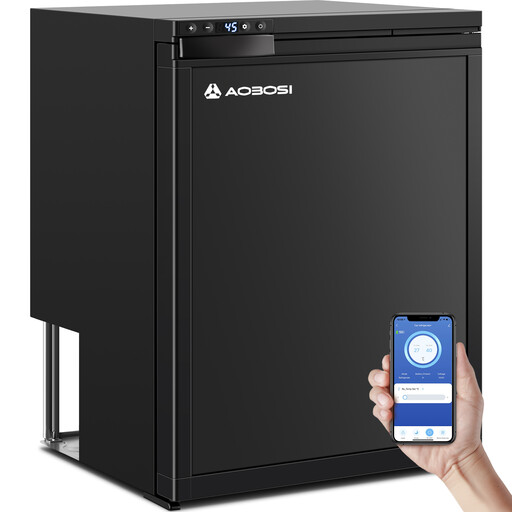
A portable compressor fridge for taking chilled items with you on the go. Check the actual internal temperature before using it to store hummus.
Capacity: 65 L. App control. The product name lists use in motorhomes, boats and trucks, as well as on road trips.
 No image available
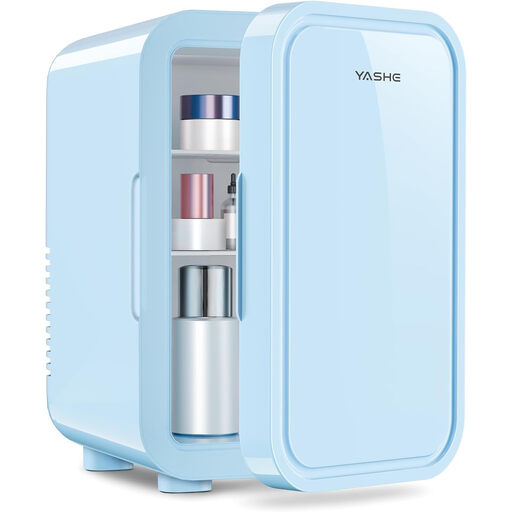
Its compact size may suit a small quantity of chilled items. Check the temperature before storing opened hummus in it.
Capacity: 6 litres or 8 cans. Power supply: 220–240 V AC/DC. Colour: blue.
 No image available
A freestanding tabletop fridge for anyone who wants to store other chilled groceries as well as hummus. After installation, check whether it reaches 4 °C.
Capacity: 88 litres. Energy label: E. Colour: black.
 No image available
This tabletop model may suit you if you want a permanent place to keep hummus and other groceries chilled, as well as a freezer compartment. Check the temperature in the fridge compartment separately.
Capacity: 109 litres. Energy label: C. Colour: white.
 No image available
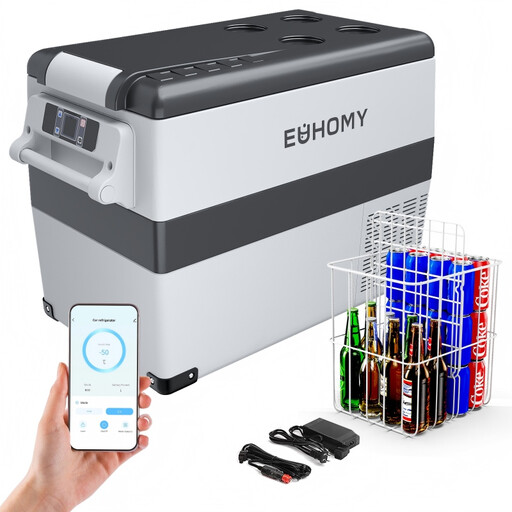
A portable compressor cool box for keeping hummus actively chilled while you’re travelling. Check the internal temperature in the conditions in which you plan to use it.
Capacity: 40 L. Temperature range: −20 °C to 20 °C, including 4 °C. Power supply: 12/24 V DC and 100–240 V AC.
Set the fridge to 4 °C and check the actual temperature with a fridge thermometer. The Voedingscentrum advises placing the thermometer in the middle of the bottom shelf, leaving it for half a day or overnight, then adjusting the setting if the reading is too high. The setting on the dial isn’t a temperature reading.
According to the Voedingscentrum, plain hummus keeps for 1–3 days after opening if it’s homemade, and 5–10 days if it’s ready-made, provided it’s kept in the fridge. Use clean cutlery and follow the label on your product too. These storage times don’t make up for a prolonged period out of the fridge.
Compare the stated consumption in kWh per year and consider the capacity of each appliance at the same time. Energielabel.nl notes that the label also gives information about the fridge and freezer compartments, as well as the noise level.
The NVWA states that the applicable energy label must be clearly visible on fridges. According to the Dutch government, when you buy a new, similar household appliance, the retailer must take back your old one. The old-for-new scheme also applies to online purchases, with an alternative option if the delivery driver can’t take it away straight away.