
A family short on fridge space
You want to fit several sealed containers in after cooking without squeezing out the rest of your shopping. The Consumers’ Association points out that the stated capacity may differ from the space you can actually use.


Start with a fridge that fits your kitchen, can be set to 4 °C and offers enough practical space for sealed containers. If you already have freezer space, a fridge without a freezer compartment could suit you. If you want to keep portions for longer, compare fridge-freezers and check how much fridge space is left. The Netherlands Nutrition Centre advises keeping cooked vegetables in the fridge for no more than two days, or in the freezer for up to three months.
You want to fit several sealed containers in after cooking without squeezing out the rest of your shopping. The Consumers’ Association points out that the stated capacity may differ from the space you can actually use.
You keep some cooked vegetables for more than two days, so you need freezer space as well as fridge space. The Netherlands Nutrition Centre recommends keeping cooked vegetables in the freezer for up to three months.
You’re looking for an appliance that fits in the space you already have, so you check its external dimensions and energy use. Also find out what’s included in the arrangements for delivery, installation and taking away your old appliance.
For cooked vegetables, storage temperature and how you store them come first; extra features don’t replace these essentials.
| What to consider | What should you check? | Who is this important for? |
|---|---|---|
| Keeping food safely chilled | Check whether you can set the fridge to 4 °C; put cooled leftovers in a sealed container and refrigerate them within two hours. | I want to store leftovers carefully after cooking, rather than relying on a special drawer. Around 29% of consumers put safe chilling first. |
| Space for family-sized portions | Compare the fridge capacity, shelf layout and space for your own containers. | When there are several containers left after a family meal, I want to be able to put them alongside the shopping. Around 23% of consumers prioritise practical fridge space. |
| Freezing food for later | Compare fridge and freezer capacities separately, and think about how many portions you want to freeze. | I batch cook and want to store portions we won’t eat within two days. Around 18% of consumers prioritise freezer space for later. |
| Energy use | Check both the energy rating and the annual consumption in kWh for models of a suitable size. | I want to compare the energy use of appliances that meet my needs for space and layout. Around 18% of consumers focus mainly on annual energy consumption. |
| Fitting and replacing an appliance | Measure the available space and access route; for a built-in model, also check the housing unit and cabinet door. | When replacing an appliance, it needs to fit in the existing space, and I want to know in advance what the delivery and collection arrangements involve. Around 12% of consumers prioritise fitting and replacement. |
The Consumers’ Association points out that the stated capacity may differ from the usable capacity in practice. So the number of litres alone won’t tell you whether your containers will fit on the shelves.
Measure your food containers and check the shelf layout. Where available, also compare independently measured usable capacity.
Brand descriptions of special drawers may refer to fresh fruit and vegetables. For cooked vegetables, the Netherlands Nutrition Centre’s storage advice still applies.
Let leftovers cool, store them in a sealed container and put them in a 4 °C fridge within two hours. Don’t keep them in the fridge for more than two days.
A larger fridge may use more energy per year than a smaller appliance, even if it has a better energy rating. Milieu Centraal and the Consumers’ Association point out that size and annual energy consumption both matter.
Compare both the energy rating and the stated consumption in kWh per year for appliances that suit your capacity and space requirements.
A fridge may not fit through the access route or may be unsuitable for the space available. Delivery, installation and taking away your old appliance may also depend on the arrangements with the retailer.
Measure the space and access route in advance. Ask the retailer what’s included with delivery and any disposal service.
Bosch offers models without a freezer compartment as well as fridge-freezers, making it easy to compare the two layouts.
The B5RCNE366HXB1 is a freestanding fridge-freezer measuring 59.5 cm wide.
Liebherr offers a fridge without a freezer compartment and a fridge-freezer as examples of two different appliance types.
The KG39NVICG is a freestanding fridge-freezer for anyone looking for both compartments in one appliance.
These fridge-freezers are for anyone who wants to keep family portions chilled and have freezer space in one appliance. Check the stated compartment capacities and external dimensions against your own containers and kitchen space.
 Image unavailable
An option for combining chilled portions and freezer space in an appliance that’s 55 cm wide.
Stated capacity: 187 l of fridge space and 73 l of freezer space.
According to the product description, the fridge temperature can be set from 2–8 °C; check that the fridge reaches 4 °C once installed.
The description lists adjustable shelves, a salad crisper, a reversible door and energy class E.
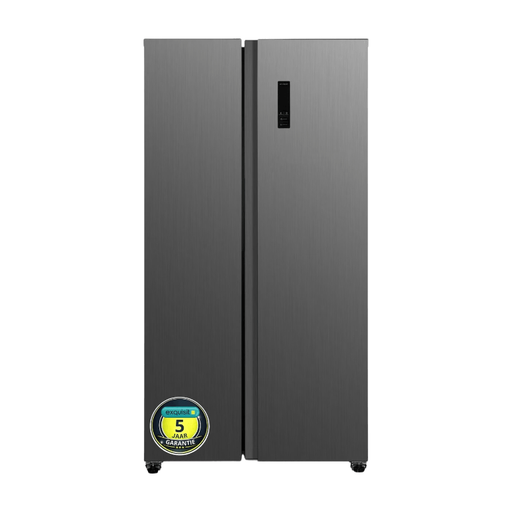 Image unavailable
For anyone considering a freestanding appliance with separate fridge and freezer compartments; check that its external dimensions suit the space you have in mind.
Stated capacity: 291 l of fridge space and 151 l of freezer space.
External dimensions: 177 × 91 × 59 cm. The description lists five glass fridge shelves and six freezer compartments.
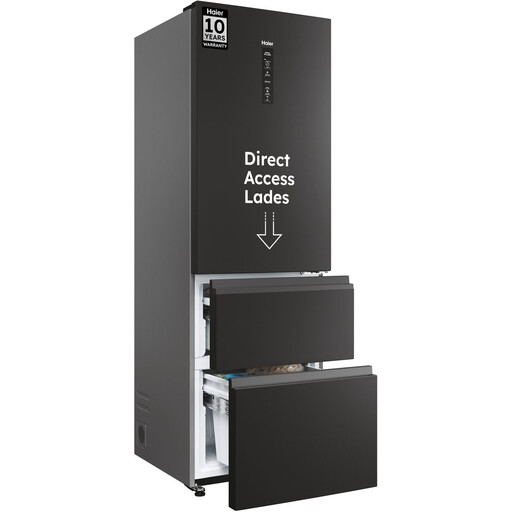 Image unavailable
A way to keep family portions chilled while also having freezer space; check the dimensions against your kitchen.
Stated capacity: 235 l of fridge space and 125 l of freezer space.
External dimensions: 59.5 × 185 × 66.7 cm. The description lists four glass shelves, three of which are adjustable, and two salad crispers.
 Image unavailable
A compact layout combining fridge and freezer space; check that the available fridge space is enough for your containers.
Stated capacity: 153 l of fridge space and 52 l of freezer space; width: 540 mm.
The product information lists 4 °C as the recommended fridge setting and energy class E.
The title lists Low Frost, a reversible door and adjustable feet.
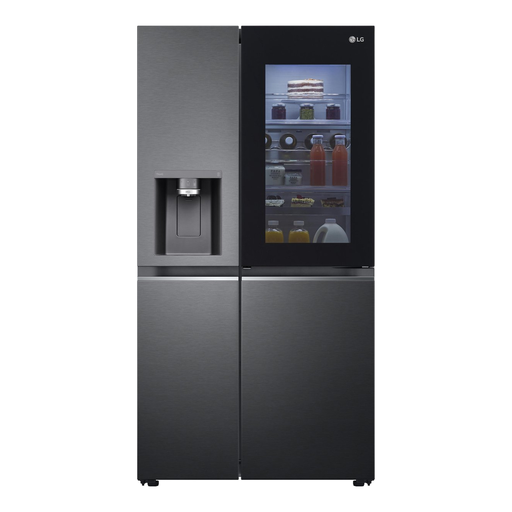 Image unavailable
A spacious fridge-freezer to consider if your kitchen has room for a large freestanding appliance.
Stated capacity: 416 l of fridge space and 219 l of freezer space.
External dimensions: 179 × 91.3 × 73.5 cm. The description lists eight shelves and two salad crispers.
The Netherlands Nutrition Centre advises keeping them for no more than two days in the fridge or three months in the freezer. Let leftovers cool, store them in a sealed container and put them in a 4 °C fridge within two hours.
No, the Netherlands Nutrition Centre’s storage advice doesn’t require a special drawer. Store cooled leftovers in a sealed container in the fridge; descriptions of drawers for fresh fruit and vegetables don’t change how long cooked vegetables can be kept.
Measure the available height, width and depth, and check that the appliance will fit through the access route. For a built-in model, also check that the housing unit and cabinet door are suitable for the specific model.
For models that fit your space, compare both the EU energy class and the stated consumption in kWh per year. You’ll also need your own electricity tariff to work out the cost; actual consumption may vary.
According to the Dutch government, you can return an old household appliance to the shop or online retailer where you buy a new, similar appliance, or take it to your local council recycling centre. The retailer must state any additional costs, such as delivery or installation charges. Ask in advance what applies to your delivery and any disposal service.