
Cook with limited worktop space
You need somewhere to store cooked pasta without having to put a fridge on the worktop. The available floor space or alcove dimensions, ventilation and door clearance all determine which set-up will work.


If your existing fridge has room for sealed containers and you can check that it is at 4 °C with a thermometer, you may not need a second fridge. If you do buy an appliance, first measure the space, allowing for ventilation and the door to open, then compare the usable shelf space. Choose a freezer compartment only if you want to keep pasta for longer and the specific compartment is suitable. The Voedingscentrum recommends cooling cooked pasta quickly, refrigerating it within 2 hours and keeping it in the fridge for no more than 2 days. Freeze pasta if you want to keep it for longer.
You need somewhere to store cooked pasta without having to put a fridge on the worktop. The available floor space or alcove dimensions, ventilation and door clearance all determine which set-up will work.
You want to be able to cool portions promptly, seal them and store them at a controlled fridge temperature. For longer storage, you’re considering freezing them.
You want to know whether the shelves and genuinely usable fridge space will accommodate your containers, rather than relying only on the stated capacity in litres.
First, measure the space and check whether your existing fridge has enough room. Then compare the usable space for containers and whether you can check the temperature. Only consider a freezer compartment if you need one.
| What to consider | What should you check? | Who should pay extra attention? |
|---|---|---|
| Suitable space | Measure the height, width and depth, and allow for ventilation and enough clearance to open the door, as set out in the model’s manual. | If I have limited worktop space, I want to know whether the fridge will fit on the floor or in the intended alcove without blocking the door or ventilation. Around 34% of consumers put a good fit first. |
| Temperature you can check | Check whether you can set the temperature, then measure it with a fridge thermometer once the appliance is in place. Follow the guidance on cooling and storage times too. | When I store cooked pasta, I want to be able to check that the fridge is cold enough and cool the portions promptly. Around 33% of consumers put temperature control first. |
| Space for containers | Compare the shelf layout and separate fridge and freezer capacities with the dimensions of your containers. | If I’m preparing several portions, I want my containers to fit on the shelves while leaving enough chilled storage space. Around 20% of consumers put usable space for containers first. |
| Energy use | Compare suitable models by their stated annual consumption in kWh, and first consider whether you really need an extra fridge. | If I’m considering an extra appliance, I want to take its stated energy use into account rather than looking only at its dimensions. Around 13% of consumers put energy use first. |
A freestanding appliance needs space for ventilation and for the door to open. Just because a fridge physically fits in an alcove doesn’t mean it is suitable for a tight built-in installation.
Measure the whole set-up and check the installation requirements in the manual for the exact model before buying.
If the door can’t open far enough, it may be difficult to get containers in and out of the fridge.
Shelves, drawers and any freezer compartment affect how much practical space is left for containers. The Consumentenbond lists 100 litres of usable fridge space for the Inventum KK550, compared with its stated capacity of 131 litres.
Compare the shelf layout and separate fridge and freezer capacities with the dimensions of your own containers.
The Voedingscentrum recommends a temperature of at least −18 °C for frozen storage and notes that one- and two-star freezer compartments cannot reach this temperature.
Check the star rating and specifications of the particular freezer compartment before storing portions in it for an extended period.
An extra appliance uses electricity even when it doesn’t contain any pasta. Milieu Centraal says that two cooling appliances use more electricity together than one large appliance.
First check whether your existing fridge has enough room. Otherwise, compare the stated annual energy consumption of models that fit the available space.
The TLT4702W is a freestanding table-top fridge without a freezer compartment. The Consumentenbond lists external dimensions of 86,2 × 47,7 × 45 cm.
The KK550 is a table-top fridge without a freezer compartment, while the narrower KV471W has a freezer compartment. They cater to different space and storage needs.
Bosch describes the KTR15NWEB as a freestanding table-top fridge without a freezer compartment, with 134 litres of fridge capacity and a door alarm.
Liebherr lists the Rsdci 1620 Plus as a freestanding table-top fridge measuring 60 cm wide, with a total capacity of 141 litres.
These Joybuy options are compact fridges for chilled storage. Compare their dimensions and layout with the available space and your containers, then check after installation that you can set and measure the required fridge temperature.
 No image available
An option to compare if you’re looking for a freestanding model and its stated dimensions fit the available space.
Net fridge capacity: 88 litres; external dimensions: 85 × 48 × 45 cm.
Three adjustable glass shelves, a salad drawer and three door compartments.
Energy class E according to the product name; check the current energy label for the version on offer.
 No image available
An option if you’re looking for chilled storage with an adjustable layout to suit different types of food.
82 litres of usable fridge space; no freezer compartment.
Adjustable glass shelves, a salad drawer, door compartments and mechanical temperature control.
Energy class E according to the product name; check the current energy label for the version on offer.
 No image available
An option to compare if the 54 cm width and the full installation space fit your kitchen.
Stated capacity: 129 litres; two glass shelves, a salad drawer and two door racks.
Mechanical temperature control and a reversible door.
Energy class E according to the product name; check the current energy label for the version on offer.
 No image available
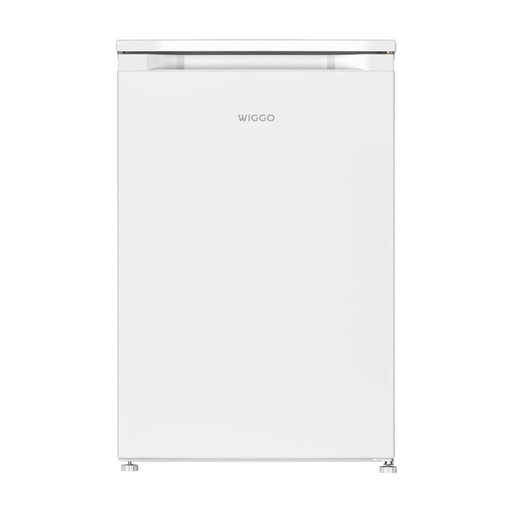
An option to compare if you’re looking for a table-top model and its stated width fits the space.
Net capacity: 107 litres; one glass shelf, a salad drawer and door compartments.
Mechanical temperature control and a reversible door.
Energy class D according to the product name; check the current energy label for the version on offer.
 No image available
An option if you can fit the stated external dimensions into your space and want adjustable storage for chilled food.
Capacity: 90 litres; external dimensions: 449 × 485 × 842 mm.
Three adjustable glass shelves and a separate chiller box.
The stated cooling range is 0–10 °C. This doesn’t confirm that the fridge will reach 4 °C in your space; check the temperature with a thermometer once it’s in place.
Energy class E according to the product name; check the current energy label for the version on offer.
The Voedingscentrum recommends keeping cooked pasta chilled for no more than 2 days. Cool it quickly, seal it properly and refrigerate it within 2 hours of cooking. Freeze it if you want to keep it for longer.
Set the fridge to 4 °C and check the actual temperature with a fridge thermometer. The Voedingscentrum recommends placing the thermometer in the middle of the bottom shelf and leaving it there for half a day or overnight. Adjust the setting if needed.
Don’t assume that it can. Measure the space, follow the ventilation instructions in the manual for the exact model and make sure the door can open far enough for you to reach the containers.
No, check the specifications of the particular compartment. The Voedingscentrum recommends a temperature of at least −18 °C for frozen storage and notes that one- and two-star freezer compartments cannot reach this temperature.
Milieu Centraal says that two cooling appliances use more electricity together than one large appliance. Check the stated annual consumption in kWh on the EU energy label for models that suit your space, and first see whether your existing fridge has enough room.