Choose a fridge to suit the size and number of your dessert trays, the space available and how often the door will be opened. A compact table-top model may suit a small workshop; if you have more trays, a larger fridge without a freezer compartment could be more practical. A commercial cabinet is worth considering mainly for intensive business use. No type of fridge can guarantee a safe storage temperature on its own: follow the product instructions and check the temperature of the desserts.
Who is this choice relevant to?
Workshop host serving perishable desserts
You store desserts containing ingredients that need to be kept chilled, and want to prioritise temperature control and good hygiene. Food businesses must meet the applicable HACCP requirements. The Netherlands Food and Consumer Product Safety Authority explains that businesses handling food must follow a food safety plan based on HACCP.
Organiser with lots of dessert trays
You need a layout that can accommodate the trays you use. Don’t just look at the stated capacity: the usable width, depth and height between shelves also determine how much you can practically store. The Dutch Consumers’ Association points out that a fridge’s stated and usable capacities may differ.
Organiser with limited space
You’re looking for a compact appliance, but you’ll need to check the required ventilation clearance and usable interior space as well as the external dimensions. Also measure the route to the fridge’s intended position.
What should you look for when choosing?
The main considerations are temperature control, suitable shelf space, where you’ll place the fridge and its energy consumption. Which matters most depends on the desserts and how you’ll use the fridge during the workshop.
| What to consider |
What to look for |
Who it matters most to |
| Cooling temperature with frequent use |
Follow the storage instructions and measure the temperature; a setting or super-cool function does not tell you the temperature of the dessert itself. |
If I’m storing perishable desserts during a workshop and need to open the door regularly, I want to know whether the products will stay cold. Around 36% of consumers prioritise safe storage. |
| Space for dessert trays |
Measure your largest trays and check the usable width, depth and shelf heights. |
If I want to store several trays neatly, the layout needs to suit their dimensions. Around 29% of consumers mainly look for sufficient shelf space. |
| Positioning in the workshop space |
Measure the space and access route; check the ventilation clearance in the manual for the exact model. |
In a small kitchen, I want to know in advance whether the appliance will fit with the necessary clearance. Around 21% of consumers make positioning their top consideration. |
| Energy consumption and frequency of use |
Compare the energy label and stated annual consumption in kWh for suitable models; also consider whether your existing fridge will do the job. |
If I only need a fridge for workshops occasionally, I don’t want to use more fridge space than necessary. Around 14% of consumers mainly consider running costs. |
Common buying pitfalls
-
Assuming the capacity in litres tells you how many dessert trays will fit
The stated capacity doesn’t tell you whether wide or tall trays will fit on the shelves. The Dutch Consumers’ Association points out that stated capacity and usable space may differ.
Measure your largest trays and compare them with the internal dimensions and shelf heights before choosing.
-
Assuming a super-cool setting guarantees safe storage
A manufacturer’s feature doesn’t show what temperature a particular dessert reaches or maintains.
Follow the storage instructions and check the temperature during the relevant storage and serving periods.
-
Assuming a commercial fridge is right for every workshop
A commercial cabinet can take up a lot of space. What’s more, the stated temperature range doesn’t prove that every dessert will stay at the required temperature during use. Food businesses must also meet the applicable food safety requirements, as explained by the Netherlands Food and Consumer Product Safety Authority.
Consider the external and internal dimensions, how you’ll use the fridge and how you’ll monitor the temperature before choosing a model.
Brands and models to consider
Inventum
The KK550 model we looked at is a compact table-top fridge without a freezer compartment, suitable for a small quantity of chilled desserts.
- Inventum lists a stated capacity of 131 l, adjustable shelves and a super-cool function.
- Check that your trays will fit and measure the temperature during use; the listed features are not an independent performance test.
Liebherr
The Rd 4600 Pure model we looked at is a freestanding fridge without a freezer compartment. Its mid-sized capacity makes it an option if you need more cooling space than a table-top model offers.
- Liebherr lists a total volume of 298 l, external dimensions of 145,5 × 59,7 × 67,5 cm and SuperCool.
- The manufacturer describes EasyFresh as being for fruit and vegetables. Check that the shelf layout suits your dessert trays.
Bosch
The KSV33VWEP model we looked at is a tall, freestanding fridge without a freezer compartment, suitable for a workshop with more trays.
- Bosch lists a fridge capacity of 324 l, external dimensions of 176 × 60 × 65 cm, a sliding shelf and SuperCooling.
- The stated capacity and features don’t prove that a particular load of desserts will stay sufficiently cold.
CombiSteel
The Entry Line 7950.5025 model we looked at is a commercial fridge to consider for intensive use in a food business.
- CombiSteel lists digital controls, static cooling with a fan, a self-closing door and a temperature range of +2 to +8 °C.
- The stated 429 l is gross capacity. Check the internal dimensions, shelves and product temperature before deciding whether the cabinet is suitable for desserts.
Fridges for chilled desserts
These product picks are aimed at keeping food chilled during a cookery workshop, from compact models to a fridge with a separate freezer compartment. Always check that the usable fridge space will accommodate your trays.
 No image available
Wiggo WL-BTT88E(W) table-top fridge
A table-top model to consider if space is limited and your dessert trays will fit on the shelves.
Stated capacity: 129 l. The fridge has two adjustable glass shelves and external dimensions of 54 × 54 × 88 cm.
According to the user instructions, leave at least 10 cm of clear space on all sides and behind the appliance.
Joybuy
 No image available
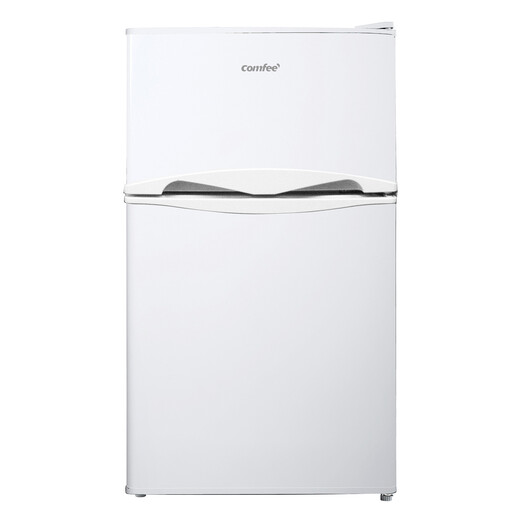
COMFEE' RCT87WH2EU(E) compact fridge
A compact model to consider if you’re looking for a simple layout for chilled workshop supplies.
The product information lists two removable glass shelves, a removable basket and an adjustable thermostat.
Joybuy
 No image available
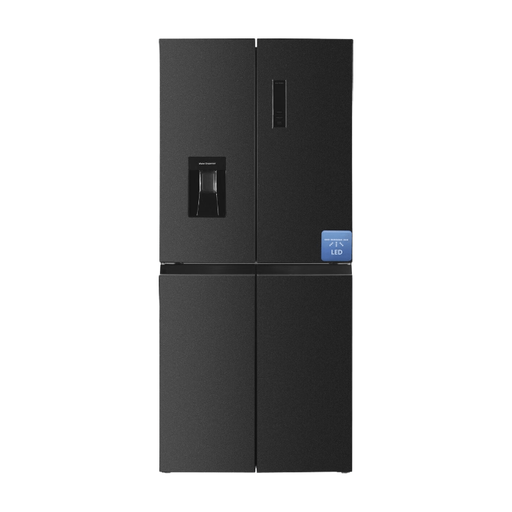
Frilec BONN-MD458-WS-040DDI fridge-freezer
An option if you also need freezer space; for desserts, assess the fridge compartment on its own.
The product information lists 269 l of fridge space and 150 l of freezer space, digital temperature control and an internal temperature display.
The external dimensions are 180 × 79 × 70 cm. Check that the shelves will accommodate your dessert trays.
Joybuy
 No image available
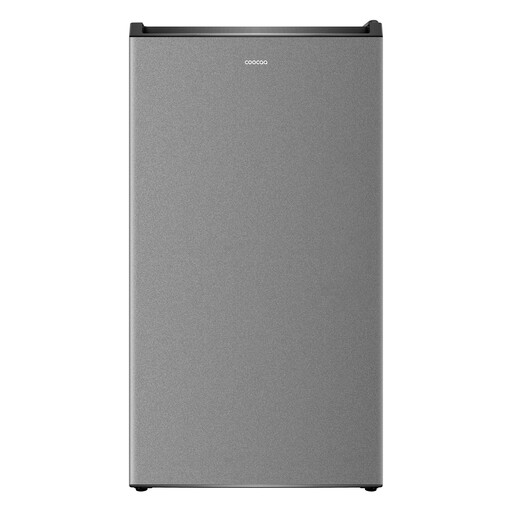
Coocaa 83 l single-door fridge
A compact fridge to consider if your workshop needs little cooling space and room is limited.
The product information lists 83 l of fridge space, one shelf, three door compartments and a crisper drawer. The external dimensions are 444 × 456 × 850 mm.
The temperature is adjustable; follow the storage instructions for the desserts and check the actual temperature.
Joybuy
 No image available
CHiQ JR92DSE 92 l compact fridge, 47 cm wide
A slim model to consider if space is limited and your dessert trays will fit on the adjustable shelves.
The product information lists a capacity of 92 l, seven temperature settings and adjustable glass shelves. The external dimensions are 831 × 474 × 447 mm.
Joybuy
Frequently asked questions
What temperature should you keep chilled desserts at?
First, follow the storage temperature on the label of any pre-packaged ingredients or desserts. The Netherlands Nutrition Centre recommends a fridge temperature of 4 °C. For food businesses, the Netherlands Food and Consumer Product Safety Authority specifies 7 °C or below for products that need chilling when no storage instructions are available; the applicable requirements depend on the product and circumstances. Measure the temperature rather than relying on the setting alone.
Is an HACCP plan required for every cookery workshop?
Not simply because it’s called a workshop. The Netherlands Food and Consumer Product Safety Authority says that food businesses producing, processing, selling or distributing food must follow a food safety plan based on HACCP; an applicable hygiene code can be used for this. Whether this applies to your activity depends on how it is organised and the food-related activities involved.
Can you put warm desserts straight into the fridge?
Don’t assume that your fridge can replace a suitable cooling process. The Netherlands Nutrition Centre recommends letting hot leftovers cool first, then covering and refrigerating them within 2 hours of cooking. Food businesses must also follow the applicable rules for cooling cooked food; where relevant, follow your own food safety plan.
How do you check the fridge temperature during a workshop?
The Netherlands Nutrition Centre recommends placing a fridge thermometer in the middle of the bottom shelf and checking it after half a day or overnight. For food businesses, the Netherlands Food and Consumer Product Safety Authority recommends regular checks with a digital probe thermometer and a clean storage area. Put perishable products back promptly after use and close the door straight away.
What should you consider when it comes to energy use and an old fridge?
Compare the annual energy consumption in kWh of models that suit the amount of fridge space you need. Milieu Centraal points out that two cooling appliances use more electricity together than one suitably sized large appliance. The Dutch Government says you can return an old, similar household appliance to the shop where you buy a new one in the Netherlands.


