
Storing cream cakes
You need a cool place for perishable desserts and want to be able to check the temperature and the product-specific storage time. The Netherlands Nutrition Centre recommends 4 °C for fridge storage.


For perishable desserts, a fridge whose temperature you can check during use is a sensible starting point: the Netherlands Nutrition Centre recommends 4 °C for fridge storage. Then choose according to the space you have and whether you also want to freeze portions. A portable thermoelectric cooler is only suitable if you can check that the desserts stay cold enough in your particular conditions.
You need a cool place for perishable desserts and want to be able to check the temperature and the product-specific storage time. The Netherlands Nutrition Centre recommends 4 °C for fridge storage.
You have limited floor or worktop space and want to check in advance whether dessert packaging will fit on the shelves and the door can open sufficiently. Also bear the model’s installation requirements in mind.
You want to freeze suitable dessert portions as well as chill them. In that case, it’s important to consider the fridge and freezer capacities separately and follow the instructions on the packaging.
Start with the temperature perishable desserts need, then weigh up usable shelf space, where the fridge will go and whether you need a freezer compartment.
Choose this option: if you mainly want to keep desserts chilled and don’t need to freeze portions.
Bear in mind: packaging needs to fit on the shelves, and models vary in their external dimensions and fridge capacity.
Choose this option: if you also want to freeze desserts and the packaging says they’re suitable for freezing.
Bear in mind: Inventum lists 97 l of fridge capacity and 16 l of freezer capacity for the KV550; according to Inventum, the KK550 without a freezer compartment has 131 l of fridge capacity.
Choose this option: only if portability is important and you can check the actual storage temperature.
Bear in mind: Dometic states that the TCX 14 cools to a maximum of 27 °C below the ambient temperature; this is not a fixed internal temperature.
| Consideration | What to look for | Who is this most relevant for? |
|---|---|---|
| Reliable cooling | The Netherlands Nutrition Centre recommends 4 °C for fridge storage. Check the temperature with a fridge thermometer and follow the storage advice for your dessert. | I want to check that perishable cakes stay cold enough, rather than relying only on the temperature setting. Reliable cooling is the top priority for around 36% of consumers. |
| Usable shelf space | Measure the available space and the dessert packaging you usually buy. Also check the shelf height, door clearance and ventilation space required for the model you choose. | I have limited space and want my dessert box to fit without obstructing the door or ventilation. Usable space is the top priority for around 29% of consumers. |
| Energy use and noise | Compare the energy label and kWh per year for the exact models you’re considering. Also check the stated noise level if the appliance will be near your living or sleeping area. | I’m putting the fridge in a small home and want to take its energy use and noise during operation into account. Together, these are the top priority for around 21% of consumers. |
| With or without a freezer compartment | Compare fridge and freezer capacities separately, and check whether the dessert packaging says it’s suitable for freezing. | I want to keep suitable portions for later, but don’t need freezer space if I only store chilled desserts. The option to freeze is the top priority for around 14% of consumers. |
The cooling performance of a thermoelectric cooler can depend on the ambient temperature. That doesn’t automatically mean perishable desserts will stay at the temperature they need.
Check the temperature during normal use and follow the storage advice for your dessert.
The capacity in litres won’t tell you whether a tall cake box will fit on a shelf. External dimensions, shelf layout and the space needed for installation also matter.
Measure the space and your largest usual package, then check the shelf height and the ventilation requirements for the exact model.
In compact models, some of the capacity may be reserved for freezing rather than chilled desserts.
Choose a freezer compartment to meet a specific need and compare fridge and freezer capacities separately.
The TS190040N is a compact freestanding model without a freezer compartment. It’s worth comparing if you’re looking for a slim fridge with plenty of space for chilled food.
The KK550 without a freezer compartment and the KV550 with one show the difference between fridge space and the option to freeze food.
The Rc 1400 Pure is a tabletop model without a freezer compartment. It’s worth comparing if the stated noise level and temperature settings are important to your choice.
The KKV956WIT is a tabletop model without a freezer compartment. It’s worth comparing if fridge space and adjustable shelves are important to you.
The TropiCool TCX 14 is a portable thermoelectric cooler, not an obvious like-for-like alternative to a fixed fridge for perishable desserts.
This selection includes compact freestanding fridges without a freezer compartment and tabletop models with one, for chilled desserts and, where suitable, freezing portions.
 No image available
An option to compare if you want to store chilled desserts in a compact freestanding tabletop fridge.
The product name lists a capacity of 88 l and an energy rating of E.
 No image available
An option if you want to keep desserts chilled and freeze suitable portions too.
The product name lists a capacity of 109 l and an energy rating of C. Check how the fridge and freezer space is divided to make sure it suits your needs.
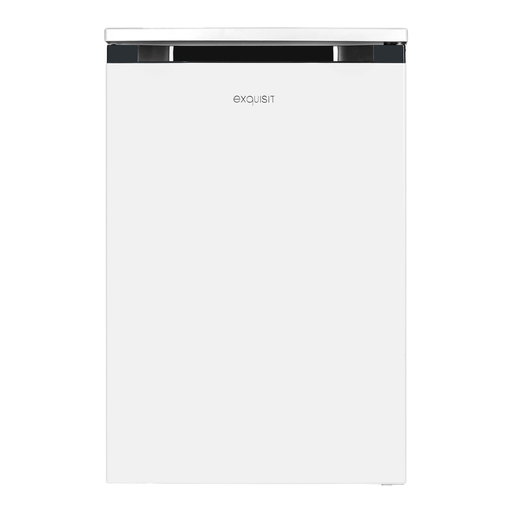 No image available
An option to compare if you’re looking for a tabletop model that combines chilled dessert storage with a freezer compartment.
The product name lists a capacity of 107 l, a freezer compartment and an energy rating of C. Check how much space is available for chilling and freezing.
 No image available
An option to compare if you’re looking for a tabletop model for chilled storage and need to consider the available width.
The product name lists a width of 54 cm and an energy rating of E.
 No image available
An option to compare if you’re looking for a compact fridge with an adjustable layout to suit different packaging.
The product name lists a capacity of 92 l, a width of 47 cm, seven temperature settings, adjustable glass shelves and a crisper drawer.
You can’t tell from the size or product name alone. The Netherlands Nutrition Centre recommends 4 °C for highly perishable foods. Dometic says the TCX 14 cools to a maximum of 27 °C below the ambient temperature, so check the actual temperature before storing perishable cakes in it.
The Netherlands Nutrition Centre’s storage guide says opened cream cake keeps for one day in the fridge. For an unopened pack, follow the storage instructions and use-by date on the packaging.
Follow the manual for the exact model, as installation requirements can vary. For example, the Inventum KK550 manual specifies 10 cm of clearance all around; this isn’t a standard measurement for all fridges.
Compare the stated kWh per year on the energy labels for the exact models. The European Union uses a scale from A to G for fridge energy labels. To calculate the cost in euros, you’ll also need to know your own electricity tariff.
Compare the fridge and freezer capacities separately, and check whether the packaging says the dessert is suitable for freezing. Choose a freezer compartment only if you also need that extra space for suitable portions.