
Host with several desserts
You want to fit desserts, their packaging and the other lunch items in the fridge at the same time. So, look beyond the total capacity in litres: consider the usable space and shelf layout too.


First, check whether your desserts will fit in your current fridge with their packaging or serving dish, and use a thermometer to check that the temperature where you store them is 4 °C. You may not need an extra fridge for a single lunch. If you regularly need more chilled storage, a compact fridge could work for a modest amount of extra space, while a spacious fridge without a freezer makes more sense if your regular shopping no longer fits either. As well as usable layout and external dimensions, compare annual energy use. Choose a fridge-freezer only if you also need freezer space.
You want to fit desserts, their packaging and the other lunch items in the fridge at the same time. So, look beyond the total capacity in litres: consider the usable space and shelf layout too.
You may only need some extra chilled storage for lunch. First, measure the space available for a compact fridge and check whether there will be enough room inside for your serving dish or cake box.
You make or buy desserts in advance and want to check the temperature, packaging and storage information carefully. Follow the advice for the specific dessert rather than relying on the fridge setting alone.
A good fit if: your desserts fit on their serving dishes or in their packaging alongside the other lunch items.
Keep in mind: the selected setting doesn’t confirm that the temperature where you store your food is 4 °C. Check it with a fridge thermometer.
A good fit if: you need a modest amount of extra chilled storage and its dimensions work for your desserts.
Keep in mind: a second fridge takes up space and uses extra electricity. Reorganising your existing fridge may be enough if you only run short of space occasionally.
A good fit if: you regularly want to store more chilled groceries outside of weekend lunches too, and don’t need extra freezer space.
Keep in mind: a larger model needs more room. Compare the annual energy use of models with the right amount of fridge space.
A good fit if: you genuinely need freezer space as well as fridge space.
Keep in mind: the total capacity includes the freezer compartment. Compare the fridge capacity in litres separately.
| What to consider | What to look for when buying | Who is this important for? |
|---|---|---|
| Usable space | Measure the height and width of your largest package or serving dish. Compare these with the shelves and the fridge capacity, not just the total capacity. | If I want to store several desserts and lunch items at once, the layout needs to work for my serving dishes. Around 36% of consumers prioritise usable space and layout. |
| Storage temperature | Check the temperature with a fridge thermometer and follow the storage advice on the packaging. | If I want to store perishable desserts in advance, I need to know what temperature they require and whether my fridge actually reaches it. Around 29% of consumers place particular importance on being able to check the storage temperature. |
| Space for installation | Compare the external dimensions, installation instructions and fridge capacity separately. Also measure the space needed to open the door. | If my kitchen has limited space, an extra appliance needs to fit without leaving too little room for the desserts. Around 21% of consumers prioritise finding a suitable size. |
| Energy use | For models with the right amount of fridge space, compare the energy label and annual consumption in kWh. Consider whether the extra fridge will be on all the time. | If I want to keep the fridge running after lunch, its energy use will factor into my choice of size and number of appliances. Around 14% of consumers pay particular attention to energy use when an appliance is in continuous use. |
In a fridge with a freezer compartment, some of the total capacity is taken up by the freezer, leaving less room for desserts.
Compare the fridge capacity separately, and measure the box or serving dish that needs to fit on the shelf.
A freezer compartment can limit usable fridge space, which may make it seem as though you need a second appliance after all.
The selected setting doesn’t tell you the temperature where you store your desserts.
The Netherlands Nutrition Centre recommends 4 °C. Check the temperature with a fridge thermometer and follow the storage advice on the packaging.
An extra appliance takes up space and uses electricity while it’s on. Milieu Centraal points out that two fridges together use more energy than one large appliance.
First, see if you can reorganise your existing fridge. If you’re buying another one for the long term, compare the annual energy use of models that suit your needs.
A second fridge left on permanently will use extra electricity all the time.
The freestanding KK1850W is an example of a spacious fridge without a freezer compartment, for anyone looking for extra fridge space in the long term.
The freestanding Rd 4200 Pure is a mid-sized fridge with no freezer compartment listed, for anyone looking for more space than a compact fridge offers.
The TS190340N is a compact fridge, suited to situations where space is limited.
The KSV36VWEP illustrates the features of a tall fridge without a freezer, but is no longer available.
This selection includes compact fridges and fridges for chilled food, including a built-in model. Compare the listed specifications with the space available and the amount of fridge space you need.
 No image available
A compact option if you need extra fridge space for a small number of items.
88 litres; energy label E; black.
 No image available
A compact fridge to consider if you need extra chilled storage and its stated width fits the space available.
54 cm; white; energy label E.
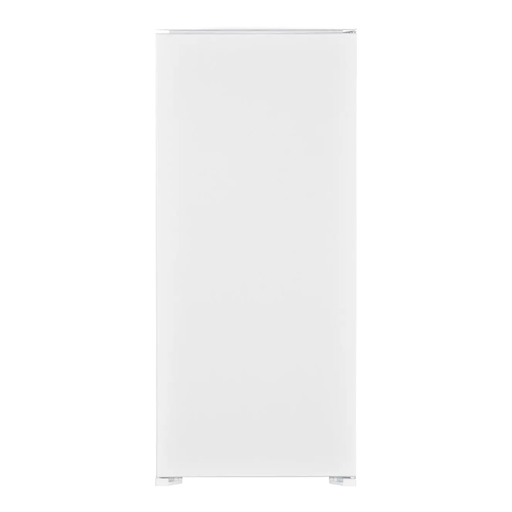 No image available
A built-in model to consider if you want extra chilled storage and have a suitably sized space for it.
54 cm; white; energy label E.
Check that the available space matches the stated model specifications.
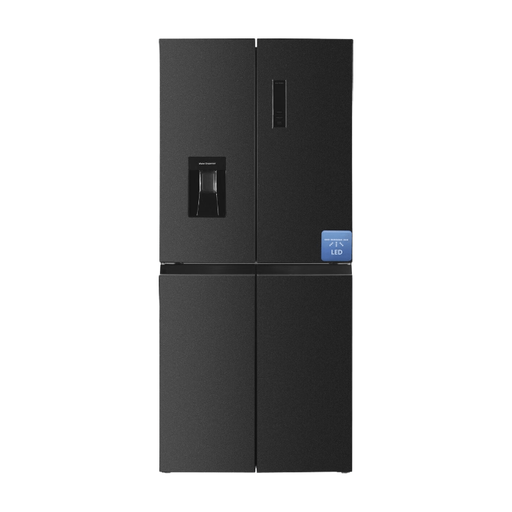 No image available
A freestanding fridge to consider if you want to store chilled lunch items and adjust the layout to suit your needs.
Adjustable shelves; reversible door.
After transport, follow the model-specific instructions on leaving the appliance upright and allowing clearance around it.
 No image available
A compact option if you need a little extra fridge space and want adjustable shelves.
92 litres; 47 cm wide; energy label E; silver.
The product name lists seven temperature settings and adjustable glass shelves.
The Netherlands Nutrition Centre recommends 4 °C. Place a fridge thermometer in the middle of the bottom shelf and leave it there for half a day or overnight before checking the temperature. Adjust the fridge if needed, and follow the storage advice for the specific dessert too.
No, it depends on the dessert and its storage instructions. For leftovers, the Netherlands Nutrition Centre recommends cooling them quickly, storing them in a sealed container, refrigerating them within two hours and keeping them in the fridge for no more than two days. For packaged products, follow the label and use-by date. Don’t automatically apply the general advice for leftovers to every type of cake or dessert.
Measure the space available and follow the installation instructions for your chosen model. Check the temperature once the fridge is in use, and refer to the manual for model-specific ventilation clearances. Removable shelves can make cleaning easier.
Fridges must have an energy label. Compare the energy class and annual consumption in kWh, among other things. If a product is faulty, the retailer is your point of contact for the statutory guarantee in the Netherlands. The Dutch government states that there is no fixed statutory two-year guarantee period for every product in the Netherlands.
For purchases by individuals in the Netherlands, the old-for-new scheme applies to a similar appliance, including online purchases. The Dutch government states that the retailer may not charge you to take back the old appliance. How it is collected can vary, for example when your new appliance is delivered.