
Student with their own cheese portions
Wants to keep opened portions separate and chilled, and be able to check the temperature of the available fridge.


If there’s enough accessible space in the shared fridge and you can check its temperature, you don’t need to buy a second fridge just for your cheese portions. If you do buy one, choose a model whose temperature you can check while it’s in use and set it to 4 °C. Also compare the usable fridge space, external dimensions and annual energy consumption. You don’t need a freezer compartment just for cheese, but it could be useful if you also want freezer space.
Wants to keep opened portions separate and chilled, and be able to check the temperature of the available fridge.
Needs a fridge that fits in the available space while leaving enough usable fridge room for cheese portions and other shopping.
Takes the stated noise level and energy consumption into account when choosing a fridge or freezer layout.
A good fit when: there’s enough accessible space for sealed cheese portions and you can check the temperature.
Keep in mind: you share the space and access with your housemates; an extra fridge uses electricity for as long as it’s switched on.
A good fit when: the available space is narrow and you mainly store cheese and other chilled food.
Keep in mind: check the door clearance and space for your containers as well as the external dimensions; there’s no freezer space.
A good fit when: you need more fridge space of your own and have enough room for a larger model.
Keep in mind: a larger model takes up more space; compare the annual energy consumption of the exact versions you’re considering.
A good fit when: you need freezer space as well as chilled storage for cheese.
Keep in mind: the freezer compartment takes up some of the total capacity; compare fridge and freezer space separately.
A good fit when: you can establish that the internal temperature will stay suitable for chilled cheese in the conditions in which you’ll use the box.
Keep in mind: a cooling performance rating relative to the ambient temperature doesn’t guarantee a constant internal temperature of 4 °C.
| What to consider | What should you check? | Who is this important for? |
|---|---|---|
| Temperature for cheese | Choose a fridge with adjustable cooling. Once it’s installed, check the temperature with a fridge thermometer and adjust it if needed. | If I’m storing opened portions of cheese, I want to be able to check that they’re being kept cold enough. Around 31% of consumers prioritise reliable temperature control. |
| External dimensions and fridge space | Measure the space and check the width, depth, height, door clearance and the stated fridge capacity. | When my kitchen has limited space, the fridge needs to fit and leave enough room for my portions. Around 25% of consumers prioritise dimensions that fit and usable fridge space. |
| Energy consumption | Compare the annual consumption in kWh on the energy label of models with enough fridge space. | If the fridge is running for long periods, I want to factor in energy consumption alongside the capacity I need. Around 19% of consumers put energy consumption first. |
| Noise near your living space | Compare the stated noise levels of the exact models and consider where the fridge will be placed. | If my fridge is close to where I live or sleep, its stated noise level matters more. Around 13% of consumers focus particularly on this. |
| With or without a freezer compartment | Compare fridge and freezer capacity separately, and decide whether you’ll actually use the freezer compartment. | If I also want to freeze food, I need a separate freezer compartment as well as fridge space for cheese. Around 12% of consumers prioritise this extra freezer space. |
The Netherlands Nutrition Centre recommends setting your fridge to 4 °C and checking the temperature while it’s in use. A product description or temperature dial alone won’t tell you what temperature the fridge will actually maintain in your kitchen.
A cooling performance rating relative to the ambient temperature isn’t the same as a constant internal temperature of 4 °C.
Check the internal temperature in the conditions in which you’ll store your cheese. Don’t choose this option based solely on its relative cooling rating.
According to Inventum, the stated 113 litres of the Inventum KV550 comprises 97 litres of fridge space and 16 litres of freezer space.
For a model with a freezer compartment, always compare the fridge capacity separately.
If you want to compare the energy consumption of two models, the energy rating isn’t a substitute for the annual consumption in kWh.
Compare the annual consumption on the energy label of models that fit and offer enough fridge space.
The Netherlands Nutrition Centre recommends checking the temperature while the fridge is in use with a fridge thermometer, and adjusting it if needed.
After installation, measure the temperature on the bottom shelf and check again if you change the layout or setting.
Beko describes the TS190040N as a slim, freestanding table-top fridge.
Inventum offers table-top models without a freezer compartment, as well as models with a separate freezer compartment.
Tomado offers table-top models both with and without a freezer compartment.
These models are compact, freestanding fridges for chilled storage, including table-top models and a mini fridge. Compare the stated fridge space with the room you have available; models with a freezer compartment have less room for chilled food than their total capacity suggests.
 Image unavailable
An option if you want a separate freezer compartment as well as chilled storage for cheese portions.
The product information lists 95 litres of fridge space and 14 litres of freezer space, giving 109 litres in total. The product name states energy rating C and the colour white. Even with the stated temperature dial, you’ll still need to check the temperature after installation.
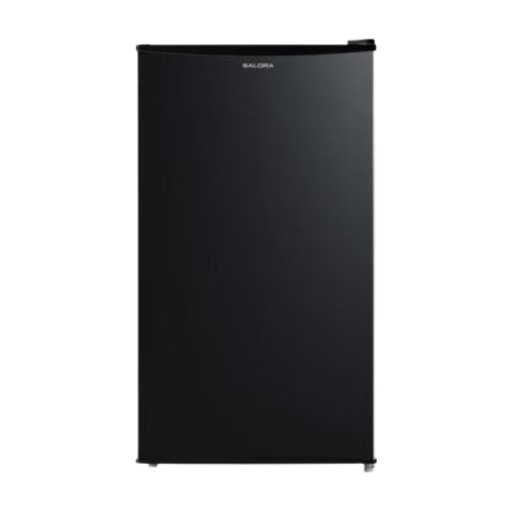 Image unavailable
This model has a separate fridge section and freezer compartment for anyone who needs both types of storage.
The product information lists 68 litres of fridge space and 12 litres of freezer space. The product name states energy rating E, 41 dB, a reversible door and the colour black. Check the actual temperature in the fridge section after installation.
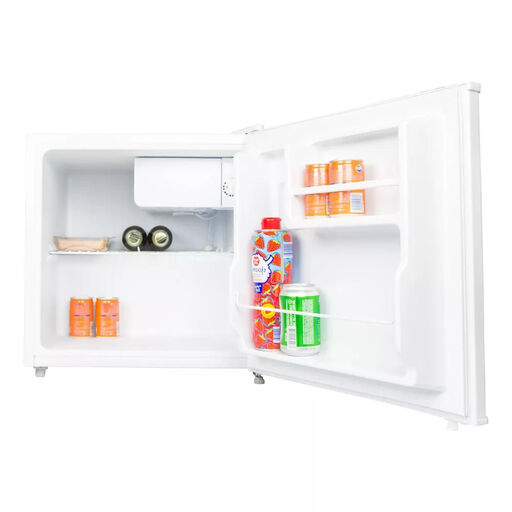 Image unavailable
A compact option to compare if space is limited.
The product name states a capacity of 43 litres and static cooling. The product information gives dimensions of 47,2 × 45 × 49,2 cm and a rotary dial. According to the product information, the freezer compartment is only for temporarily storing food that is already frozen, not for freezing food.
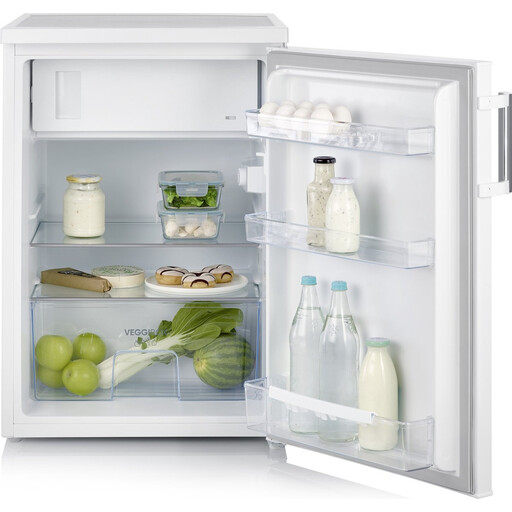 Image unavailable
A table-top model to consider if you want to combine fridge space for cheese and shopping with freezer space.
The product information lists 107 litres of fridge space and 13 litres of freezer space, giving 120 litres in total. The product name states energy rating C and the colour white. After installation, check that the temperature in the fridge section stays at the right level.
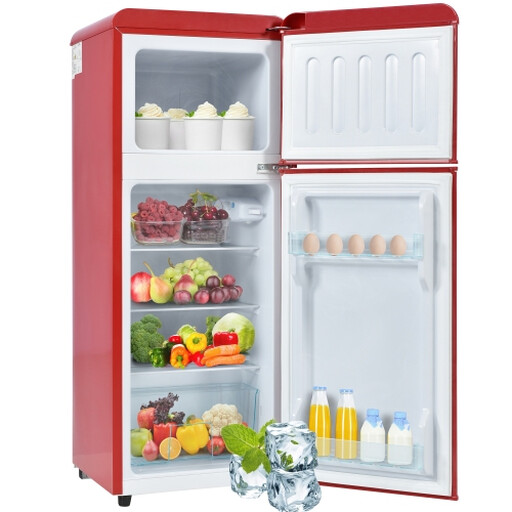 Image unavailable
This version could be a good fit if you’re looking for a compact model with both fridge and freezer space.
The product information lists 64 litres of fridge space, a 28-litre freezer compartment and seven temperature settings. The product name states that it’s red. Compare the fridge capacity with the space you need for your cheese portions.
The Netherlands Nutrition Centre recommends setting your fridge to 4 °C. Place a fridge thermometer in the middle of the bottom shelf, leave the fridge closed for half a day or overnight, then check the temperature. Adjust the fridge if the temperature is too high.
Keep cheese sealed in the fridge. For hard cheese, the Netherlands Nutrition Centre recommends cheese paper or reusable food wrap. Advice varies depending on the type of cheese and its packaging, so follow the instructions on the packaging too. If mould appears, cutting it away generously is only an option for hard cheese, not soft cheese.
Look up the annual consumption in kWh on the energy label for each exact model, then multiply it by your own price per kWh. Compare models with enough usable fridge space; an energy rating alone doesn’t tell you the same thing as the absolute annual consumption.
According to the Dutch Government, you’re entitled to a legal guarantee when you buy a product: it must be of satisfactory quality. Any manufacturer’s or seller’s guarantee is in addition to this. Contact the seller if there’s a fault.
According to the Dutch Government, you can return an old household appliance to the shop or online retailer where you buy a new, similar appliance, or take it to a collection point or your local council’s recycling centre.