For a one-off shared meal, you don’t automatically need a second fridge. Use your existing fridge if the sealed portions fit and the temperature is around 4 °C, as advised by the Netherlands Nutrition Centre. If you regularly run short of space, choose between a suitable under-counter fridge and a larger model based on its usable layout, external dimensions and stated annual energy consumption.
Who is this relevant for?
Host with a full fridge
You’re storing several portions of cheese alongside other chilled dishes for a shared meal. You want to know whether your existing fridge layout is up to the job or whether you need extra chilled storage. The Netherlands Nutrition Centre and Milieu Centraal offer guidance on food storage and choosing a fridge that suits the way you use it.
Cook with limited kitchen space
You only want extra chilled storage if a compact appliance will genuinely fit. External dimensions, door clearance and usable shelves matter to you; the Consumers’ Association points out that stated capacity doesn’t always reflect the space you can use in practice.
Occasional host keeping an eye on energy use
You want to keep cheese chilled without running a second fridge unnecessarily all year round. Milieu Centraal advises choosing a fridge to suit your needs and taking the energy use of an extra appliance into account.
What should you look for?
Start by checking the space and temperature in your existing fridge. Only consider adding another one if you regularly need more room.
Keep using your existing fridge
Choose this if: the sealed portions fit without pushing out other chilled food.
The trade-off: you won’t get any extra space. Check the temperature with a thermometer rather than relying on the dial setting alone.
Under-counter fridge without a freezer compartment
Choose this if: you regularly need extra chilled storage, don’t need a freezer compartment and have room for a freestanding model.
The trade-off: the stated capacity doesn’t tell you exactly how many sealed containers will fit, and running a second fridge adds to your energy use.
Under-counter fridge with a freezer compartment
Choose this if: you genuinely need a small freezer compartment as well as chilled storage for cheese portions.
The trade-off: compare the fridge capacity separately; the freezer compartment takes up space that could otherwise be used for chilled food.
A larger fridge
Choose this if: you run short of chilled storage outside shared meals too and have room for a larger model.
The trade-off: choose a size that suits both your usual shopping and the portions you serve to guests. According to Milieu Centraal, an oversized fridge can use more energy than necessary.
| What to consider |
What to look for when buying |
Who should consider this? |
| Fridge temperature |
Use a fridge thermometer in the middle of the bottom shelf; the Netherlands Nutrition Centre recommends 4 °C. |
If I’m storing chilled cheese, I want to know whether the fridge is actually around 4 °C, not just set to a particular level. For around 33% of consumers, being able to check that food is being kept cold is their main concern. |
| Space and layout |
Compare the fridge capacity, shelf heights and space for your own sealed packaging. |
If I need to fit several portions of cheese alongside other dishes, I want to check in advance that the shelves and containers will work in practice. For around 27% of consumers, space and layout for portions come first. |
| External dimensions |
Measure the height, width and depth, as well as the space needed to open the door; compare these with the exact model. |
With limited kitchen space, I want to make sure the appliance will fit and the door can open before looking at its capacity. Around 20% of consumers prioritise getting the external dimensions right. |
| Annual energy consumption |
For models with enough chilled storage, compare the energy label and stated consumption in kWh per year. |
If I’m considering a second fridge for use on some evenings, I also want to factor in its annual energy consumption. Around 13% of consumers focus mainly on energy use. |
| Noise |
Compare the stated dB ratings for the exact models, alongside their capacity and dimensions. |
If the fridge is close to the dining table or in an open-plan kitchen, I want to take its stated noise level into account without overlooking the layout. For around 7% of consumers, noise where the fridge will be placed is their main concern. |
Common mistakes
-
Buying a second fridge just for the occasional cheese night
An extra fridge that’s left running all the time adds to your energy use. Milieu Centraal advises choosing a capacity that suits your normal needs.
First, check whether the portions of cheese fit in your existing fridge and measure its temperature. Only then compare an extra appliance with replacing your current one with a single, suitably larger model.
A second appliance that stays switched on uses extra electricity.
-
Assuming total capacity means there’s room for cheese containers
A freezer compartment doesn’t count as chilled storage, and the stated capacity won’t tell you exactly whether your packaging will fit on the shelves.
Compare the stated fridge capacity separately, and check the layout against the dimensions of your own containers and packaging.
-
Assuming a dial setting gives you exactly 4 °C
A dial setting isn’t a temperature reading. What’s more, the temperature can vary across different areas of the fridge.
Place a fridge thermometer in the middle of the bottom shelf and leave it there for half a day or overnight, as advised by the Netherlands Nutrition Centre.
Brands to consider for this choice
Inventum
The Inventum KK550 is an under-counter fridge without a freezer compartment, for anyone looking for extra chilled storage and adjustable shelves.
- Inventum lists 131 litres of fridge capacity, a width of 55 cm, 39 dB, three adjustable shelves and digital temperature control for the KK550.
- Check that the external dimensions and shelf layout suit your space and containers. The stated specifications don’t replace checking the temperature once the fridge is set up.
Bosch
The Bosch KTR15NWEB is an under-counter fridge without a freezer compartment, with a door alarm and SuperCooling.
- Bosch lists 134 litres of fridge capacity, a width of 56 cm, 39 dB, energy label E and 91 kWh per year for this model, based on a standard test.
- Compare the fridge capacity, external dimensions and stated annual energy use with your needs and available space.
Liebherr
The Liebherr Rd 1400 Pure is an under-counter fridge without a freezer compartment to consider if a stated low noise level and adjustable temperature matter to you.
- Liebherr lists a capacity of 125 litres, a width of 55 cm, 34 dB and an adjustable temperature range of +2 °C to +8 °C for this model.
- The stated noise level isn’t a measurement of how loud it will be where you place it. Also check that the available shelf space suits your portions.
Beko
The Beko TSE1285N is a compact under-counter fridge to consider if you want a freezer compartment as well as chilled storage.
- Beko lists 101 litres for fresh food, a width of 54 cm and energy label D for this model.
- Compare the fridge capacity separately with models that don’t have a freezer compartment; the total capacity won’t tell you how many portions of cheese will fit in the fridge section.
Fridges at Joybuy
These are under-counter fridges for extra chilled storage. Before choosing, check the external dimensions, layout and any model-specific limitations.
 No image available
Bella BKK090.1BE, 88 litres, energy label E
An under-counter fridge without a freezer compartment for extra chilled storage. Its stated capacity can help you judge whether there may be room for portions alongside other chilled dishes.
Stated capacity: 88 litres. Energy label: E.
View at Joybuy
 No image available
Wiggo WL-BTT88E(W), 54 cm, energy label E
An under-counter fridge for extra chilled storage. Measure the space available and check the shelf layout against your own packaging.
Width: 54 cm. Energy label: E.
View at Joybuy
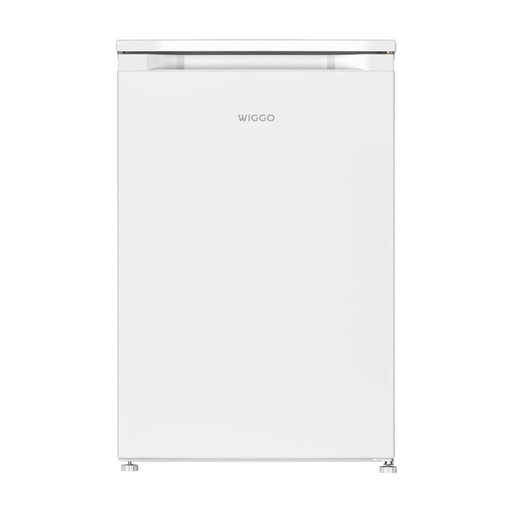 No image available
Wiggo WL-TT82D(W), 55 cm, energy label D
An under-counter fridge without a freezer compartment for extra chilled storage. Check that the external dimensions and layout suit your kitchen and portions.
Width: 55 cm. Energy label: D.
View at Joybuy
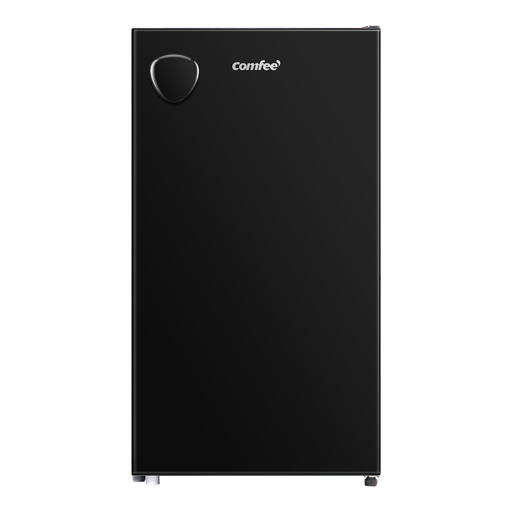 No image available
COMFEE' RCD92BL2EUY(E), 88 litres, black
A compact fridge for chilled storage. Compare the stated capacity and layout with the space you need for sealed portions.
Stated capacity: 88 litres. Energy label: E. According to the product description, the separate chill box is for short-term cooling only; don’t store anything in it for longer than 2 hours.
View at Joybuy
 No image available
CHiQ JR92DSE, 92 litres, 47 cm, energy label E
A compact fridge for extra chilled storage. Check that the internal layout suits the packaging you want to store.
Stated capacity: 92 litres. Width: 47 cm. Energy label: E. According to the product description, the separate chill drawer is designed for short-term storage.
View at Joybuy
Frequently asked questions
How can you tell if your fridge is cold enough for cheese portions?
The Netherlands Nutrition Centre recommends 4 °C. Place a fridge thermometer in the middle of the bottom shelf, leave it there for half a day or overnight, and adjust the fridge if the temperature is too high.
How should you store cut hard cheese and opened soft cream cheese?
Keep hard cheese wrapped, preferably in cheese paper or reusable food wrap, and follow the label instructions for packaged products. For opened soft cream cheese, the Netherlands Nutrition Centre recommends keeping it in the fridge for four days and using a clean knife. Follow the guidance for the specific type of cheese.
What should you check on a fridge’s energy label and warranty?
Compare the energy label and stated consumption in kWh per year for models with the right fridge capacity and dimensions. According to the Dutch government, there’s no fixed term for statutory guarantees in the Netherlands; if a product is faulty, contact the retailer.
Can you hand in your old fridge when you buy a new one?
According to the Dutch government, when you buy a new appliance of the same type, you can return your old one to the retailer free of charge as a private consumer. Ask the retailer in advance how they arrange collection.


