
Vandaag of morgen in huis

Kwaliteit gegarandeerd

Welkomstaanbiedingen ontgrendelen: GRATIS bezorging | Tot 80% korting | Gratis 30 dagen JoyPlus-proefperiode
Download de app
Choosing a new fridge may seem straightforward, until you discover how much models vary in size, layout, energy consumption and noise level. If you focus only on price or appearance, you may run into practical problems later. For example, the fridge may not fit the space, offer too little room or use noticeably more electricity than expected.
This buying guide will help you choose the right fridge for your kitchen, student room, office, holiday home or as additional cold storage.
A fridge approximately 55 cm wide will not automatically fit every kitchen. Always check the height, width and depth of the cabinet space, as well as the ventilation clearance required. With a built-in fridge, the door system and hinge type are also important. A door-on-door installation requires different preparation from a sliding-door system.
Also check whether the door can open fully. With some compact models, the required opening depth is greater than the depth of the appliance itself.
European energy labels range from A to G. Do not compare just the letter: pay particular attention to the stated annual consumption in kWh. A larger fridge may use more electricity because of its additional capacity, even when its energy label is similar.
Also watch out for outdated descriptions such as A++ in product listings. The current EU scale runs from A to G. For a fair comparison, check the official energy label and the annual number of kWh.
You can identify a quiet fridge by its stated noise level in dB(A). Models rated at around 35 to 39 dB are generally worth considering for an open-plan kitchen, studio flat or bedroom, while 40 dB or more may be more noticeable in a small room. Your actual experience also depends on the surface, ventilation and the point at which the compressor switches on.
A tabletop fridge or small fridge of approximately 80 to 130 litres is suitable for one person, an office or limited additional storage. A 90-litre fridge provides room for everyday shopping, but has less space for large pans and bottles.
For a household with several people, a fridge of around 180 to 330 litres is more practical. A 300-litre fridge gives you greater flexibility for fresh food. If you also store a lot of frozen food, you could consider a fridge with a freezer compartment or an American-style fridge freezer. Bear in mind the greater dimensions and higher energy consumption.
A fridge without a freezer compartment offers more usable refrigeration space and is suitable if you already have a separate freezer. For more choice, take a look at the range of fridges without a freezer compartment.
A small freezer compartment is useful for ice cream, bread or a few frozen products, but it cannot replace a full-size freezer. Check the star rating and freezing capacity in kilograms per 24 hours.
A built-in fridge is designed to fit a kitchen cabinet and creates an integrated look. Check the cabinet height, cabinet width, cabinet depth, ventilation and hinge system before ordering.
A freestanding fridge is easier to install and move later. A reversible door is useful if you want to adapt the opening direction to the layout of the room. With a mini fridge for a student room or office, the cable, ventilation clearance and placement on a stable surface are also important.

Why it suits this profile: With a width of 47.4 cm, this model is suitable for a small kitchen, student room, hotel room or office.
The stated dimensions, 92-litre capacity and annual consumption of 85 kWh give you a clear basis for comparison before buying.
Energy label E, reversible door, adjustable shelves and a separate cooling drawer.
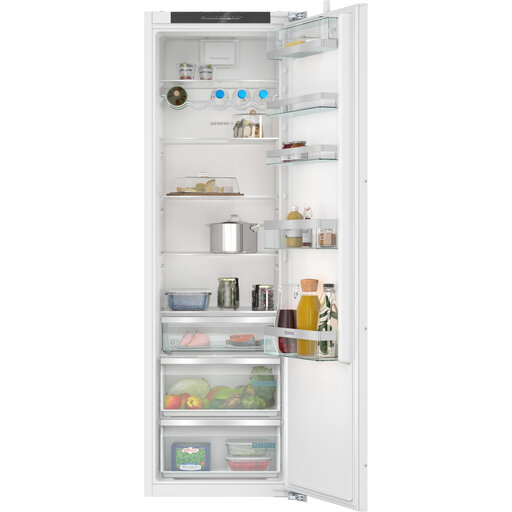
Why it suits this profile: This model is designed for a tall kitchen cabinet and combines 310 litres of refrigeration space with digital temperature control.
The stated cabinet dimensions are 177.2 × 55.8 × 54.8 cm. However, check these measurements against your own kitchen before ordering.
310 litres net capacity, 34 dB, seven shelves and two salad drawers.
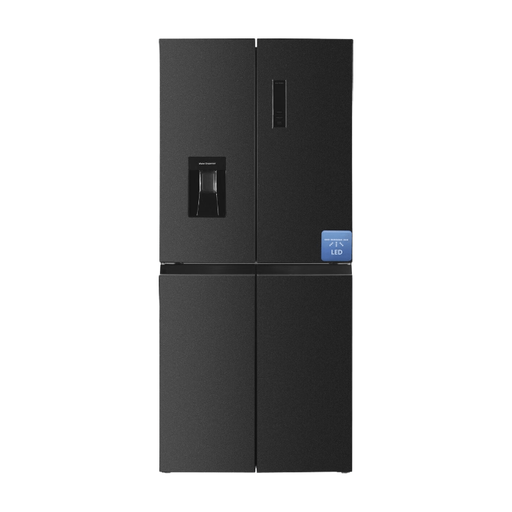
Why it suits this profile: With 269 litres of refrigeration space and 150 litres of freezer space, this model is aimed at large households and bulk shoppers.
The total dimensions of 180 × 79 × 70 cm and consumption of 224 kWh per year are clearly stated and can be checked in advance.
No Frost according to the product description, digital controls, water dispenser and 419 litres total capacity.
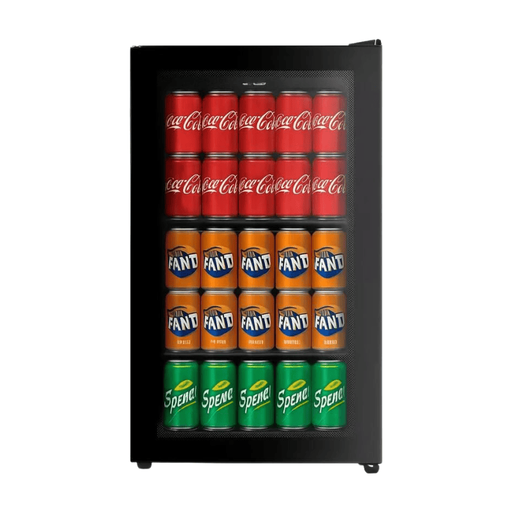
Why it suits this profile: The glass door and 93-litre capacity are practical for storing drinks in an office, utility room, games room or as additional refrigeration space.
The SN-ST climate class, reversible door and stated opening depth help you make a realistic choice about where to place it.
Three adjustable shelves, LED lighting, energy label E and stated consumption of 81 kWh per year.
We have put together a complete, up-to-date list of products that fully meet these strict selection criteria and the applicable European safety regulations.
For one person, around 80 to 150 litres is often sufficient, depending on how often you shop. For several people, a capacity of approximately 200 to 330 litres is more suitable. As well as the total capacity, look at the layout: a large number of litres is less useful if the shelves and door compartments are impractical.
Place the appliance level on a stable surface and keep the ventilation openings clear. Follow the instructions regarding the waiting time after transport; some models need to stand upright for several hours before you connect them. Do not place a fridge directly next to a heat source and check that the door can open freely.
Multiply the stated annual consumption in kWh by your current electricity tariff. According to the specification, a model using 90 kWh per year consumes less than one using 220 kWh, but the actual cost depends on your energy tariff and conditions of use. Always compare kWh per year, capacity and energy label together.
