
Vandaag of morgen in huis

Kwaliteit gegarandeerd

Welkomstaanbiedingen ontgrendelen: GRATIS bezorging | Tot 80% korting | Gratis 30 dagen JoyPlus-proefperiode
Download de app
Choosing a new fridge seems straightforward, until you have to decide between an under-counter fridge, fridge freezer, American-style fridge or mini fridge. Marketing often focuses on smart features and modern looks, while practical details such as dimensions, noise level and annual energy consumption have a bigger impact on everyday use.
There are three common pitfalls:
A freestanding fridge is usually easier to position and replace. Just make sure there’s enough space around the appliance for ventilation. A built-in fridge needs to fit the housing space precisely and work with the kitchen cabinet’s hinge system.
A fridge freezer is a practical choice for households that want one appliance for fresh and frozen food. A model with the freezer compartment at the bottom often makes it easier to reach the fridge section. If you mainly need extra freezer capacity, you could consider a separate freezer or a convertible chest freezer.
A mini fridge or under-counter fridge may be enough for a student room, office or studio flat. Pay particular attention to the net capacity: a compact model may have less usable space than its external dimensions suggest. A fridge with a freezer compartment is handy for ice cream, frozen vegetables or a small stash of frozen food, but the compartment takes up space in the fridge section.
An American-style fridge or side-by-side fridge is best suited to larger kitchens and households that store a lot of food. Measure not only the housing space, but also doorways, corridors and the clearance needed to open the doors.
Before you buy, measure:
Then compare the net capacity, not just the total capacity in the product title. An interior with adjustable shelves, door balconies and salad drawers may be more practical in everyday use than a larger, less flexible one.
A reversible door is useful in a small kitchen or studio flat. Check whether you can reverse the door yourself or whether an installer needs to do it.
The European energy label runs from A to G. A higher rating doesn’t automatically mean the appliance will cost less to run in every situation. Check the stated annual energy consumption in kWh too, and multiply it by your current electricity tariff.
The noise level in dB matters if your fridge is in an open-plan kitchen, bedroom or office. A difference of a few decibels can be noticeable when the fridge is close to where you work or sleep. Use the product specifications as your guide; claims about extra-quiet operation shouldn’t be taken as a general guarantee.
According to the product description, a No Frost fridge uses automatic air circulation to limit or prevent ice forming in the freezer compartment. This can make maintenance easier. A Low Frost model may be an alternative if you want to defrost less often but don’t mind some manual maintenance.
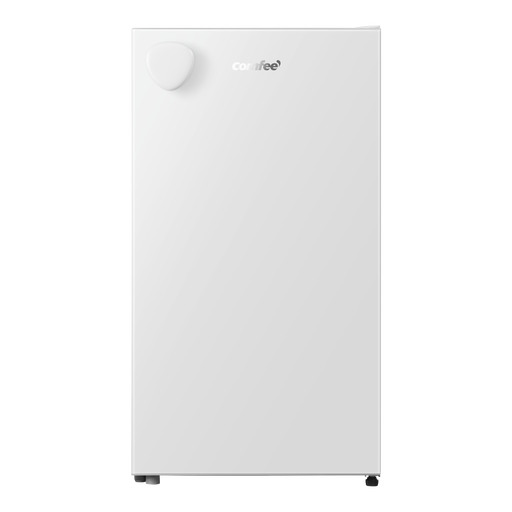
Why it suits this profile: Measuring 44.5 × 47 × 82.7 cm, this under-counter model fits in an office, bedroom or studio flat. Its 88-litre capacity is suitable for the everyday groceries of a small household.
The product specifications list the external dimensions, a reversible door and removable glass shelves. This makes it easier to check the positioning and layout in advance.
88-litre capacity, adjustable thermostat, interior light and E energy rating.
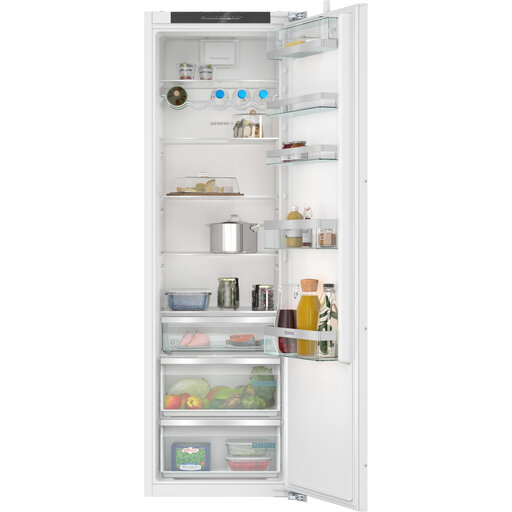
Why it suits this profile: This built-in fridge has a net capacity of 310 litres and is designed for a housing space measuring 177.2 × 55.8 × 54.8 cm.
The specified housing dimensions and door-on-door hinge system help ensure the appliance fits your kitchen cabinet.
D energy rating, 91 kWh per year according to the product specifications, and a noise level of 34 dB.
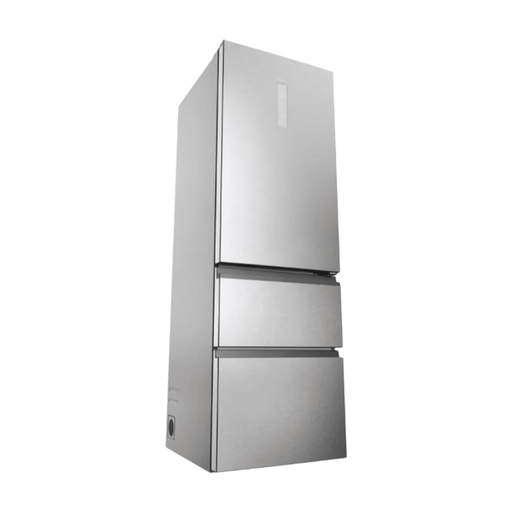
Why it suits this profile: Its 360-litre capacity, three doors and three freezer compartments make it practical for families and households that do larger food shops.
Its stated dimensions, energy consumption of 173 kWh and 35 dB noise level make it easier to compare with other large models than focusing on features alone.
No Frost, C energy rating, digital temperature control and Wi-Fi connectivity according to the product information.
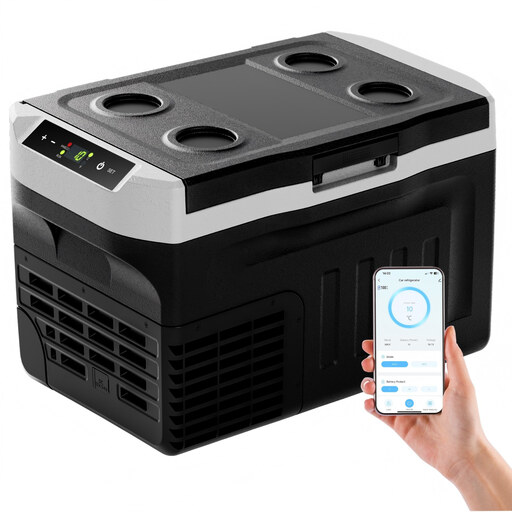
Why it suits this profile: This portable 12V fridge supports 12/24V DC and 220-240V AC power. That makes it suitable for use in a car, caravan, motorhome or at home.
Check which connection you’ll be using beforehand. The product specifications list a 12/24V connection, mains adapter, battery protection and a capacity of 21 litres.
Compressor cooling, an adjustable temperature range of -20 to 20 °C according to the product information, and app control.
We’ve put together a complete, up-to-date list of products that meet these strict selection criteria and the applicable European safety regulations.
Its lifespan depends on how it’s used and maintained, ventilation and the quality of its components. Clean the door seals, keep ventilation openings clear and don’t place a fridge right next to an oven or radiator. Always check the warranty terms. A minimum two-year legal guarantee generally applies within the EU; additional manufacturer terms may vary by brand and model.
Use the annual energy consumption in kWh shown on the energy label. Multiply this figure by your electricity tariff. For example, the Siemens KI81RADD0 is listed at 91 kWh per year, while a larger model will generally have more capacity and different energy consumption. So compare appliances with a similar capacity and layout.
Make sure the fridge is level, allow enough ventilation and, after transport, leave it standing upright for the period specified in the manual before plugging it in. Use an earthed socket and avoid extension leads or multiway adaptors if the manufacturer advises against them. Also check that the doors and drawers can open fully.
