
Vandaag of morgen in huis

Kwaliteit gegarandeerd

Welkomstaanbiedingen ontgrendelen: GRATIS bezorging | Tot 80% korting | Gratis 30 dagen JoyPlus-proefperiode
Download de app
Buying a new fridge seems simple – until you discover just how many models, layouts and features there are to choose from. A low purchase price may seem tempting, but an awkward door, too little freezer space or high energy use can lead to frustration and extra costs later on.
Use this practical buying guide to compare fridges on the features that really matter in a UK home: dimensions, capacity, energy rating, noise level, layout and maintenance.
A 300-litre fridge won’t necessarily fit in your kitchen. As well as checking the height, width and depth, make sure you consider:
A fridge for a small kitchen, for example, may be 54 or 55 cm wide, while an American-style fridge is often more than 90 cm wide.
Terms such as ‘ultra-quiet’, ‘energy-efficient’ and ‘keeps food fresher for longer’ sound reassuring, but always check the technical specifications. A noise level of 37 dB is more specific than simply calling it a ‘quiet fridge’. The annual energy use in kWh is also a more useful guide than a general claim about low running costs.
According to a brand’s own research or the product description, certain systems may improve temperature distribution or storage time. This isn’t a guarantee for every situation. So look for verifiable specifications such as energy rating, noise level, net capacity and the type of defrost system.
According to the product information, a No Frost fridge automatically limits or prevents ice build-up in the fridge and freezer compartments. Low Frost generally results in less ice than a conventional system, but you may still need to defrost it manually. Check this carefully if you have little time for maintenance.
Measure the available space in three places, as walls and floors aren’t always perfectly straight. Also leave room for ventilation, as described in the manual. Net capacity matters more than the appliance’s total external volume:
A fridge freezer is handy if you want one appliance for fresh and frozen food. Do check how the capacity is divided. For example, a model with a total capacity of 260 litres might have 187 litres of fridge space and 73 litres of freezer space.
The European energy label for fridges runs from A to G. You should consider the energy rating alongside the annual energy use in kWh. A larger appliance doesn’t automatically use more energy per litre of storage, but a spacious fridge may have higher overall energy consumption.
So compare models by looking at:
An energy-efficient fridge is particularly appealing if you’ll use it every day for years. Your actual electricity costs will depend on your tariff and how you use it.
Noise level can be important in an open-plan kitchen, studio flat or home with a nearby workspace. The models in this selection range from 36 to 40 dB. That may not seem like much on paper, but check the noise class on the energy label too.
Also look for adjustable glass shelves, door balconies, salad drawers and freezer drawers. A fridge with a reversible door gives you more flexibility in a small kitchen. A water dispenser can be handy, but check whether it needs a water reservoir or a fixed connection. Regular cleaning is also important for a fridge with a water dispenser.

Why it suits this profile: At 54.5 cm wide and with a total capacity of 260 litres, this model is a good fit for smaller kitchens and households looking to combine fridge and freezer space.
The reversible door means your kitchen layout won’t limit where you can place it. The product specifications also list a noise level of 40 dB and adjustable feet.
187 litres of fridge space, 73 litres of freezer space, three freezer drawers and a Fresh Zone.
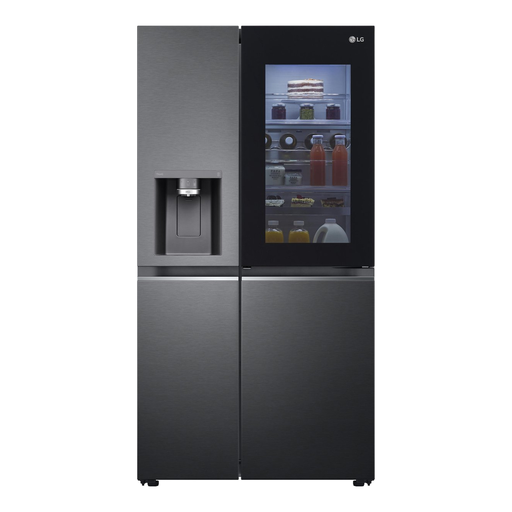
Why it suits this profile: If you like to keep plenty of food in the fridge and have room for a wide American-style model, this one offers 635 litres of total net capacity and an integrated water and ice dispenser.
The stated dimensions are 179 × 91,3 × 73,5 cm. Measure doorways and allow for ventilation before buying; its large capacity won’t suit every kitchen.
416 litres of fridge space, 219 litres of freezer space, 36 dB and Total No Frost according to the product information.
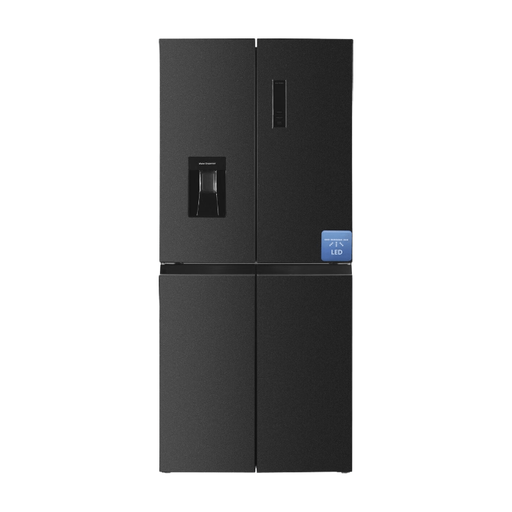
Why it suits this profile: With 269 litres of fridge space and 150 litres of freezer space, this model is a good fit for families who store larger quantities of fresh and frozen food.
The product specifications list Total No Frost, digital temperature control and a water reservoir, so there’s no need for a fixed water connection.
419 litres in total, energy rating D, 224 kWh per year and 39 dB, according to the stated specifications.
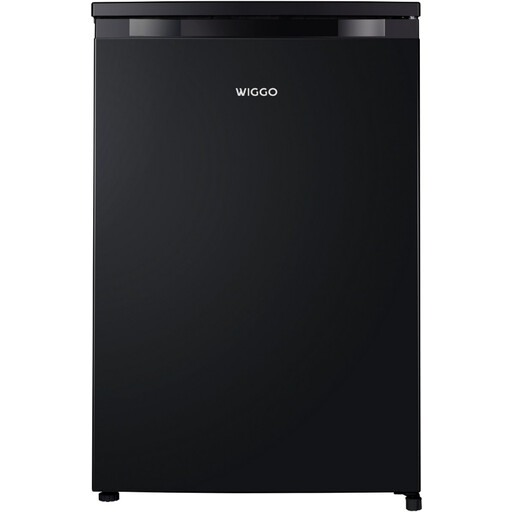
Why it suits this profile: This compact fridge is 84.5 cm high and has a capacity of 126 litres, making it suitable for a student room, office or as extra fridge space.
The reversible door is useful when space is limited. The stated dimensions and energy use of 72 kWh per year make it easy to compare with other models.
126 litres of fridge space, 17 litres of freezer space, energy rating D and 39 dB.
We’ve put together a complete, up-to-date list of products that meet these strict selection criteria and the current European safety regulations.
Around 100 to 200 litres is often enough for one person. A couple can usually get by with 200 to 300 litres. Families often need more fridge and freezer space, depending on how often they shop. Don’t just look at the total capacity; check the balance between fridge and freezer space too.
Its lifespan depends on how it’s used and maintained, the ventilation and the build quality. Keep the condenser and ventilation space clear, clean the door seals and don’t put hot food in the appliance. The statutory guarantee and any additional manufacturer’s guarantee are listed with the product. A long compressor guarantee doesn’t automatically mean that all parts or service work have the same cover.
That depends on the annual energy use shown on the energy label and your electricity tariff. Multiply the kWh used per year by your current price per kWh. Also compare models with a similar capacity: a compact, low-energy fridge isn’t directly comparable with an American-style fridge of more than 600 litres.
