
Vandaag of morgen in huis

Kwaliteit gegarandeerd

Welkomstaanbiedingen ontgrendelen: GRATIS bezorging | Tot 80% korting | Gratis 30 dagen JoyPlus-proefperiode
Download de app
Choosing a new fridge seems simple, until you discover just how much models can differ. A compact fridge for a student room has different requirements from a spacious fridge-freezer for a family. Marketing terms such as “energy-efficient”, “No Frost” and “extra quiet” only tell you so much, so it’s worth checking the specifications behind them.
A fridge with a large capacity won’t necessarily fit in your kitchen. Always check the external dimensions, including the ventilation clearance required. Measure doorways, stairs and the space where the appliance will go, too. A four-door fridge with a capacity of 474 litres, for example, can be practical for a large household, but it needs considerably more space than an under-counter fridge.
Since the European energy label was revised, the scale for fridges runs from A to G. As well as the letter, check the stated annual energy consumption in kWh. This figure makes it easier to compare different sizes. A larger fridge with an E energy rating, for example, may use more electricity than a smaller fridge with the same rating, simply because it has a greater capacity.
A No Frost fridge reduces ice build-up and the need for manual defrosting, but it may cost more. Wi-Fi connectivity is useful for some people, while others prefer simple controls. A freezer compartment may be less important in a mini fridge for drinks. So think about how you’ll use the appliance first, then consider the extra features.
A compact fridge with a capacity of around 40 to 100 litres may be enough for a single-person household or student room. An under-counter fridge will often fit beneath or beside a worktop. Check whether you need a freezer compartment, though. Models such as the Comfee RCD115DK2 combine 68 litres of fridge space with a 12-litre freezer compartment.
For families, a fridge-freezer or fridge with a freezer compartment is more practical. Check the separate capacities of the fridge and freezer sections. A total capacity of 300 litres tells you less if almost half of it is freezer space.
Compare annual energy use in kWh per year, not just the energy label. Also check the noise level in dB(A). Product information often describes noise levels of around 35 to 40 dB as quiet or relatively quiet. A difference of a few decibels can be noticeable in an open-plan kitchen, office or bedroom.
Check the climate class, too. This tells you the ambient temperatures the appliance is designed to operate in, according to its specifications. A fridge in an unheated shed or caravan may have different requirements from one in a heated kitchen.
A fridge with a reversible door gives you more flexibility when positioning it. Check that the hinges can actually be switched over, and how much space the door needs to open fully. Removable glass shelves make cleaning easier and give you more flexibility when storing tall containers.
A No Frost fridge or frost-free model automatically helps to limit ice build-up, according to the product description. A Low Frost model will generally develop less ice than a standard model that needs manual defrosting, but always check the instruction manual. Portable fridges for campervans, boats or cars have different things to consider: power supply, ventilation, battery protection and temperature settings.
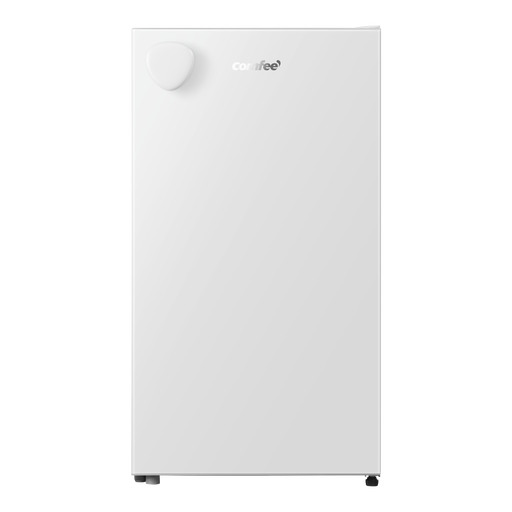
Why it suits this type of buyer: This compact fridge is designed for small kitchens, studio flats, offices and bedrooms. Its 88-litre capacity gives you room for everyday essentials without taking up as much space as a large fridge-freezer.
Its external dimensions of 44,5 × 47 × 82,7 cm make it easy to check in advance whether it will fit. The reversible door is helpful when space is limited.
88-litre capacity, adjustable glass shelves, a salad drawer, interior light and adjustable thermostat.
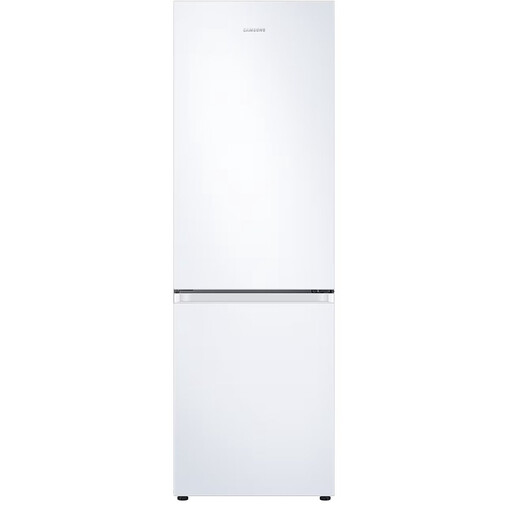
Why it suits this type of buyer: This model combines 230 litres of fridge space with 114 litres of freezer space. It also offers No Frost, digital controls and Wi-Fi connectivity for anyone who values extra control and flexible storage.
The fridge and freezer capacities are listed separately, so you can more easily decide whether the split suits the way you shop and store food.
344-litre total capacity, No Frost, 35 dB, a four-star freezer compartment and a reversible door, according to the product specifications.

Why it suits this type of buyer: For campers, motorhome owners, boat owners and travellers, a portable compressor fridge is more practical than a standard kitchen model. This appliance runs on 12/24V DC and 100–240V AC.
The stated temperature range of -18 °C to 15 °C and the dual power options make it easier to understand how you can use it than with a basic thermoelectric cool box.
22-litre capacity, compressor cooling, adjustable settings for use as a fridge or freezer, and built-in three-stage battery protection, according to the product information.
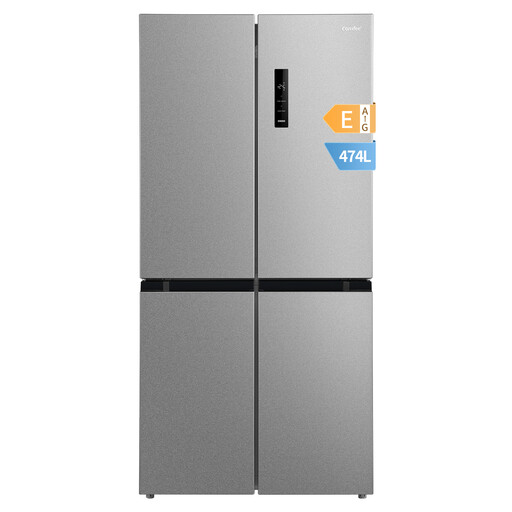
Why it suits this type of buyer: With a capacity of 474 litres and four doors, this model is designed for households that need plenty of fridge and freezer space. Be sure to check its dimensions of 83,8 × 65,3 × 177,5 cm carefully before buying.
The separate doors mean you don’t have to open every compartment at once. Still, check that the overall width and height will fit in your kitchen.
474-litre capacity, Vario Box, a salad drawer with three temperature settings and a freezer drawer that can be combined, according to the product description.
We’ve put together a complete, up-to-date list of products that meet these strict selection criteria and the applicable European safety regulations.
It varies by model. Keep the ventilation openings clear and follow the minimum clearances in the manual. Place the fridge on a level surface, and don’t push it right up against a wall if the manufacturer specifies that it needs extra space.
Multiply the stated annual energy use in kWh by your current electricity rate. For example, a fridge that uses 100 kWh per year consumes less electricity than one that uses 220 kWh per year, but the final cost depends on your tariff and energy deal. Always check the official product information sheet when comparing models.
No. No Frost reduces ice build-up and can mean less manual defrosting, but shelves, door seals and drainage openings still need regular cleaning. Also, don’t overfill the appliance, so that cold air can circulate.
