
Vandaag of morgen in huis

Kwaliteit gegarandeerd

Welkomstaanbiedingen ontgrendelen: GRATIS bezorging | Tot 80% korting | Gratis 30 dagen JoyPlus-proefperiode
Download de app
A new fridge seems like a straightforward purchase until you discover how many models and features there are. A fridge freezer, freestanding fridge, mini fridge, under-counter fridge or American-style fridge freezer each serves a different purpose. If you only consider the price or capacity, you may run into practical problems later: a door that does not open properly, insufficient space for your shopping or unnecessarily high energy costs.
The total capacity does not tell you everything. In a fridge freezer, the space is divided between the fridge and freezer compartments. For example, a 390-litre model might have 260 litres of fridge space and 130 litres of freezer space. Always check both capacities separately.
Pay attention to the layout as well. Adjustable shelves, wide freezer drawers and a bottle rack determine how much usable space you actually have.
A fridge does not only need to fit into the available space. Also measure:
A freestanding fridge usually needs additional ventilation space. Do not place an appliance tightly against a wall or heat source if the manual specifies a clearance.
No Frost, inverter technology, Wi-Fi and a water or ice dispenser can be useful, but they do not automatically make a fridge cheaper to run. Check the energy label and the stated annual consumption in kWh. This figure is more useful for comparison than a general claim about energy savings.
A brand’s own research may state that a feature reduces consumption by a certain percentage. Treat this as a brand claim and check the official energy label and product specifications before you buy.
The European energy label for fridges ranges from A to G. The energy class is useful for an initial comparison, but annual consumption in kWh makes the difference more tangible. A compact fridge usually uses less electricity because its capacity is smaller, while an American-style fridge freezer may use more energy because of its larger volume.
When comparing models with a similar capacity, consider:
A fridge is often located in an open-plan kitchen, studio flat or office. The noise level is shown in dB. According to the product specifications, models around 35 dB are relatively quiet; compact models at approximately 39 to 40 dB may still be suitable, but may be better placed away from a bedroom.
A fridge with No Frost uses a system that helps limit ice build-up in the freezer compartment. As a result, the product description states that manual defrosting is needed less often. Check, however, whether No Frost applies to both the fridge and freezer compartments.
An inverter compressor can adjust its speed to match the cooling requirement. Brands sometimes associate this with lower noise levels or reduced consumption. Do not present this as a guaranteed result: actual costs also depend on the ambient temperature, ventilation, temperature setting and usage.
A mechanical dial is simple and often sufficient for an under-counter fridge. Digital controls are useful when you want to set the temperature more precisely or manage separate zones.
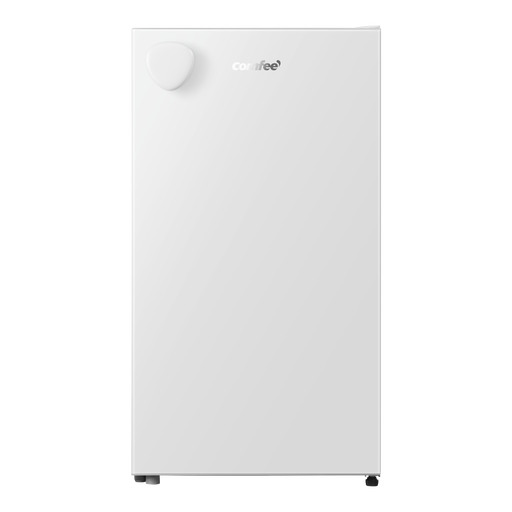
Why it suits this profile: This compact fridge is designed for kitchens, offices, bedrooms and studio flats. Its 88-litre capacity is suitable for single-person households or as additional chilled storage.
The stated dimensions of 44.5 × 47 × 82.7 cm make it easy to measure the space in advance. The reversible door prevents an awkward opening direction.
88 litres, adjustable glass shelves, a salad drawer, interior lighting and energy label E.
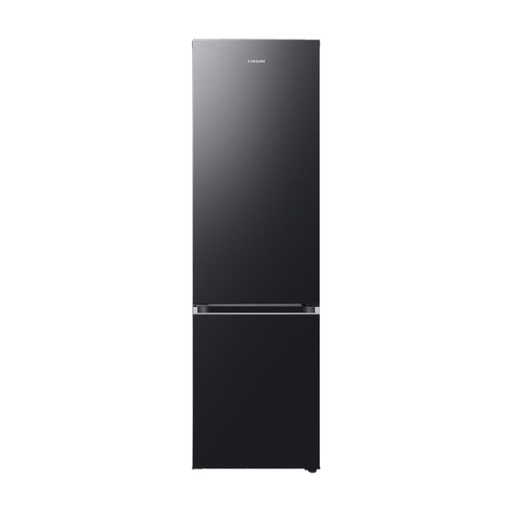
Why it suits this profile: According to the product information, this model combines a 387-litre capacity with energy label A, 35 dB and No Frost+. It is well suited to families who store a large amount of shopping every day.
The product specifications state both the total capacity and energy consumption: 108 kWh per year. This allows you to assess capacity and consumption together.
Energy label A, 387 litres, 35 dB and No Frost+, according to the stated specifications.
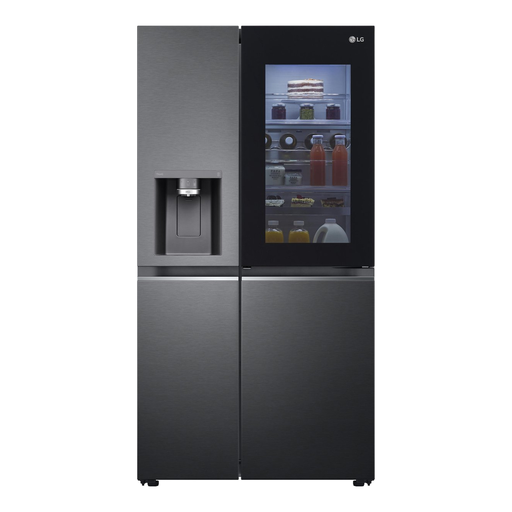
Why it suits this profile: With a total capacity of 635 litres, a water and ice dispenser and Wi-Fi control according to the product description, this model is designed for large households and intensive use.
The dimensions of 179 × 91.3 × 73.5 cm and weight of 137 kg make it essential to check delivery and installation requirements. This helps you avoid a disappointing purchase caused by restricted access points.
416 litres of fridge space, 219 litres of freezer space, 36 dB and stated consumption of 348 kWh per year.
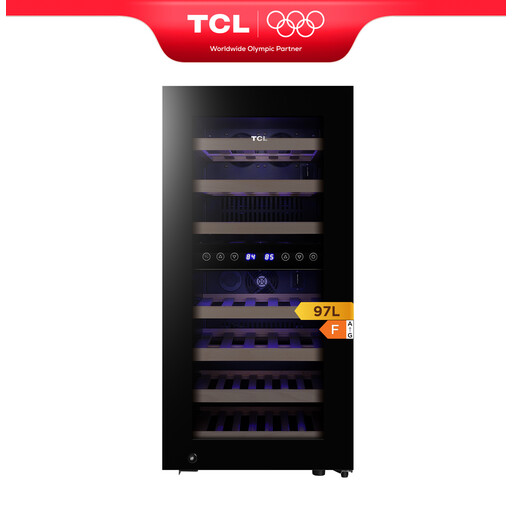
Why it suits this profile: A 97-litre wine fridge is designed for bottle storage, not as a replacement for a standard fridge. This makes it suitable for home bars, restaurants or additional wine storage.
The reference to 33 bottles and 97 litres makes its intended use clear. Check in advance that the available space and bottle layout suit your collection.
97-litre capacity, glass door and space for up to 33 bottles according to the product name.
We have put together a complete, up-to-date list of products that fully meet these strict selection criteria and the applicable European safety regulations.
This depends on the size of your household and your shopping habits. A compact fridge of around 40 to 90 litres is often suitable for one person, while an under-counter fridge of 88 to 126 litres works well as additional chilled storage or for a student room. Families generally look for a fridge freezer from around 250 litres, but the amount of freezer space you need is just as important as the total capacity.
No Frost can be useful if you do not want to defrost the appliance manually. Check, however, whether the system applies only to the freezer compartment or to the entire fridge freezer. Also compare the energy label, annual consumption and noise level. A feature is most useful when it suits the way you use the appliance.
Lifespan varies according to the model, usage and maintenance. Make sure there is sufficient ventilation, keep the door seal clean and do not place hot food directly inside the appliance. Follow the installation instructions and check the energy label when replacing your fridge. In the European Union, consumers are entitled to a minimum statutory guarantee of conformity; additional manufacturer warranties vary by brand and product.
