
Vandaag of morgen in huis

Kwaliteit gegarandeerd

Welkomstaanbiedingen ontgrendelen: GRATIS bezorging | Tot 80% korting | Gratis 30 dagen JoyPlus-proefperiode
Download de app
Buying a new fridge seems straightforward, until you discover how much difference there is between a small fridge, a fridge freezer and a spacious American-style fridge freezer. Specialised models such as wine coolers, drinks fridges and fridges with glass doors also require a different assessment.
The biggest mistake is not always choosing the wrong capacity. Often, it is selecting a model that will not fit through the doorway, does not have enough ventilation space or uses more electricity than expected. Use the checks below to compare fridges based on practical specifications rather than marketing copy.
A 300-litre fridge may seem spacious on paper, but the layout determines how much you can actually store. So also check the number of shelves, salad drawers, door compartments and freezer drawers. A tabletop fridge of around 90 to 126 litres may be sufficient for one person, while a small family is more likely to need a fridge freezer or a model of around 250 litres or more.
Also pay attention to the difference between total capacity, fridge capacity and freezer capacity. With a fridge freezer, the capacity is often stated as a combined figure.
A fridge with No Frost, inverter technology or a water dispenser can be practical, but a feature does not automatically make an appliance energy-efficient. Check the energy label from A to G and the stated annual consumption in kWh. Costs also depend on your electricity tariff and usage.
The product details provide a useful indication, but actual consumption can vary depending on the ambient temperature, how full the fridge is, the temperature setting and how often the door is opened.
Do not just measure the recess. Also measure doorways, staircases, passageways and the space needed to open the door fully. An American-style fridge freezer is often around 90 centimetres wide and can be difficult to move because of its weight.
A freestanding fridge also needs space for ventilation. The precise distance is given in the manual. For the Wiggo model, for example, a minimum of 10 centimetres around the appliance and at the back is specified. Do not place a fridge directly next to an oven or radiator, or in direct sunlight.
If you mainly use your fridge for everyday shopping, pay attention to the balance between shelves and drawers. A compact fridge with adjustable glass shelves offers greater flexibility for tall bottles and bowls. A fridge without a freezer compartment uses all its space for fresh food, but is less suitable if you want to store frozen products.
For larger households, models with separate zones are useful. According to the product specification, the COMFEE’ four-door model has a total capacity of 474 litres. The fridge features a salad drawer with three temperature settings and a freezer compartment with a combinable Flip Tray.
Noise levels are expressed in dB(A). A difference of a few decibels can be noticeable in a studio flat, bedroom or open-plan kitchen. Models rated at around 36 to 40 dB are relatively quiet on paper, but perceived noise also depends on the room, flooring and compressor cycles.
Always compare the official product rating. For example, the CHiQ JR92DSE has a stated noise level of 39 dB, while the Wiggo WL-TT82D(B) is rated at 39 dB.
As well as the energy class, check the annual consumption in kWh. A compact fridge usually uses less electricity than a large model, but several small appliances can still consume a significant amount overall.
According to the product description, a fridge with Low Frost reduces ice build-up, while No Frost provides automatic defrosting in the fridge and freezer compartments on certain models. Always check which compartment is covered by the feature. A fridge with a glass door is convenient for drinks or wine, but a transparent door can make positioning and heat exposure more critical.
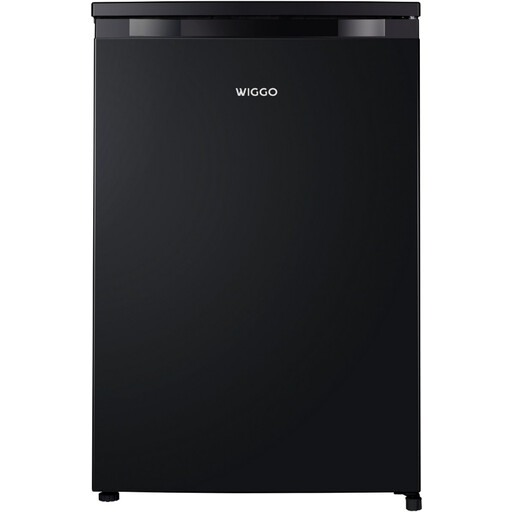
Why it suits this profile: This tabletop fridge offers 126 litres of capacity, making it suitable for students, single-person households, offices or as an extra fridge in a utility room.
The stated dimensions, capacity, layout and noise level of 39 dB make it easier to compare the model in advance. The reversible door is helpful where placement options are limited.
126 litres of fridge space, LED lighting, adjustable shelves, a salad drawer and a stated annual consumption of 72 kWh.
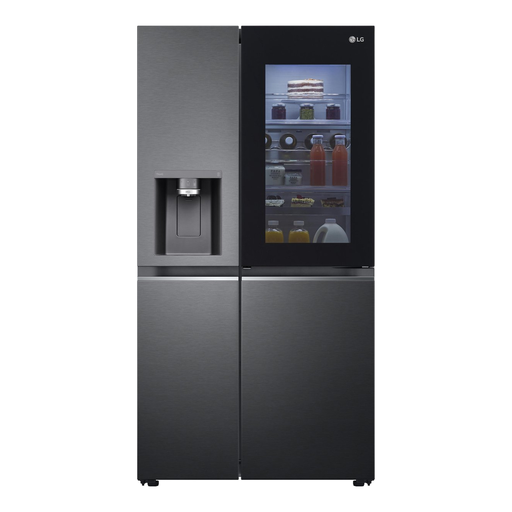
Why it suits this profile: Households needing plenty of fridge and freezer space get a generous 635-litre layout, along with extra features for everyday use.
The specifications list 416 litres of fridge space and 219 litres of freezer space separately. However, check the width of 91.3 cm, access route and required ventilation in advance.
635 litres in total, 36 dB, No Frost according to the product description, a water and ice dispenser, and control via the ThinQ app.
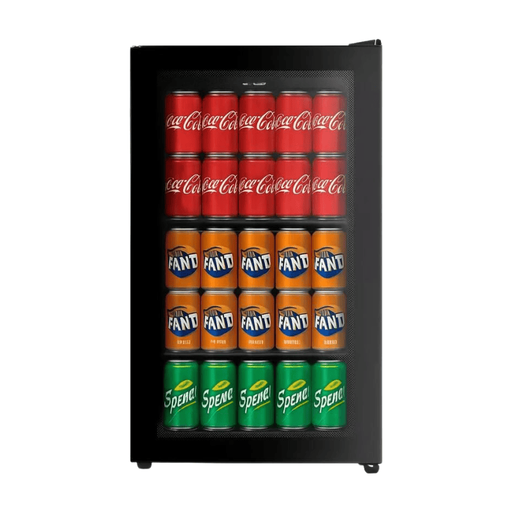
Why it suits this profile: This drinks fridge is designed for offices, mancaves, hospitality areas and households that want to store bottles and cans separately from food.
The glass door, three adjustable shelves and reversible door make the intended use and placement clear. Check the stated door-opening depth of around 91 cm before buying.
93 litres of drinks storage, LED interior lighting, one temperature zone, 40 dB and climate class SN-ST for environments from 10 to 38 °C.
Place every model on a stable, level surface and leave it standing upright after transport, as instructed in the manual. Clean the door seal regularly and never put hot food straight into the fridge. For a model with a water dispenser, check whether the reservoir or connection is suitable for your needs.
We have compiled a complete, up-to-date list of products that fully meet these strict selection criteria and the applicable European safety regulations.
For one person, a capacity of around 90 to 150 litres is often a good starting point. If you rarely eat at home, you may need less. Also consider the layout, as a practical salad drawer and useful door compartments can be more important than a few extra litres.
This varies by model. Use the stated annual consumption on the energy label as a point of comparison. For example, the Wiggo WL-TT82D(B) lists 72 kWh per year, while the Salora BCT935B lists 81 kWh per year. Large models do not automatically use proportionally more electricity, but they generally offer more fridge and freezer space.
The lifespan depends on build quality, maintenance, ventilation and usage. Keep the condenser and ventilation openings clear, do not place the appliance next to a heat source and check that the door closes properly. The statutory guarantee and any additional manufacturer’s warranty are listed for each product; check this information before placing your order.
