
Vandaag of morgen in huis

Kwaliteit gegarandeerd

Welkomstaanbiedingen ontgrendelen: GRATIS bezorging | Tot 80% korting | Gratis 30 dagen JoyPlus-proefperiode
Download de app
Buying a new fridge seems straightforward, until you discover just how much models vary in capacity, layout, energy use and dimensions. A model may look spacious on paper, yet offer little usable shelf space. Some doors may not open properly in a small kitchen, or the freezer compartment may turn out to be too small for a household that shops weekly.
As a Joybuy Product Recommendation Officer, I look beyond the product details to focus on practical considerations. Read on to find out what to look for and which models suit different needs.
A fridge with a capacity of 300 litres isn’t automatically practical inside. Check how the space is divided between the fridge and freezer compartments, whether the shelves are adjustable and how much usable width the door shelves offer. A fridge freezer, for example, may have plenty of total capacity but a small freezer compartment that won’t fit larger packs.
Brands use terms such as “fresher”, “smarter” and “energy-saving” in their product descriptions. According to Samsung’s own information, Twin Cooling Plus could keep food fresh for up to two weeks longer, while AI Energy Mode could save up to 10% energy. These are brand claims, not guarantees for every kitchen, load or use case.
So start with the verifiable details: energy label, annual consumption, noise level, capacity and dimensions.
Measure more than just the space where the fridge will stand. Allow for ventilation, opening the door and getting the appliance into your home. An American-style fridge freezer that’s almost 91 cm wide may fit in your kitchen, but not through every doorway or hallway. Also check whether the door can be reversed if the fridge will stand next to a wall.
Check the net capacity. It gives you a better idea of how much space you can actually use than a rounded marketing figure.
The European energy label for fridges runs from A to G. As well as the letter rating, compare the stated annual consumption in kWh. A smaller model may have a good rating but not enough capacity for a family. Conversely, a larger fridge with more litres of space may use more energy overall, without being less efficient per litre of storage.
Your actual costs depend on your electricity tariff and how you use the appliance. Treat any stated cost as a guide, not a fixed promise.
Noise level matters if your fridge is in an open-plan kitchen, bedroom or home office. Models rated at around 37 to 40 dB are generally specified as relatively quiet, but how much noise you hear also depends on the floor, walls and compressor cycle.
A No Frost fridge uses air circulation to limit ice build-up and, according to the product description, doesn’t need manual defrosting. Low Frost models and fridges that need manual defrosting may still require periodic maintenance. Also check whether No Frost applies to the freezer compartment only or to both compartments.

Why it suits this profile: This table-top model offers 109 litres of net capacity, including a separate 14-litre freezer compartment. It’s a good fit for a student room, studio flat or small kitchen where a standard fridge freezer would be too large.
The fridge and freezer capacities are listed separately. The noise level of 37 dB and annual consumption of 89 kWh are also clearly stated.
109-litre capacity, 14-litre freezer compartment, reversible door and LED lighting.
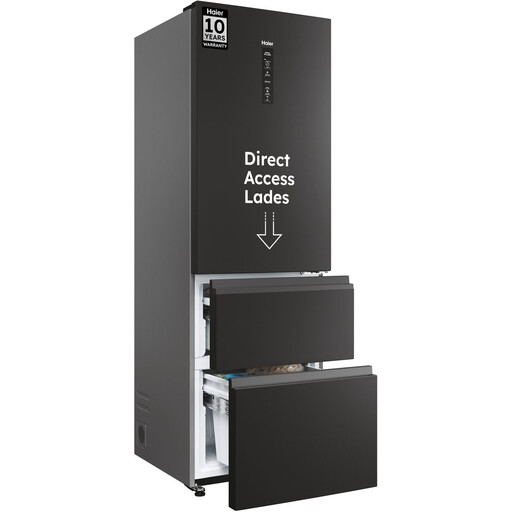
Why it suits this profile: This freestanding fridge freezer combines a 360-litre capacity with two freezer drawers, adjustable glass shelves and control via its display, Wi-Fi and Bluetooth.
The dimensions (59.5 × 185 × 66.7 cm) and the split between 235 litres of fridge space and 125 litres of freezer space can be checked in advance.
Total No Frost, two freezer drawers, reversible door and energy rating D according to the product specifications.
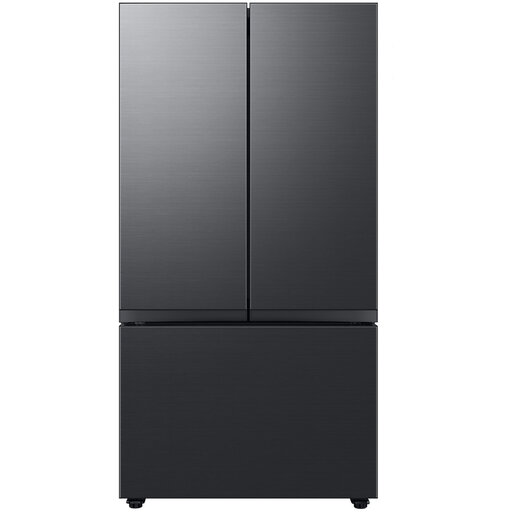
Why it suits this profile: This American-style fridge freezer is designed for large households, hospitality-style storage or anyone who wants to keep plenty of drinks, fresh food and frozen food on hand.
The product details give more than just the total capacity of 674 litres: they also specify 487 litres of fridge space, 187 litres of freezer space, 38 dB and 338 kWh per year.
674-litre capacity, Beverage Center, No Frost and a freezing capacity of 12 kg per 24 hours.
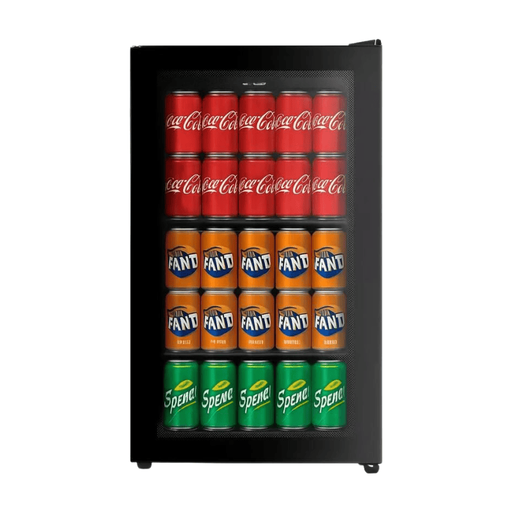
Why it suits this profile: This model is designed for cans and bottles in an office, bar, man cave, kitchen or hospitality space where presentation and quick access matter.
Its purpose is clearly defined as a drinks fridge. The 93-litre capacity, three adjustable shelves, noise level of around 40 dB and annual consumption of 81 kWh are all listed.
Glass door, LED lighting, reversible door and compact dimensions of 47 × 44 × 84.5 cm.
We’ve put together a complete, up-to-date list of products that meet these strict selection criteria and current European safety requirements.
Follow the ventilation requirements in the instruction manual. Don’t push a fridge right up against the wall if the manufacturer specifies clearance around it. Also check how much space you need to open the door fully and remove the drawers.
Lifespan varies depending on the model, how it’s used and maintained, and where it’s installed. A well-ventilated fridge that isn’t overloaded, with clean door seals and ventilation openings, can generally keep working reliably for longer. Your statutory rights and any additional manufacturer’s warranty are separate from a guaranteed lifespan.
Multiply the stated annual consumption in kWh by your current electricity tariff. Compare models in the same way, and bear capacity in mind: a smaller fridge with lower consumption won’t necessarily save you money if you need a second appliance as a result.
