
Vandaag of morgen in huis

Kwaliteit gegarandeerd

Welkomstaanbiedingen ontgrendelen: GRATIS bezorging | Tot 80% korting | Gratis 30 dagen JoyPlus-proefperiode
Download de app
Buying a new fridge seems straightforward, until you discover how many models and technical terms there are. Are you looking for a small fridge for a studio flat, a fridge-freezer for a family or a wine fridge for your collection? The most important things to consider are dimensions, capacity, energy consumption and ease of use — not eye-catching marketing claims.
A fridge with a capacity of 200, 300 or 400 litres doesn’t tell you everything. The total capacity might include a large freezer compartment, narrow door shelves or very few usable shelves. So always check the fridge capacity and freezer capacity separately. For example, a 260-litre model might offer 187 litres of fridge space and 73 litres of freezer space.
The purchase price is only part of the cost. Check the energy rating and the stated annual energy consumption in kWh, too. An energy-efficient fridge won’t necessarily use little electricity in every situation, but the energy label makes it easier to compare models. Also consider where it will be placed, the space needed for ventilation and the condition of the door seals.
An American-style fridge-freezer offers plenty of space, but you’ll need room to get it into your home and for the doors to open and ventilation. A fridge with a glass door can be handy for drinks, but isn’t always practical as your main fridge. A reversible door, on the other hand, is especially useful in a small kitchen, as you can change which way it opens to suit the layout.
Measure not only the space where the fridge will go, but also the route into your kitchen. Check:
A compact fridge, for example, is suitable for an office, bedroom or studio flat, but offers less storage space. The CHiQ JR92DSE is 47,4 cm wide, 44,7 cm deep and 83,1 cm high. It has a capacity of 92 litres and a stated noise level of 39 dB.
Choose a capacity that suits your household and shopping habits. One person or a student will often find a small fridge or a model of around 90 litres is enough. A fridge with a capacity of 200 to 300 litres may suit two people. Families who buy groceries in larger quantities could consider a 400-litre fridge or an American-style fridge-freezer.
Check the number of adjustable glass shelves, salad drawers, door shelves and freezer drawers. A large capacity is less useful if your food packaging doesn’t fit properly.
A No Frost fridge uses automatic defrosting, so manual defrosting is generally unnecessary. Low Frost reduces ice build-up, but may still need occasional maintenance. Multi-Airflow systems distribute cold air across several zones, according to the product specifications.
Noise is measured in dB. Models rated at around 37 to 40 dB may be a good choice for an open-plan kitchen or a home with a workspace nearby. Always compare the official product specifications and check the noise rating on the energy label, too.

Why it suits this type of buyer: This compact fridge is designed for small kitchens, student accommodation, offices or as extra fridge space. At 47,4 cm wide, it’s easier to fit in than a full-size family model.
The capacity, dimensions, noise level of 39 dB and annual energy consumption of 85 kWh are clearly stated. This means you can compare more than just the price.
92-litre capacity, reversible door, adjustable glass shelves and seven temperature settings.
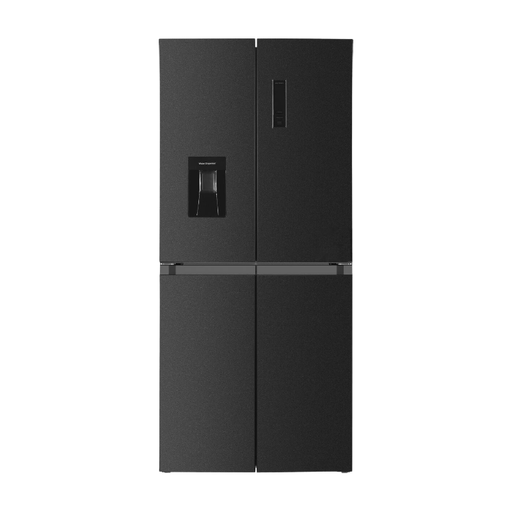
Why it suits this type of buyer: For households that store plenty of fresh and frozen food, this four-door model offers a total capacity of 419 litres, split between 269 litres of fridge space and 150 litres of freezer space.
The capacity is listed separately for each compartment. No Frost, energy rating C, 182 kWh per year and 39 dB are also specified.
Four doors, Total No Frost, digital touchscreen, water reservoir and Super Freeze function.
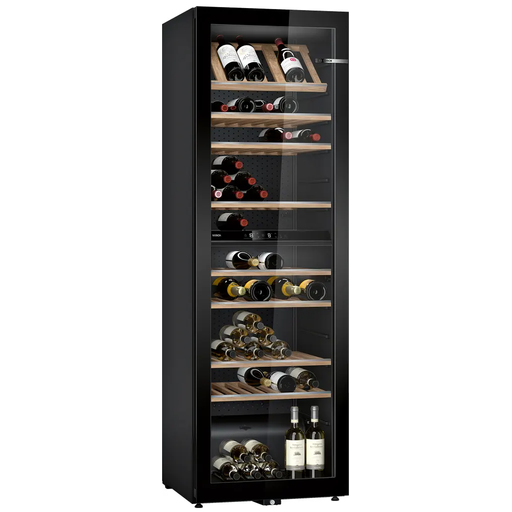
Why it suits this type of buyer: Wine lovers who want to store different types of wine separately can set the two temperature zones within the stated range of 5 to 20 °C.
The capacity of up to 199 bottles, two temperature zones, dimensions and noise level of 38 dB are all clearly stated.
Two temperature zones, pull-out oak shelves, LED lighting and a door lock.
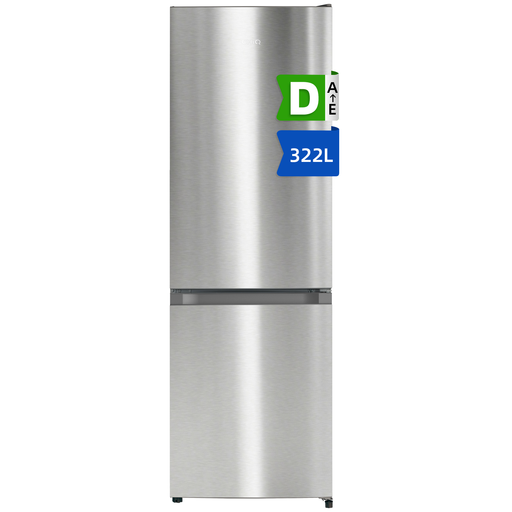
Why it suits this type of buyer: This fridge-freezer combines 226 litres of fridge space with 96 litres of freezer space. It is 185,5 cm high and 59,5 cm wide, making it a good fit for many standard kitchen layouts.
The product specifications list a noise level of 37 dB, energy rating D, 196 kWh per year and a reversible door. This makes it easier to compare the practical details.
Total No Frost, Multi-Airflow, inverter compressor, door alarm and adjustable glass shelves.
We’ve put together a complete, up-to-date list of products that meet these strict selection criteria and current European safety regulations.
After transporting your fridge, leave it upright for the time specified in the manufacturer’s instructions before plugging it in. Don’t place it directly next to an oven or radiator, or in bright sunlight. Keep the ventilation openings clear and adjust the feet so the fridge stands level and stable.
A temperature of around 4 °C in the fridge compartment is often used as a guideline for food storage, but always follow the manual and the storage advice on food packaging. Allow hot dishes to cool, covered, before putting them in the fridge. Keep the door open for as little time as possible, and check regularly that the door seals are clean and fit properly.
It depends on your household and shopping habits. A small fridge of around 90 litres may suit one person or work well as an extra appliance. A fridge-freezer with a capacity of around 200 to 300 litres is often more practical for a couple. Families who store plenty of food may want to consider around 400 litres or an American-style fridge-freezer.
No Frost reduces ice build-up and generally removes the need for manual defrosting. You’ll still need to clean the interior, door seals and ventilation openings. Check the manual for maintenance advice and the minimum clearance needed around the appliance, too.
Use the annual energy consumption in kWh on the energy label as a point of comparison. Multiply it by your current electricity rate. Actual consumption can vary depending on the room temperature, how full the fridge is, how often the door is opened and where it’s placed. So a fridge’s energy efficiency depends not only on its energy rating, but also on how you use it.
