
Vandaag of morgen in huis

Kwaliteit gegarandeerd

Welkomstaanbiedingen ontgrendelen: GRATIS bezorging | Tot 80% korting | Gratis 30 dagen JoyPlus-proefperiode
Download de app
Buying a new fridge seems straightforward, until you discover how much dimensions, energy use and layout can vary between models. A fridge that looks spacious on paper may be difficult to fit in your home. Handy features can also add to the cost without being something you use every day.
That’s why Joybuy’s Product Recommendation Officer helps you turn marketing claims into product information you can check. This makes it easier to compare a fridge-freezer, American-style fridge freezer, freezer or small fridge based on the features that really matter in a Dutch home.
A fridge with a capacity of 260 litres, 300 litres or 400 litres doesn’t tell you everything. The usable space also depends on the layout, the number of drawers and the position of the freezer compartment. A large American-style fridge freezer, for example, offers plenty of capacity, but also needs more than 90 centimetres of width and enough space for the doors to open.
As well as checking the capacity in litres, always check:
A quiet fridge is usually indicated by a low dB(A) rating. Models around 37 to 40 dB are often better suited to an open-plan kitchen, studio flat or office than appliances with a higher rating. However, the noise may temporarily change when the compressor starts or an automatic defrost cycle is running.
So compare both the stated noise level and the noise class on the energy label. The CHiQ JR318WSD, for example, is listed at 37 dB and noise class C. The 260-litre TCL fridge-freezer is listed at 40 dB.
Features such as No Frost, Multi-Airflow, a water dispenser or an app can be useful, but they don’t automatically mean that food will stay fresh for longer or that the appliance will use less energy. A brand’s own research may suggest that these features offer certain benefits, but before buying, always check the product specifications and energy label.
Also, look out for the difference between:
A freestanding fridge needs space around it for air to circulate. Check the manual for the exact clearance required. Don’t place the appliance right next to an oven or radiator, or in direct sunlight. Also check whether the door can open to the left or right. A reversible door is useful in a small kitchen, office or student room.
A table-top fridge or under-counter fridge is a good choice when height is limited. The COMFEE’ RCD92BL2EUY(E), for example, is 44,5 cm wide, 47 cm deep and 82,7 cm high. This type of fridge could work well under a worktop, in an office or in a studio flat.
A small fridge of around 80 to 130 litres may be enough for one person or an office. Households with several people usually need a fridge-freezer with a capacity of around 250 litres or more. Don’t just look at the total capacity; check the balance between fridge and freezer space too.
Practical examples:
Fridges in the European Union use an energy label ranging from A to G. As well as the energy rating, always check the stated annual consumption in kWh. Comparing the letter alone can be misleading, as larger appliances have a greater capacity.
For example, a small fridge may have an E rating and still show low absolute annual consumption because of its limited capacity. The CHiQ JR92DSE has a capacity of 92 litres and a stated annual consumption of 85 kWh. The LG GSXV91MCAE has a total capacity of 635 litres, an E rating and a stated annual consumption of 348 kWh. Always compare figures like these in relation to storage capacity and how you use the appliance.

Why it suits this profile: This compact fridge is 47,4 cm wide and has a capacity of 92 litres. It’s a good fit for a student room, office, spare room or small kitchen where a larger appliance isn’t needed.
The dimensions, 39 dB noise level and annual consumption of 85 kWh are clearly stated. The fridge has no separate freezer compartment, so you’re not paying for freezer space you won’t use.
92 litres of fridge space, reversible door, adjustable glass shelves and a separate crisper drawer.
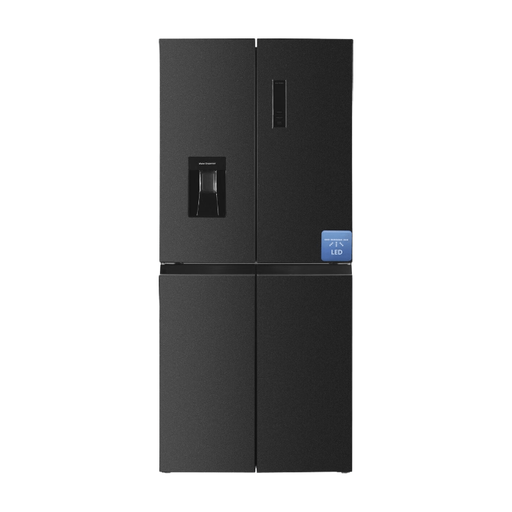
Why it suits this profile: This model offers 419 litres in total, split between 269 litres of fridge space and 150 litres of freezer space. It’s a good fit for families who want to store larger shops and frozen food at the same time.
The stated capacity is broken down by compartment. The 39 dB noise level, D energy rating and annual consumption of 224 kWh are also listed, so you can check how it performs.
Total No Frost, water dispenser with reservoir, digital controls and six freezer drawers.
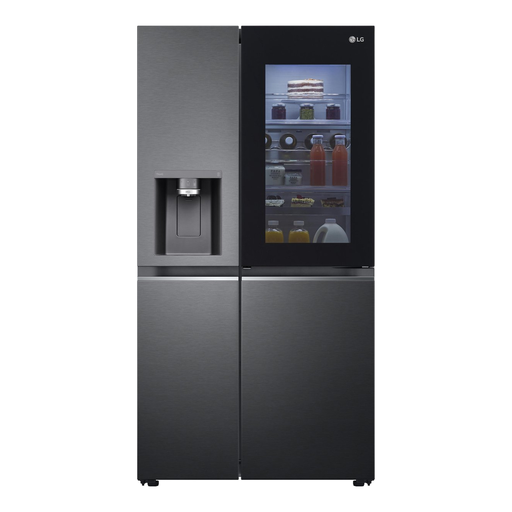
Why it suits this profile: With 635 litres in total, including 416 litres of fridge space and 219 litres of freezer space, this American-style fridge freezer is designed for large households and frequent use.
Its large size is clear from the outset: 179 cm high, 91,3 cm wide and 73,5 cm deep. This lets you check your available kitchen space and access points before buying.
36 dB noise level, water and ice dispenser, Total No Frost and control via the ThinQ app, according to the product description.

Why it suits this profile: At 54,5 cm wide, this model is suitable for kitchens where a standard-width fridge won’t fit. Its capacity is split between 187 litres of fridge space and 73 litres of freezer space.
The product specifications list a 260-litre capacity, 40 dB noise level, E energy rating and manual defrosting. This means you know in advance that it doesn’t have No Frost.
Compact 55 cm size, reversible door, adjustable shelves and three freezer drawers.
We’ve put together a complete, up-to-date list of products that meet these strict selection criteria and the applicable European safety regulations.
It depends on the size of your household and how often you shop. Around 80 to 150 litres may be enough for one person. Families often look for a fridge-freezer with a capacity of around 250 to 350 litres. If you buy in bulk or freeze a lot of food, you may be better off with a 400-litre model or a separate freezer.
Lifespan varies depending on the brand, how you use and maintain the appliance, and where you position it. Keep the ventilation space clear, clean the door seals and don’t put hot food straight into the appliance. Check the warranty terms when you buy. A longer compressor warranty doesn’t always cover every part of the fridge.
Use the annual consumption figure on the energy label and multiply it by your current electricity rate. A higher-capacity fridge may use more kWh than a small fridge, even if both have the same energy rating. So compare both the rating and the number of kWh used per year.
