
Vandaag of morgen in huis

Kwaliteit gegarandeerd

Welkomstaanbiedingen ontgrendelen: GRATIS bezorging | Tot 80% korting | Gratis 30 dagen JoyPlus-proefperiode
Download de app
A new fridge seems like a straightforward purchase, until you have to choose between an under-counter model, a fridge freezer, an American-style fridge freezer or a mini fridge. A model may look spacious and quiet on paper, yet fail to fit through your doorway or offer too little usable space.
Watch out for these common pitfalls:
A mini fridge, compact fridge or under-counter fridge may be enough for one person or a student. A model with around 80 to 130 litres of capacity takes up little space and often fits under or on a worktop. Bear in mind, though, that a small freezer compartment is usually limited.
Households of two to four people often opt for a fridge freezer with a capacity of around 250 to 350 litres. This gives you a separate freezer compartment without taking up the floor space of an American-style fridge freezer.
If you do large shops or keep plenty of food in stock, you could consider an American-style fridge freezer. These models offer lots of capacity, but they’re wide, heavy and harder to position. Check in advance that your kitchen, lift and doorways can accommodate one.
A fridge with no freezer compartment can be practical if you already have a separate freezer. A drinks fridge or wine fridge can also be a good choice for drinks, an office or a utility room. These appliances aren’t designed to serve as a full fridge for everyday food storage.
Measure the available space at three points: width, height and depth. Walls and kitchen units aren’t always perfectly straight. Also check:
A model with a reversible door offers more flexibility in a small kitchen. For a fridge in a small flat, a width of 54 to 60 cm can make the difference between a straightforward installation and an unsuitable purchase.
As well as the total capacity, check the individual compartment volumes. For example, a fridge freezer with a capacity of 260 litres might have 187 litres of fridge space and 73 litres of freezer space. That’s very different from a model with a large fridge compartment and only a small freezer section.
Also look for:
According to the product specifications, a fridge freezer with No Frost prevents ice build-up through automatic defrosting. Some ice may still form with Low Frost, so occasional maintenance is still needed.
The European energy label runs from A to G. Don’t just compare the letter; check the stated annual energy consumption in kWh too. A larger appliance may use more electricity than a smaller fridge, even if it has a better energy rating.
The noise level is stated in dB. For an open-plan kitchen, studio flat or bedroom, a stated level of around 35 to 40 dB is often more practical than a noisier model. The actual noise can vary when the compressor starts up or during an automatic defrost cycle.
It’s also worth checking the details of extra features. A fridge with a water dispenser may use a reservoir or a mains water connection. Check which system it has and how to clean the reservoir. According to LG’s own research, the InstaView feature is designed to reduce how often you open the door. This is a brand claim, not a guarantee of lower energy consumption in every home.

Why it suits this profile: Its 54.5 cm width and 260-litre total capacity make it a good fit for a small kitchen, student room or first home of your own.
The reversible door helps accommodate less conventional kitchen layouts. The stated fridge and freezer capacities show you how much usable space you’ll actually get.
260 litres of capacity, a compact width of 55 cm, three freezer drawers and a stated noise level of 40 dB.
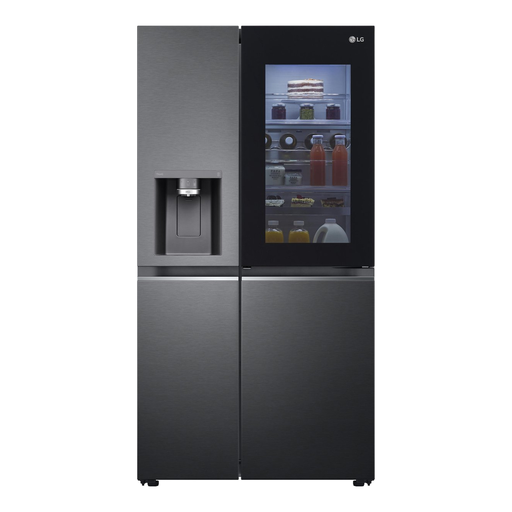
Why it suits this profile: This model is aimed at larger households looking for plenty of fridge and freezer space, a water and ice dispenser, and app control.
The specifications list 416 litres of fridge space and 219 litres of freezer space separately. This lets you weigh up its large external dimensions against its actual storage capacity.
635 litres of total capacity, a noise level of 36 dB according to the product specifications, Total No Frost and control via ThinQ WiFi.
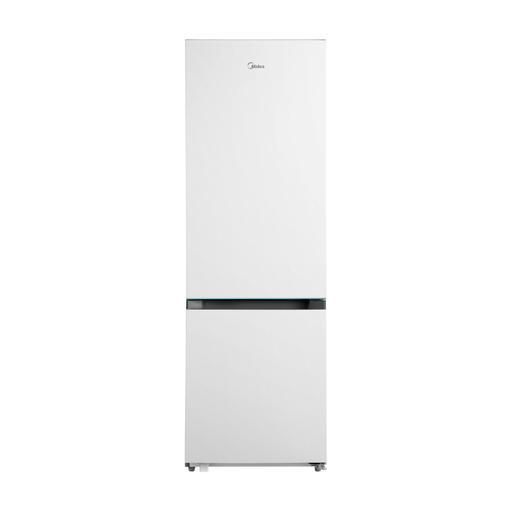
Why it suits this profile: A family looking for a spacious fridge freezer gets a separate 232-litre fridge compartment and a 98-litre freezer compartment.
The dimensions of 59.5 × 57 × 186 cm and stated annual energy consumption of 248 kWh give you concrete points to check for installation and running costs.
Total No Frost, 35 dB, reversible door, electronic controls and a total capacity of 330 litres.
We’ve put together a complete, up-to-date list of products that meet these strict selection criteria and the applicable European safety regulations.
Around 100 to 200 litres of fridge space is often enough for one person, depending on how often you shop. An under-counter fridge with a capacity of 126 litres may be suitable for everyday use. If you also freeze a lot of food, you’ll need a separate or larger freezer compartment too.
Lifespan depends on usage, ventilation, maintenance and the quality of its components. Keep the condenser and vents clear, make sure the appliance is level and check the door seals regularly. The statutory guarantee and any manufacturer’s warranty vary by product, so check the terms on the product page.
No Frost can reduce maintenance because manual defrosting is usually unnecessary. Whether it’s worth paying extra depends on how you use your fridge. The feature can be practical if you have a large freezer compartment or your household opens and closes the door frequently. Always compare annual energy consumption, capacity and noise level too.
